




Corner Protection Rental LED Panel: Damage Prevention and Maintenance Guide
By hqt
Oct 30, 2026Related Posts
How to Choose the Right Pixel Pitch Based on Viewing Distance
November 14, 2026
Corner Protection Rental LED Panel: Damage Prevention and Maintenance Guide
October 30, 2026
How to Choose a Shop Window Transparent LED Display for Retail Stores
October 29, 2026
Iron vs. Aluminum Outdoor LED Display Cabinets: How to Choose
October 28, 2026
Rental LED panels are constantly on the move from warehouse to trucks and stages to exhibition venues. Each event constitutes a series of handlings, installations, dismounts and packs.
Panel's corners are especially susceptible during these operations. Exposed LED pixels may be ruined by minor impact, cabinet edges may be bent or misaligned panes may occur when cabinets are put back together.
The purpose of a corner protection rental LED panel is to minimize these risks. But, protective hardware is most effective when used in conjunction with proper handling practice, appropriate transport cases and routine checks.
For the rental firm, it's not just a more powerful panel. It also is retaining more equipment to be used at the next event.
What Is Corner Protection Rental LED Panel?
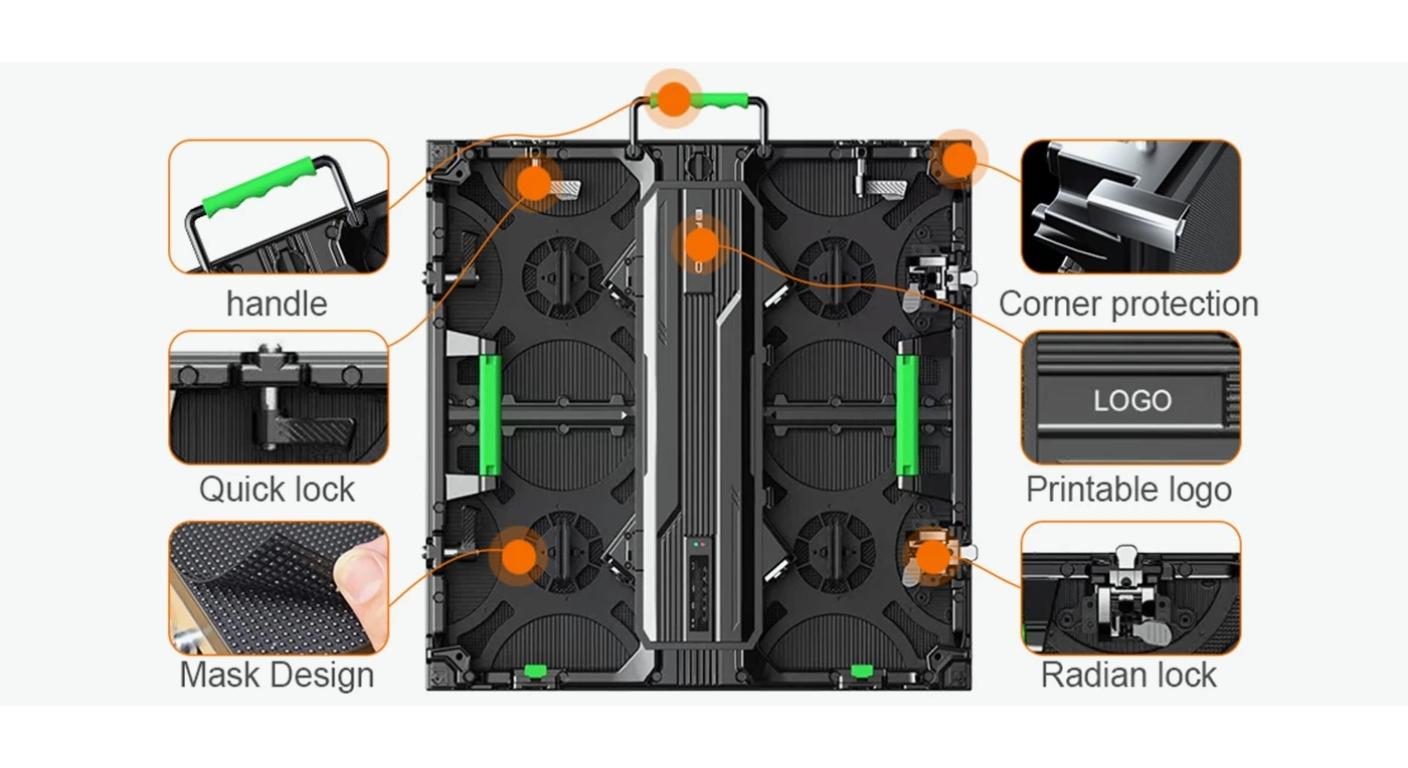
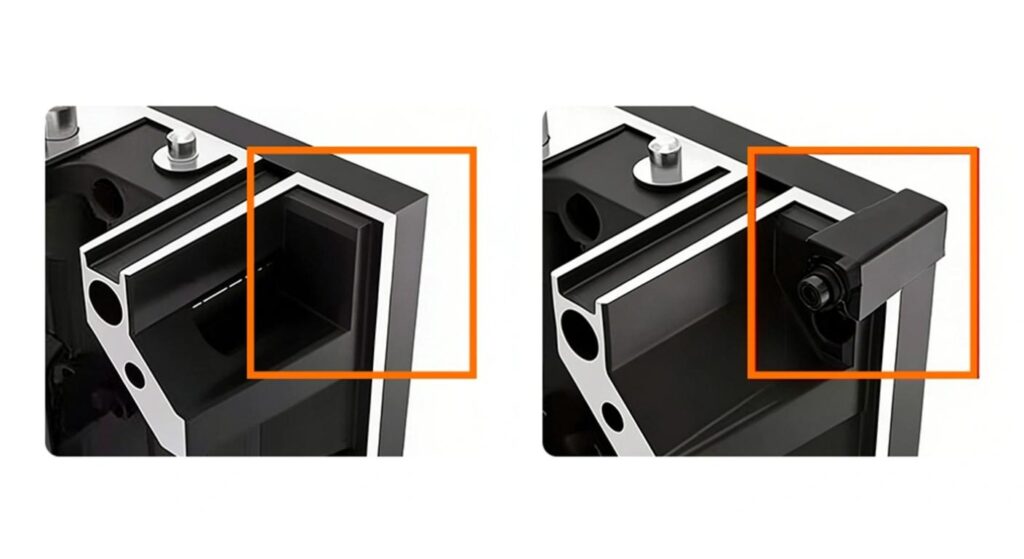
Corner Protection Rental LED Panels are modular event display cabinets that have protective components on the corners that are more susceptible to damage.
They could be retractable corner guards, hinged protective pieces or built-in protective structures, depending on the cabinet design.
The guards are able to protect exposed edges of panels and LED pixels from unintended contact during handling.
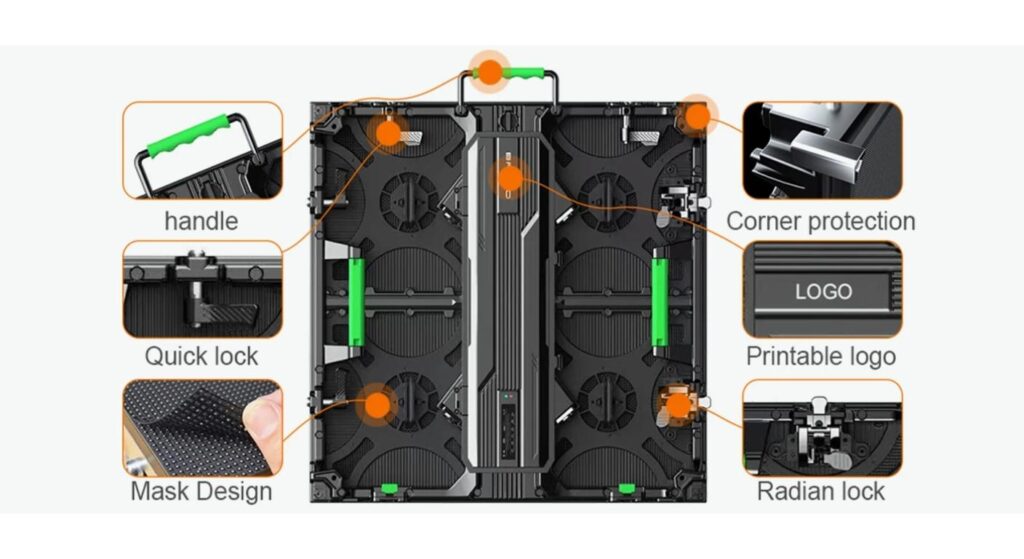
Many LED rental displays also have lightweight cabinets, built-in handles, positioning capabilities, and easy-to-lock connections for multiple event rentals.
This mechanical design has several elements, including corner protection. It does not render the panel impact-proof, but it can minimise the chances of damage caused by the normal use of the panel.
The reason for the easy damage of rental LED Panels Corners
A corner of an LED cabinet is a weak point as it is a concentrated contact point while also leaving the cabinet's edges exposed.
While unloading a technician can accidentally put a corner of a panel in contact with a flight case, or another cabinet. When assembling the stages, two panels can collide before the positioning features are properly aligned.
Excessive use may lead to breakage of the LED lamps, to loosen the adjacent components or influence the mechanical accuracy of the cabinet.
Fine pitch displays are especially susceptible as the LEDs are tightly packed together and there is not much room for accidental contact.
It's not always apparent at first glance. A panel might look fine in storage but show up dead pixels or visible seams in the subsequent installation.
| Handling Stage | Common Damage Risk | Preventive Action |
| Warehouse Loading | Panel corners strike case frames | Use controlled lifting |
| Vehicle Transportation | Cabinet movement and vibration | Secure fitted flight cases |
| Stage Assembly | Contact between adjacent panels | Align before locking |
| Event Dismantling | Accidental edge collisions | Follow removal sequence |
| Return Storage | Incorrect panel positioning | Inspect before packing |
How Retractable Corner Protection Helps
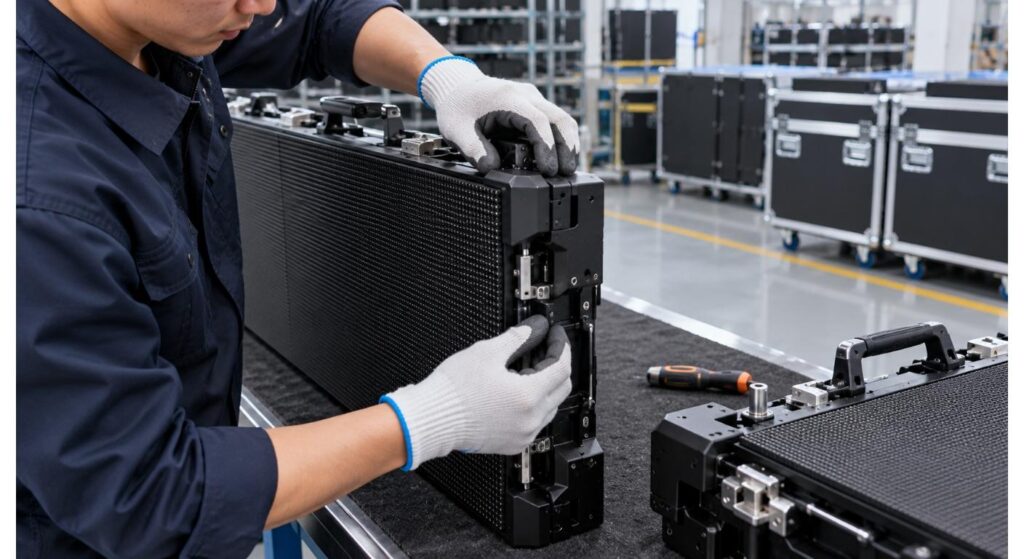
Retractable corner protectors will protect the corners during handling and fold away when the panels are connected.
Technicians install the protection elements in the proper position of protection prior to transportation or assembly. The guards are a barrier to prevent the exposed LED corner from interacting with nearby objects.
If cabinets need to be joined the protectors are shifted in the position indicated by the manufacturer to position the panels properly.
MIC's MCR-S Indoor Event Rental LED Screen is a corner protection structure that is designed to minimize the accidental damage of the LED pixels during multiple rental events.
Details of the operation vary with the cabinet design. Technicians are to use the provided handling instructions and not to jam a guard in place.
If you make the mistake of using corner guards, you will need to use proper handling to make up for this.
Protective corners are a nice feature as it minimizes accidental contact but does not eliminate all types of damage.
Even if a panel is dropped from a substantial height, it can be subject to cabinet deformation, broken internal connections or broken LED elements.
Handle and cabinet joints also can be stressed from incorrect lifting. Therefore, the rental teams must study and use the lifting points specified by the designer and refrain from lifting panels by bare edges of modules.
The assembly should be done by using alignment pins and locking parts as prescribed by the manufacturer.
Excessive force should never be used by technicians in attempting to close a gap between misaligned cabinets.
Use of protective hardware and controlled handling practices is more reliable than relying on either alone.
Take steps to safeguard LED Panels in transit and storage.
Repeated vibration, movement and handling risks are added in the transportation process.
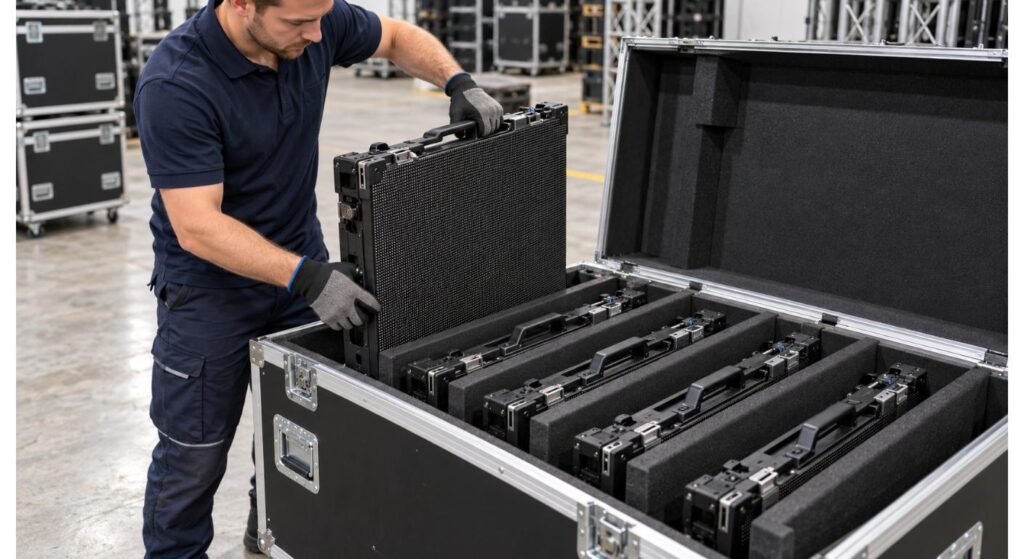
Flight cases should be capable of accommodating the cabinets in their desired orientations and protect adjacent panels from striking each other.
Delicate LED surfaces should not come into contact with protective padding. There should be internal compartments that are suitable to the cabinet size and layout.
Technicians should verify the proper placement of corner protectors and that there are no cables or accessories stuck against the screen prior to closing case.
Storage should be kept dry, tidy and secure from unwarranted movement.
With a large number of items in storage, it can also help minimise packing-up errors and increase the speed at which equipment is ready for tour, for touring companies.
Ensure that the Corners are checked prior to each event
Problems can be detected before panels reach the stage with a brief pre-event inspection.
Start at the corners guards. Test for proper movement of each protective piece, proper attachment and no cracks or deformations.
Next, inspect nearby LED pixels, cabinet edges, positioning pins and cabinet locking hardware.
Perform panel connection and display uniform-color patterns on the panel for the purpose of checking for damaged pixels or for abnormal image areas.
If a corner is bent, ensure the cabinets are aligned before making larger cabinet assemblies.
If any protection hardware is damaged on a panel it should be checked and repaired as per manufacturer's instructions prior to putting them back in rental service.
| Inspection Item | What to Check | Action if Defective |
| Corner Guard | Movement and structural condition | Repair or replace |
| LED Pixels | Dead or physically damaged pixels | Test and service module |
| Cabinet Frame | Bent edges or visible deformation | Check alignment |
| Positioning Pins | Wear or looseness | Replace damaged hardware |
| Quick Locks | Secure engagement | Service locking mechanism |
| Power and Signal | Stable connections and operation | Troubleshoot before use |
Quick-Lock Assembly and Corner Protection Go Hand in Hand.
Proper placement of the cabinets and connections are essential for efficient rental installation.
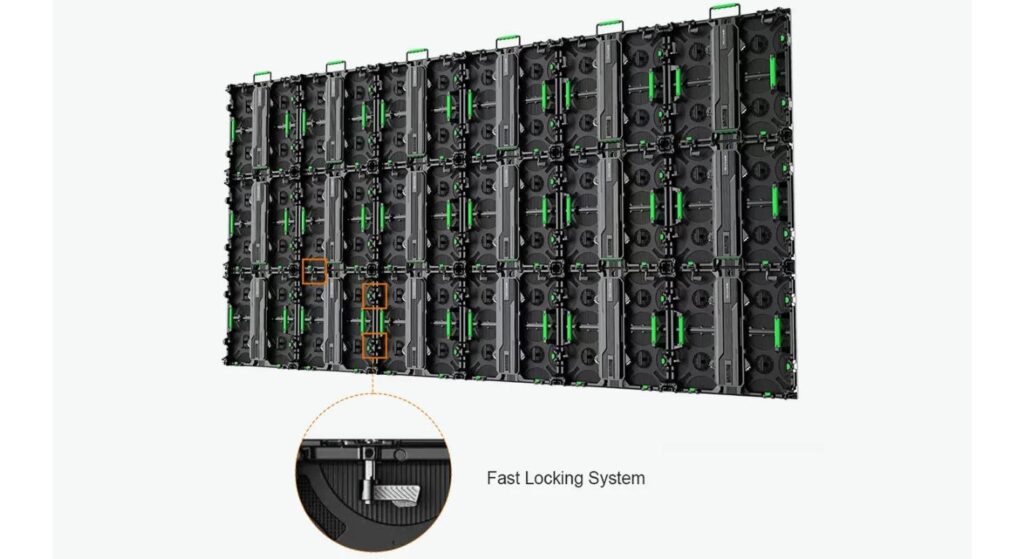
Locking corners can be used to help technicians connect adjacent panels using quick-lock systems, but they must not interfere with the quick-lock system.
Due to the poor positioning, the cabinet may not be inserted in the proper position, which will result in gaps between modules or pressure being applied to edges of the display.
Technicians should verify alignment of panels and retractable panel guards are in the proper operating position before making connections.
Modular cabinets can be assembled easily for stages that need different sizes of screens.
MIC also provides LED screen hire for outdoors for professional events. The following are particular safeguards that need to be examined for the chosen model.
Compare Repair Costs in Multiple Rentals
The cost-effectiveness of corner protection is more evident if equipment is to be used repeatedly.
This could result in LED module repair, replacements and additional technician time as well as functional testing.
What is more important is that the equipment is not available for the next scheduled event, if it is in need of repair.
Rental companies should document across their fleet the damaged modules, repair costs and equipment downtime.
These records can help identify if there are any losses that can be avoided in the future by using protective hardware, better packing procedures, or staff training.
Look at long term serviceability and availability of spares when comparing suppliers – do not look only at the initial panel price.
Before buying rental LED panels, there are several key factors to consider.
If you are ordering, request the supplier to show you the corner protection and its positions.
Verify size of panel, weight of the cabinet, locking system, maintenance access and transport case requirements.
Determine if damaged guards can be replaced without having to remove the module and also if spare modules and mechanical components exist.
In large rental fleets, having the same cabinet can ease the process of managing inventory and planning replacement.
MIC offers LED display solutions for event and AV projects where you can customize your displays. Buyers can send their application requirements to the MIC contact page where they can discuss which cabinets they would like, and technical support.
Conclusion
A corner protection rental LED panel is one of the ways to counteract a frequent problem in event display practices – accidental damage because of repeated handling.
Good protection can only be achieved through appropriate corner hardware, proper installation, thoughtful transportation and inspection routines.
To rental businesses, safeguarding the edges of the sensitive display is important to minimize unnecessary repairs, maximize equipment availability and ensure more dependable preparation for events.
FAQs
Q1. What is the meaning of a corner protection of a LED panel hire?
It's a protective structure to protect the weak corners of the cabinet and surrounding LED pixels. Some designs have retractable guards that move during the process of assembly.
Q2. Do corner guards stop all damage to LED's?
No. They minimize some of the accidental contact risks but will not prevent damage from drops, over force and misuse.
Q3. Should comer protection be used during transport?
Yes, where specified by the manufacturer. Always follow the cabinet's handling and packing instructions.
Q4. Does the corner protector have an impact on the assembly of LED panels?
When used properly, they shouldn't interfere. Retractable guards should be installed as per manufacturer's assembly instructions.
Q5. Are there any corner guards that can be replaced if they are broken or damaged?
Certain cabinets can be changed in regards to protective components. The buyer is requested to check with the supplier the availability of spares and the procedure to be followed for repairs.


Contact Us
In This Article
Related Posts
How to Choose the Right Pixel Pitch Based on Viewing Distance
November 14, 2026
Corner Protection Rental LED Panel: Damage Prevention and Maintenance Guide
October 30, 2026
How to Choose a Shop Window Transparent LED Display for Retail Stores
October 29, 2026
Iron vs. Aluminum Outdoor LED Display Cabinets: How to Choose
October 28, 2026


