




What Is the Difference Between Indoor and Outdoor LED Displays?
By miashuvo2077
Sep 29, 2026Related Posts
LED Window Display- The Complete Guide for Retail, Advertising, and Commercial Spaces
October 26, 2026
Mini LED Display- What It Is, How It Works, and Where It Fits
October 26, 2026
Naked Eye 3D LED Display - How It Works, Key Specs, Cost and How to Plan One (2026 Guide)
October 16, 2026
Transparent LED Displays for Storefronts
October 14, 2026
Indoor LED displays are built for controlled indoor conditions: comfortable, dimmable brightness with fine pixel pitch for close viewing, and enclosures that mainly resist dust. Outdoor LED displays are built for uncontrolled conditions: higher brightness so they stay legible in daylight, sealed enclosures against rain, dust and humidity, and pixel pitches matched to longer viewing distances. The right choice depends on the site's real light, weather exposure and closest regular viewer — not the indoor or outdoor label alone.
Key takeaways
- Indoor LED displays prioritise comfortable, dimmable brightness and fine pixel pitch; outdoor LED displays prioritise daylight legibility and sealed weather protection.
- Trust Fall's specifier's guide lists typical indoor brightness of 600–1,500 nits against 5,000–10,000 nits for outdoor LED displays.
- Pixel pitch follows viewing distance and content detail, so the indoor or outdoor label alone does not determine it.
- One number never proves suitability: an outdoor display's IP rating should be checked against the exact exposure and against the enclosure areas it actually covers.
- A covered or semi-outdoor site often needs neither a pure indoor nor a full outdoor product, so judge it on real light, windblown rain, humidity and temperature.
What is an indoor LED display, and what is an outdoor LED display?
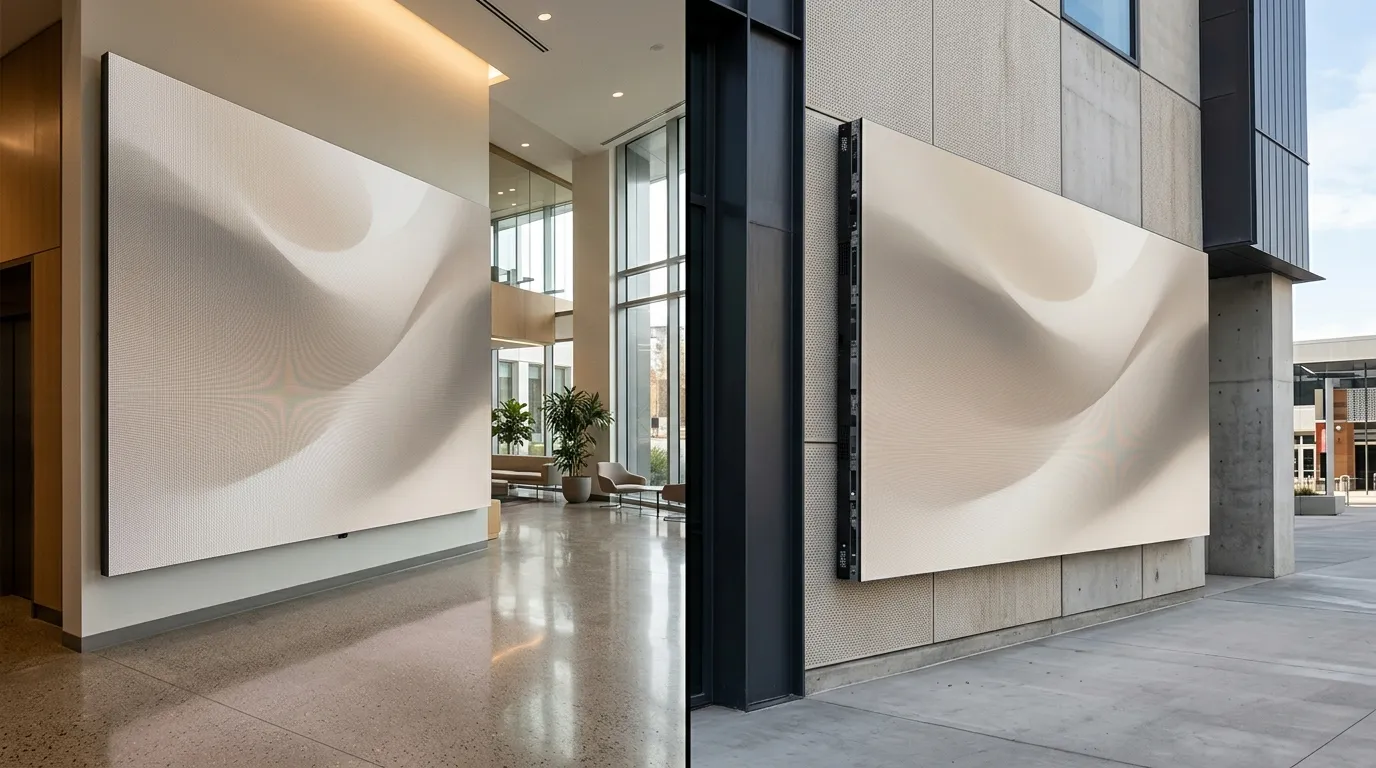
An indoor LED display is a screen designed for controlled indoor environments, with comfortable, dimmable brightness, finer pixel pitch for close viewing, and an enclosure that mainly resists dust and minor condensation. An outdoor LED display is engineered to keep working through daylight, rain, dust, humidity and temperature swings, so it combines higher brightness, a sealed enclosure and a structure that can be mounted on a facade, pole or ground frame.
Brightness is the clearest dividing line. Trust Fall's specifier's guide lists typical indoor brightness of 600–1,500 nits and outdoor brightness of 5,000–10,000 nits. An indoor screen at 5,000 nits would be uncomfortable to look at up close; an outdoor screen at 1,000 nits would wash out in afternoon sun.
The design priority differs too. Chipshow's comparison table describes indoor screens as being designed around grayscale quality at low brightness, and outdoor screens around brightness and weather protection. That is why the same screen size can look completely different in two locations.
Pixel pitch also tends to differ, though not by definition. MIC Display's retrieved homepage describes its indoor HD displays at P0.9–P2.5 pitch and its outdoor fixed LED screens with IP65 protection. The company's own range covers small-pitch P0.9375–P1.86, indoor P2–P10 and outdoor P2.5–P10.
For the two broad categories, see indoor LED display and outdoor LED display.
The main differences between indoor and outdoor LED displays
Indoor and outdoor LED displays differ mainly in brightness, pixel pitch, enclosure protection, cabinet construction, heat handling and viewing distance — and every one of those differences exists because the installation environment is different.
| Attribute | Indoor LED display | Outdoor LED display | What it means for the buyer |
|---|---|---|---|
| Brightness | Typically 600–1,500 nits, per Trust Fall | Typically 5,000–10,000 nits, per Trust Fall | Outdoor screens must compete with daylight; indoor screens must stay comfortably dimmable |
| Pixel pitch | Chosen for the closest regular viewer, often at short range | Trust Fall's guide gives P4–P10 as general outdoor guidance for viewing distances of 10 metres or more | Pitch follows viewing distance and content detail, not the indoor or outdoor label |
| Enclosure and ingress protection | Resists dust and minor condensation | Sealed against rain, dust and humidity; MIC Display lists IP65 protection on its outdoor fixed LED screens | Confirm what the rating covers, and check front and rear enclosure areas separately |
| Cabinet structure | Lighter, thinner profiles | Heavier, more rigid frames to handle wind load | Affects mounting method, supporting structure and load calculations |
| Heat and ventilation | Copes with room conditions | Must handle direct sun and higher ambient temperatures | Outdoor installations need more attention to airflow and heat gain |
| Viewing distance | Short to medium | Medium to long | Sets the practical pitch, brightness and cabinet choice |
Brightness and ambient light
Outdoor LED displays need much higher brightness because they must stay legible against strong ambient light, especially direct sunlight, while indoor LED displays only need enough brightness to look comfortable and remain dimmable in a controlled space. Brightness without dimming control is a liability indoors: a screen that is too bright for its room causes glare and eye strain.
The ranges are guidance, not a specification. Trust Fall's 2026 specifier's guide lists 600–1,500 nits for indoor screens and 5,000–10,000 nits for outdoor screens, but the required level depends on how much light actually falls on the screen face at the worst time of day. A north-facing indoor lobby and a sunlit atrium need different answers even though both are indoor.
Covered and semi-outdoor sites sit between the two extremes, and they deserve their own assessment rather than a brightness figure picked from either column.
Pixel pitch and viewing distance
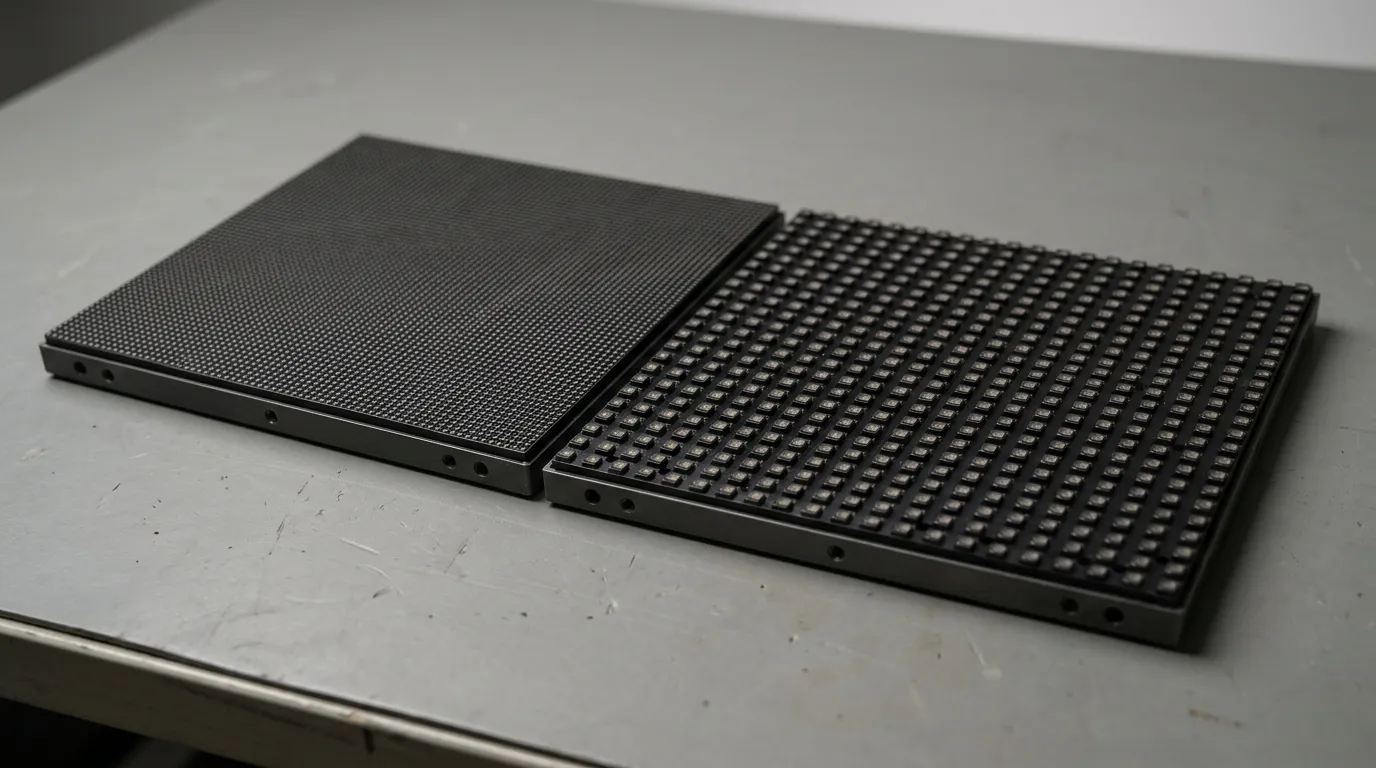
Pixel pitch is the centre-to-centre distance between adjacent pixel positions, so a smaller pitch means higher pixel density and finer detail at close range, as MIC's pixel pitch guide explains. The right pitch depends on the closest regular viewing distance and the detail in the content, not simply on whether the screen is indoors or outdoors.
INFiLED notes that viewing distance, content type and available viewing time all affect appropriate pitch, and distinguishes close-view indoor detail from outdoor legibility at distance. A viewer standing two metres from a screen and a driver passing at eighty metres are two completely different optical problems.
Rules of thumb exist but come with conditions. Trust Fall's guide gives P4–P10 as general outdoor guidance for viewing distances of 10 metres or more. That is a starting point for a stadium or roadside site; it is not a rule for a covered outdoor terrace where people stand close to the screen. Read the full LED pixel pitch guidance before fixing a specification.
Weather, dust and moisture protection
Outdoor LED displays must resist rain, dust and humidity, while indoor LED displays usually only need to handle dust and minor condensation. An ingress protection rating tells you what level of protection the enclosure actually provides — and which parts of the enclosure it covers.
Trust Fall identifies IEC 60529 as the standard associated with ingress protection ratings, which use two digits to describe resistance to solids and to water. The same source advises checking the rating against the exact exposure and evaluating front, rear and other enclosure areas separately, because a screen can be well protected on the face and vulnerable at the rear access panel or cable entry.
Protection is not one number. INFiLED separates ingress protection from impact resistance and links impact ratings to IEC 62262. A screen facing a public walkway may need both water resistance and resistance to knocks.
MIC Display lists IP65 protection on its outdoor fixed LED screens. That is a statement about those products; it is not a claim that any IP rating suits any outdoor site, so confirm in writing what the rating covers on the configuration you order.
Cabinet, heat and service
Outdoor LED displays use heavier, more rigid cabinets that shed water, resist wind load and tolerate solar heat gain, while indoor LED displays favour lighter, thinner cabinets with quiet operation and easy service access. Cabinet design is where the environmental differences turn into physical hardware.
Chipshow's comparison table frames indoor screens around low-brightness grayscale quality and outdoor screens around brightness and weather protection, which is reflected in materials, sealing and frame rigidity. INFiLED also points to thermal behaviour and material differences between the two categories.
Maintenance follows from the design. An outdoor cabinet must be serviceable without compromising its seal, so rear access, gaskets and cable entries need a plan before installation. An indoor cabinet can usually be opened more freely because water ingress is not a routine risk.
Can an indoor LED display be installed outdoors — or an outdoor display indoors?
An indoor LED display should only be installed outdoors when the actual exposure is genuinely indoor-like; otherwise it risks water ingress, dust, ultraviolet degradation, condensation and heat damage it was never built to resist. An outdoor LED display can be used indoors, but it usually brings extra weight, higher cost and brightness headroom that must be dimmable enough for comfortable in-room viewing.
The first case is the riskier one. A canopy, a shopfront recess or a covered walkway can still receive windblown rain, humidity and strong reflected light, and the screen's own heat may struggle to escape. Treat an outdoor position as indoor-like only if it passes every exposure check in the semi-outdoor decision process below.
The reverse case is workable but wasteful if it is not thought through. Outdoor-rated screens are sealed, heavier and typically more expensive, and their brightness must be turned well down indoors to avoid glare. Where the brightness is controllable and the mounting structure can carry the weight, an outdoor-rated screen inside a bright, humid or wash-down area can be a defensible choice.
The deciding question is not which category the screen belongs to, but which conditions the site will actually deliver over the life of the installation. If any credible risk is present, choose protection that handles that risk.
How do you decide for a covered or semi-outdoor site?
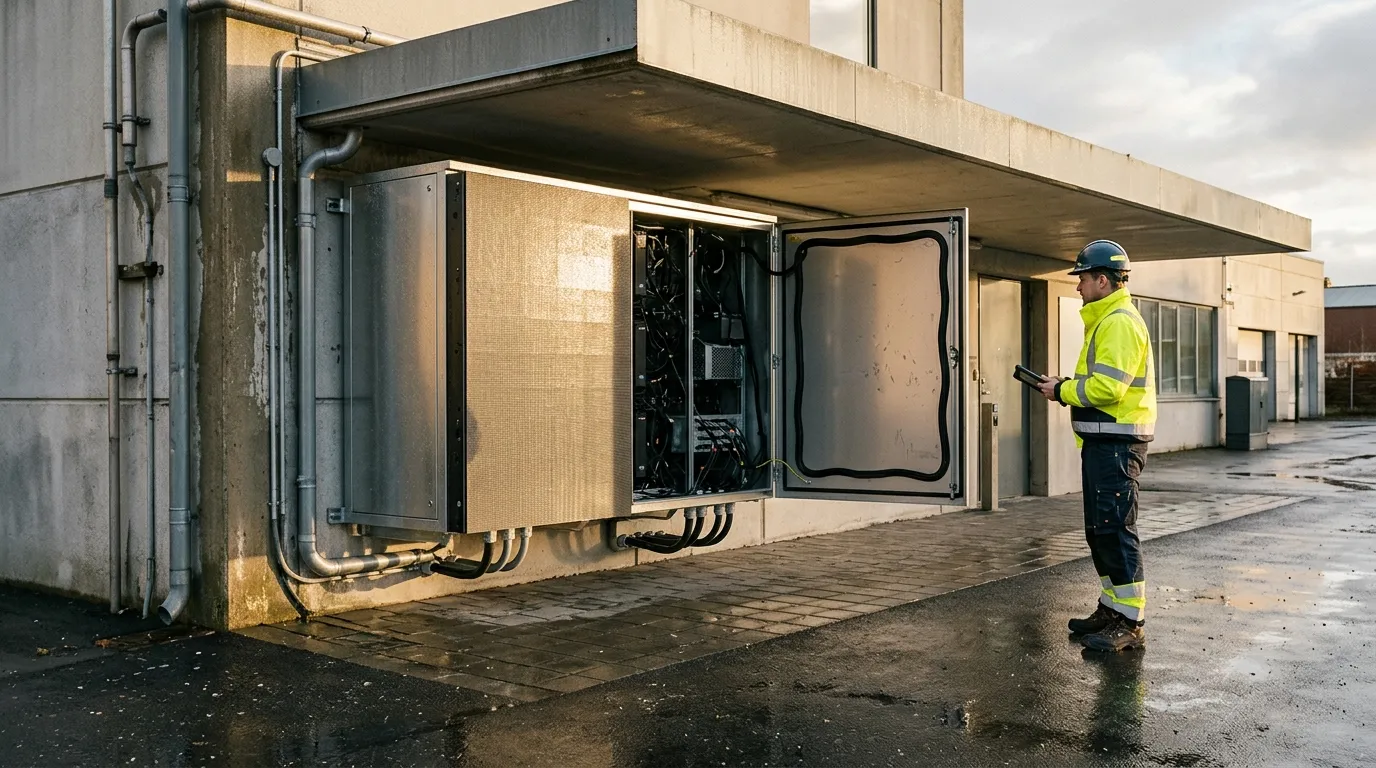
There is no single rule for a covered site: check direct sun and ambient light at the screen, windblown rain and spray, humidity and condensation, temperature extremes, and which parts of the enclosure are truly exposed. If any credible risk exists, choose protection that handles that risk rather than trusting the indoor label.
Work through these five steps before specifying:
- Assess worst-case ambient light. Observe or measure the light falling on the screen face across a full day, including low sun angles, and not just at midday.
- Trace every route water can reach. Consider rain, windblown rain, spray from cleaning or nearby traffic, and condensation forming inside the enclosure as temperatures change.
- Check temperature conditions. Look at heat gain behind the screen, available ventilation, and whether the site sees freezing conditions or rapid temperature swings.
- Inspect the enclosure in detail. Go beyond the front face: rear access panels, cable entries, mounting brackets and fixings each need their own protection.
- Specify for the harshest credible condition. Then confirm what the chosen IP rating actually covers, following the protection checks in the weather, dust and moisture section.
Trust Fall's guide gives 1,500–3,000 nits as typical semi-outdoor or covered-space brightness and advises assessing actual light and exposure rather than assuming a covered position is safe. That range is a reference point, not a target: a glass-fronted east-facing wall at sunrise can need more, while a shaded interior corridor may need far less.
[DIAGRAM: Semi-outdoor decision flow — five gates (light → water → temperature → enclosure → harshest credible condition) leading to an indoor, semi-outdoor or outdoor recommendation.]
Which applications suit indoor vs outdoor LED displays?
Indoor LED displays commonly serve lobbies, retail interiors, control rooms, meeting rooms and indoor stages, where the main constraints are viewing distance, viewing comfort and content detail. Outdoor LED displays commonly serve advertising facades, street furniture, transport hubs and outdoor event stages, where the dominant constraints are daylight, weather and longer viewing distances.
The application drives the specification, not the other way round. A control room watched from three metres needs fine pitch and controlled brightness, while a roadside advertising face read from a passing vehicle needs brightness, weather sealing and a coarser pitch. Advertising is a common outdoor use, and advertising displays show how those requirements come together in practice.
The same screen family can appear in both worlds. LED floor tiles, transparent screens and rental cabinets exist in indoor and outdoor versions, and the deciding factors remain exposure and viewing distance.
If your project sits between indoor and semi-outdoor conditions, MIC Display's design team can review the site conditions and advise on structure, size, pitch and protection — see the FAQs for common questions, or contact the team directly.
Frequently asked questions
What is the single biggest difference between indoor and outdoor LED displays?
The environment each one is built for. An outdoor LED display must stay legible in daylight and survive rain, dust and humidity, so it uses higher brightness and a sealed enclosure. An indoor LED display prioritises comfortable, dimmable brightness and finer pixel pitch for close viewing. According to Trust Fall, typical indoor brightness is 600–1,500 nits against 5,000–10,000 nits outdoors.
Do outdoor LED displays always use a larger pixel pitch than indoor ones?
No. Pixel pitch follows the closest regular viewing distance and the detail in the content, not the indoor or outdoor label. Trust Fall's specifier's guide gives P4–P10 as general outdoor guidance for viewing distances of 10 metres or more, but a short-viewing outdoor site can justify a finer pitch than that guidance suggests.
What happens if an indoor LED display is installed outdoors?
It risks damage it was not designed to resist: water ingress through unsealed joints, dust, ultraviolet degradation, condensation and heat build-up. Rain can also be windblown into a position that looks sheltered. Only treat an outdoor position as indoor-like if it passes every exposure check in this article's semi-outdoor decision steps.
Is a higher IP rating always better for an outdoor LED display?
Not automatically. The rating has to match the real exposure, and it applies to the enclosure areas that were assessed. Trust Fall advises checking the rating against the exact exposure and evaluating front and rear enclosure areas separately. IP also differs from impact resistance, which INFiLED links to IEC 62262 impact ratings.
Share on Social:


Contact Us
In This Article
Related Posts
LED Window Display- The Complete Guide for Retail, Advertising, and Commercial Spaces
October 26, 2026
Mini LED Display- What It Is, How It Works, and Where It Fits
October 26, 2026
Naked Eye 3D LED Display - How It Works, Key Specs, Cost and How to Plan One (2026 Guide)
October 16, 2026
Transparent LED Displays for Storefronts
October 14, 2026


