




LED Video Wall vs LCD Video Wall
By hqt
Nov 17, 2026Related Posts
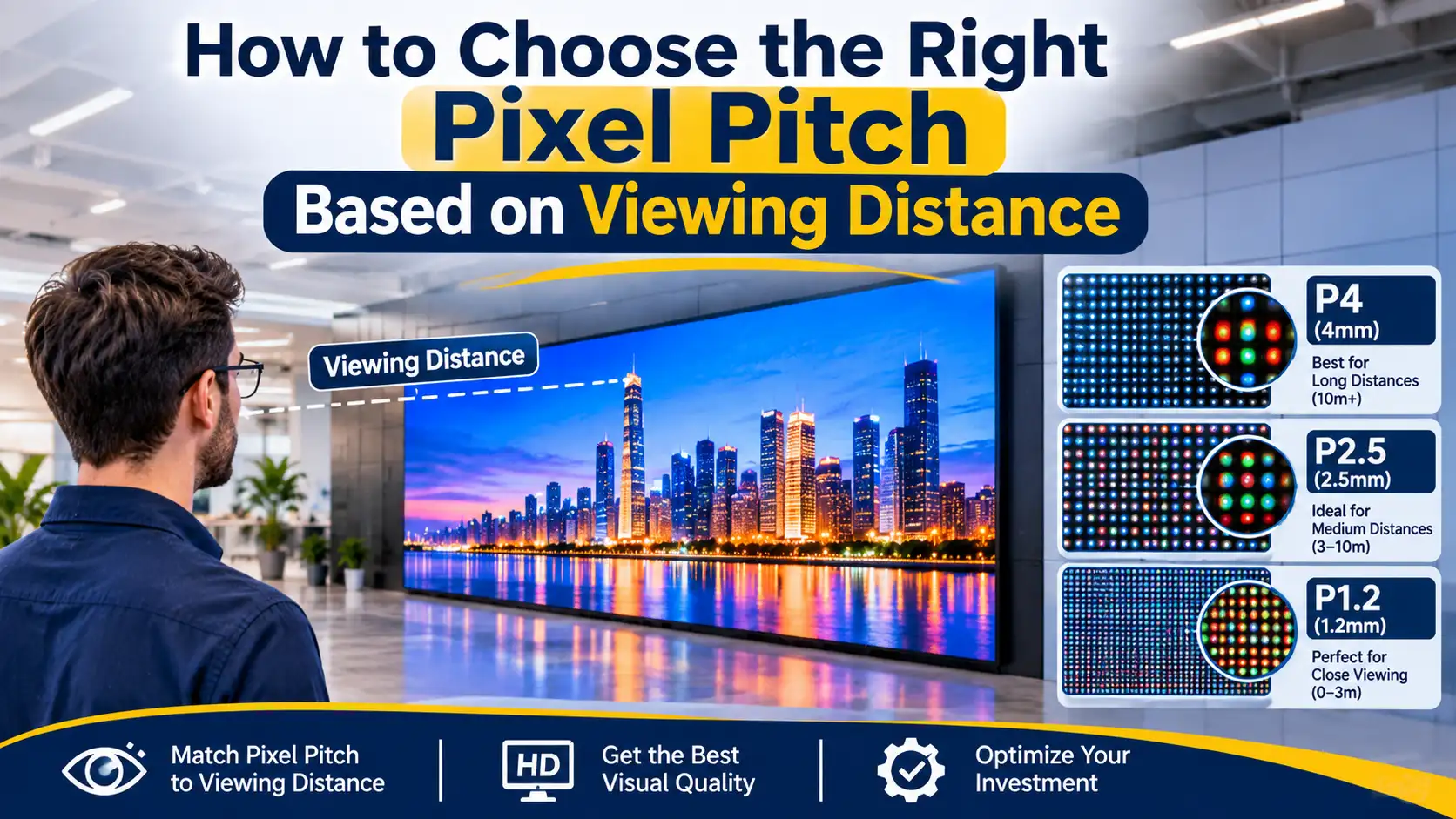
How to Choose the Right Pixel Pitch Based on Viewing Distance
November 14, 2026
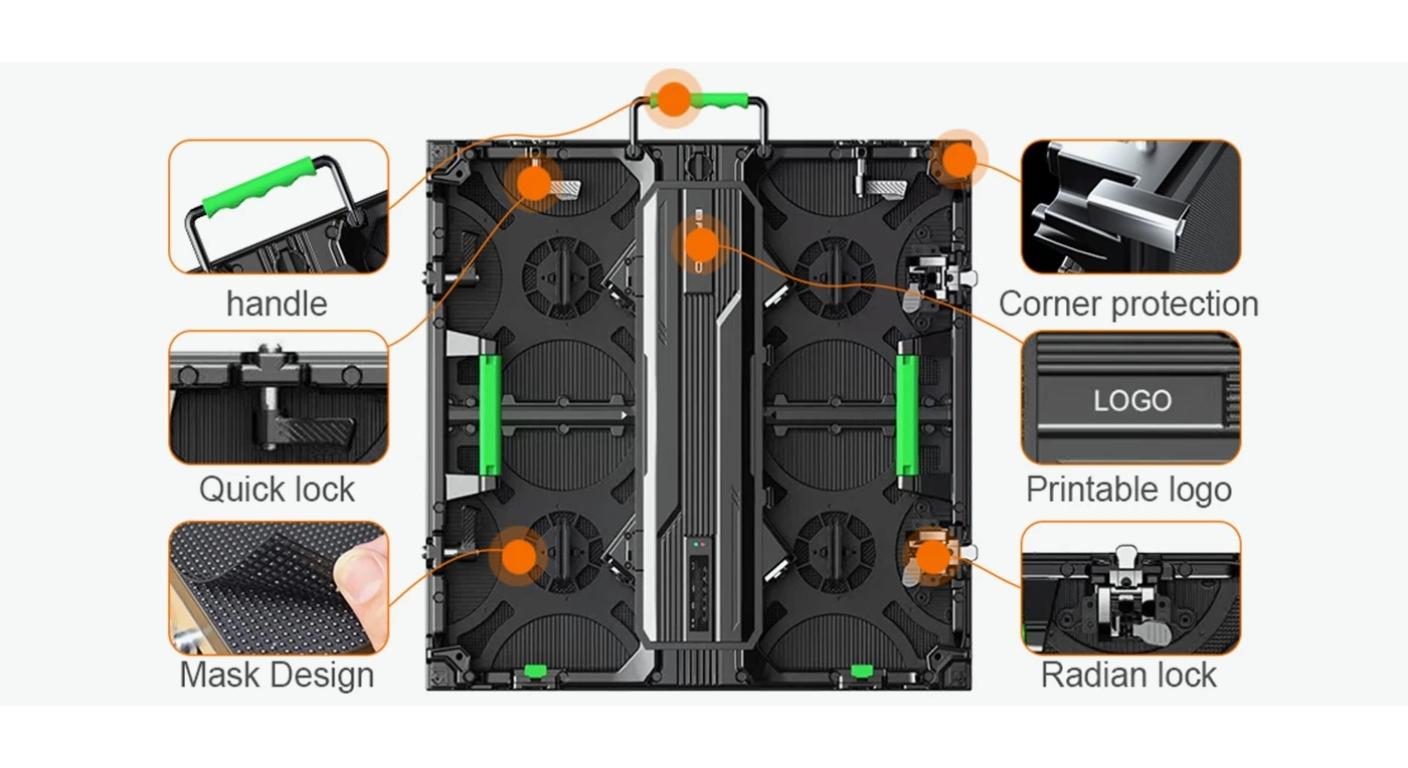
Corner Protection Rental LED Panel: Damage Prevention and Maintenance Guide
October 30, 2026
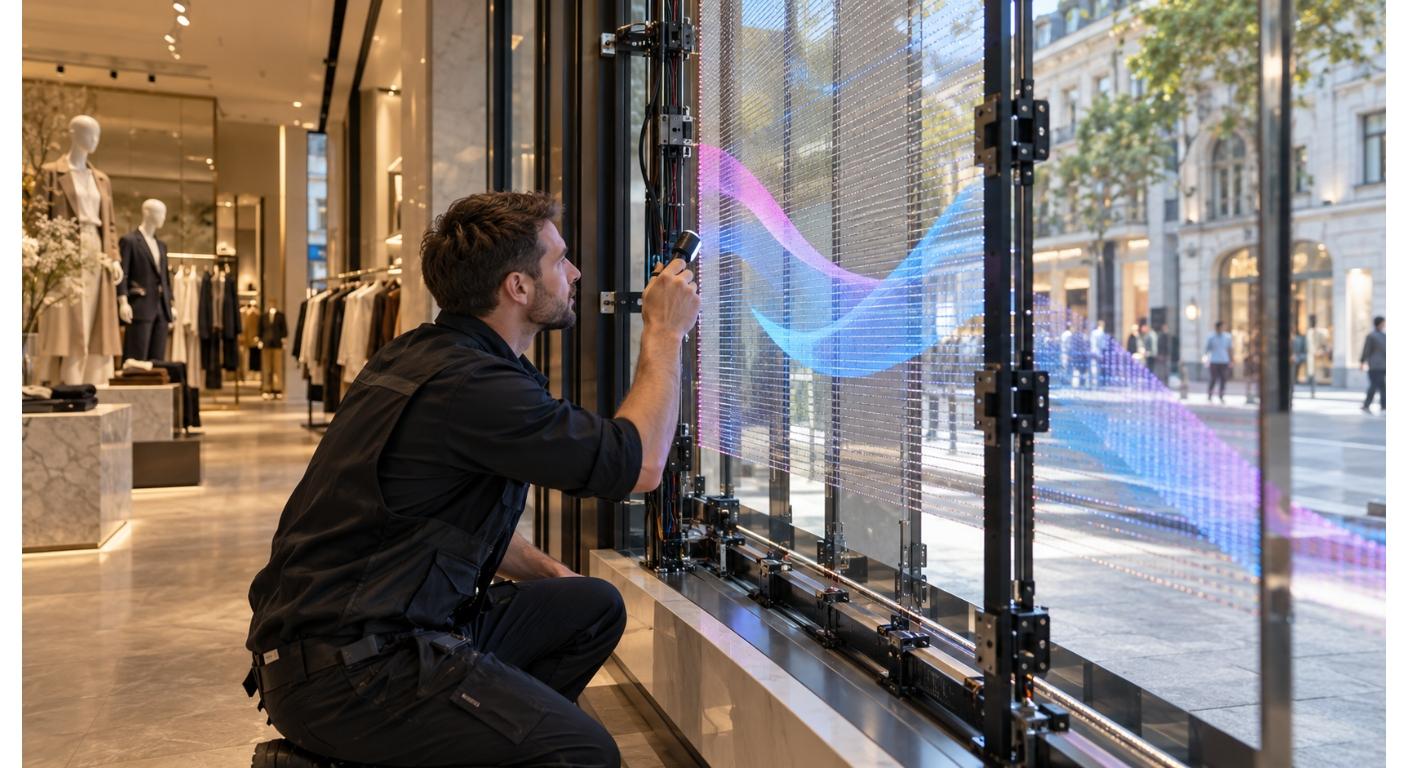
How to Choose a Shop Window Transparent LED Display for Retail Stores
October 29, 2026
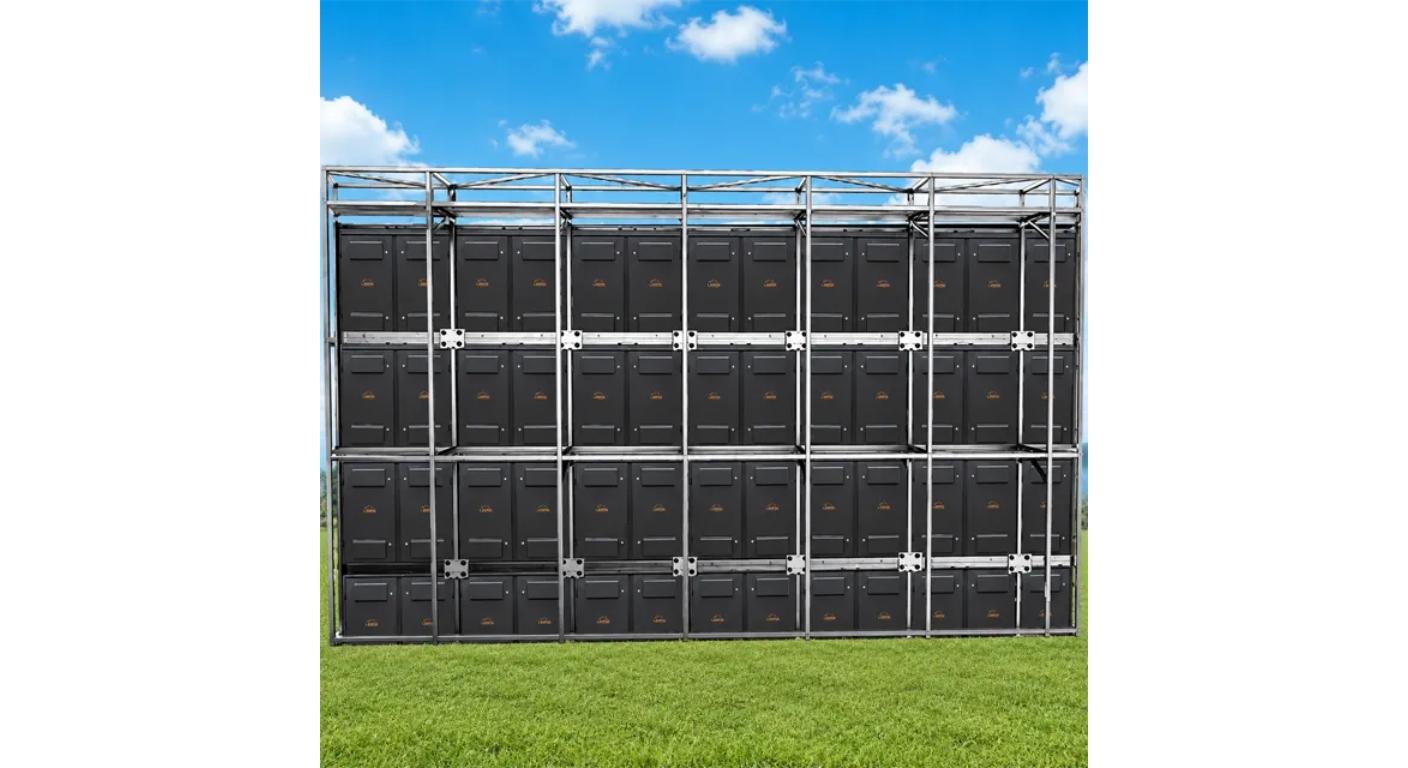
Iron vs. Aluminum Outdoor LED Display Cabinets: How to Choose
October 28, 2026
Viewing distance, content, size of the screen and budget are the factors that can help you decide between an LED video wall and an LCD video wall. Direct-view LED suits large and continuous images and flexible dimensions. For smaller indoor installations, LCD provides detailed images at a lower initial cost, but panel borders are still visible.
Therefore, which would work best for your project? Boil it down to people's needs to see – and where they'll be standing.
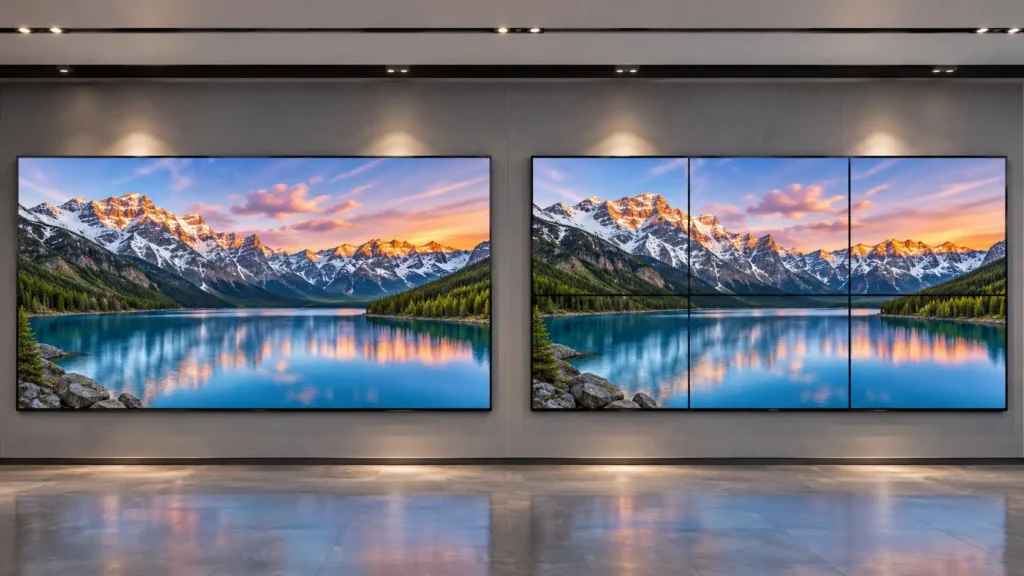
What Is the Difference Between LED and LCD Video Walls?
In an LED Video Wall, the image is formed directly using the light emitting diodes. Modules can be integrated to make a bigger screen, while LCD panels do not have any kind of framed border between them.
A liquid crystal display (LCD) video wall is a collection of LCD displays, typically with LED backlighting. This last piece of information is confusing: LED-backlit LCD screens are still LCD technology.
| Feature | Direct-view LED video wall | LCD video wall |
|---|---|---|
| Image production | LEDs emit light directly | Backlight illuminates liquid crystal pixels |
| Panel borders | No LCD-style bezel grid | Borders remain between panels |
| Resolution | Depends on pixel pitch and dimensions | Depends on panel resolution and layout |
| Screen shape | Modular sizing; selected systems support curves | Usually rectangular panel arrangements |
| Initial cost | Fine-pitch configurations can cost more | Often competitive for smaller installations |
| Repairs | Individual modules or components may be replaced | A failed display panel may need replacement |
Neither technology wins every comparison. The installation conditions decide which advantages matter.
Picture Quality: Seamless Images or Fine Detail?
LED Removes the Bezel Grid
For a showroom film, architectural rendering, or full-screen presentation, borders can interrupt the image. LED avoids that grid, helping content flow across the wall.
However, seamless results still depend on cabinet alignment, calibration, and installation quality. Poorly aligned modules can remain noticeable.
For commercial interiors requiring a continuous image, MIC’s MC-PRO indoor LED video wall provides a modular option with front-access maintenance.
LCD Can Be Practical for Detailed Content
LCD panels can provide high pixel density within a compact area. That makes them worth considering for spreadsheets, monitoring feeds, and detailed dashboards viewed nearby.
But resolution figures need context. A wall assembled from several high-resolution panels still needs a processor and source capable of using that pixel canvas. Enlarging a low-resolution image won’t create missing detail.
Viewing Distance Changes the Decision
For direct-view LED, pixel pitch refers to the distance between the center of each LED. The smaller pitch will offer more pixels in the same screen space.
What about this example?
There are nominal 3,840 horizontal pixels in a 4,800 mm wide LED wall at P1.25. The same width at P2.5 gives around 1,920. Actual dimensions will be dependent on module and cabinet selection.
That's an important distinction to make when displaying small text. It might not be as important for big graphics hanging throughout an atrium.
| Viewing situation | What to check |
|---|---|
| Nearby desks or seating | Smallest readable text, pixel visibility, comfortable brightness |
| Meeting room | Presentation detail from front and back seats |
| Retail atrium | Recognition of messages at typical walking distances |
| Control room | Dashboard labels, source layouts, viewing angles |
| Corporate lobby | Image continuity, ambient light, architectural fit |
Avoid choosing pitch from a distance rule alone. Ask to see your actual content at the intended viewing distance.
MIC’s fine-pitch COB LED display is one option to evaluate for close-viewing indoor projects.
Brightness, Reflections, and Everyday Comfort
The greater the brightness, the better, and that is not a foregone conclusion.
What appears to be a good showroom display can seem out of place in a dim meeting room. On the other hand, a screen that is turned to strong sunlight may experience reflections.
Check the useable brightness, dimming function, reflections on the surface and image quality for your site lighting. Also test the grayscale performance of LED at the level you'll be using it.
Regular indoor LCD video walls can't be used outdoors. Equipment and installation provisions for outdoor projects should be weather-proof.
Installation and Maintenance: Plan Access Early
Both technologies need accurate mounting, suitable power distribution, ventilation, and coordinated signal processing.
LED adds module alignment and calibration requirements. LCD needs careful panel positioning and consistent gaps. Neither installation is simply “hang it and switch it on.”
Ask these questions before approving drawings:
- Can technicians reach replaceable parts?
- How much service clearance is required?
- Are spare modules or panels available?
- How will replacement components be color-matched?
For permanent commercial installations, MIC’s MC-S indoor fixed LED display offers another product route to assess against the site requirements.
Compare Total Cost, Not Just Screen Price
LCD often has an initial cost advantage for smaller conventional layouts. LED becomes attractive when uninterrupted imagery, larger dimensions, or customized proportions carry more value.
Still, there’s no universal price crossover.
| Cost item | Questions for both quotations |
|---|---|
| Display hardware | What resolution, brightness, and configuration are included? |
| Processing | Are controllers, inputs, and required licenses included? |
| Installation | Are mounting, alignment, cabling, and commissioning covered? |
| Electricity | What is typical consumption at the intended operating settings? |
| Maintenance | What do labor, replacements, and calibration cost? |
| Downtime | How quickly can failed components be replaced? |
Compare energy consumption at equivalent screen area, operating brightness, content, and daily hours. Maximum power ratings alone don’t show normal electricity costs.
Which Video Wall Should You Choose?
Opt for LED if constant imagery, adjustable size, or extensive visual field is crucial to the project.
It's worth considering when detail at close range is important, panel layouts are conventional, and the initial budget is more significant, with visible borders not being an issue.
Prior to ordering either of these systems, ask for a demo with your presentations, video or dashboards. A well-crafted demo reel may not be as revealing as a familiar spreadsheet.
Frequently Asked Questions
Is an LED video wall better than an LCD video wall?
LED is often preferable for seamless, large-format imagery. LCD can be practical for compact installations requiring detailed content at a controlled initial cost.
Can an LED video wall display 4K?
Yes, if its physical pixel count supports 3840 × 2160. Screen dimensions and pixel pitch determine this; accepting a 4K signal alone does not make the wall native 4K.
Do LCD video walls always have visible borders?
LCD panels have bezels. Narrow-bezel designs reduce their visual impact but do not eliminate the panel grid.
Which technology uses less electricity?
There is no universal winner. Compare measured or documented typical consumption for equivalent operating conditions.
Can both systems operate continuously?
Selected commercial models support continuous operation. Confirm the specific model’s operating rating, cooling requirements, warranty, and maintenance provisions.
What should I send a supplier for a recommendation?
Provide wall dimensions, nearest viewing distance, content examples, ambient lighting, daily operating hours, budget, and installation photographs. These details make the proposed configuration far more useful.
Share on Social:


Contact Us
In This Article
Related Posts
How to Choose the Right Pixel Pitch Based on Viewing Distance
November 14, 2026
Corner Protection Rental LED Panel: Damage Prevention and Maintenance Guide
October 30, 2026
How to Choose a Shop Window Transparent LED Display for Retail Stores
October 29, 2026
Iron vs. Aluminum Outdoor LED Display Cabinets: How to Choose
October 28, 2026


