




LED Display vs OLED Display for Commercial Signage
By hqt
Nov 17, 2026Related Posts
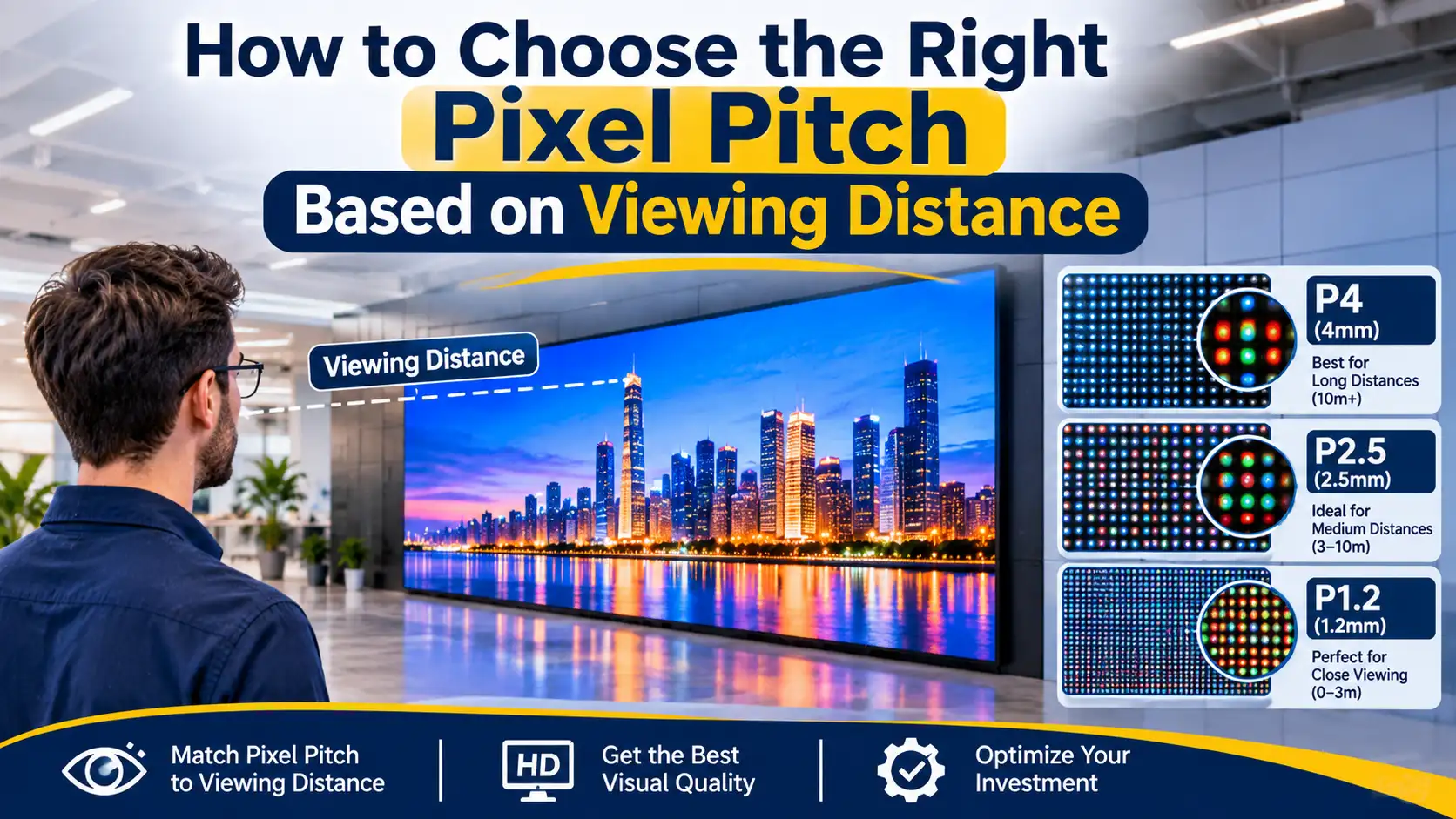
How to Choose the Right Pixel Pitch Based on Viewing Distance
November 14, 2026
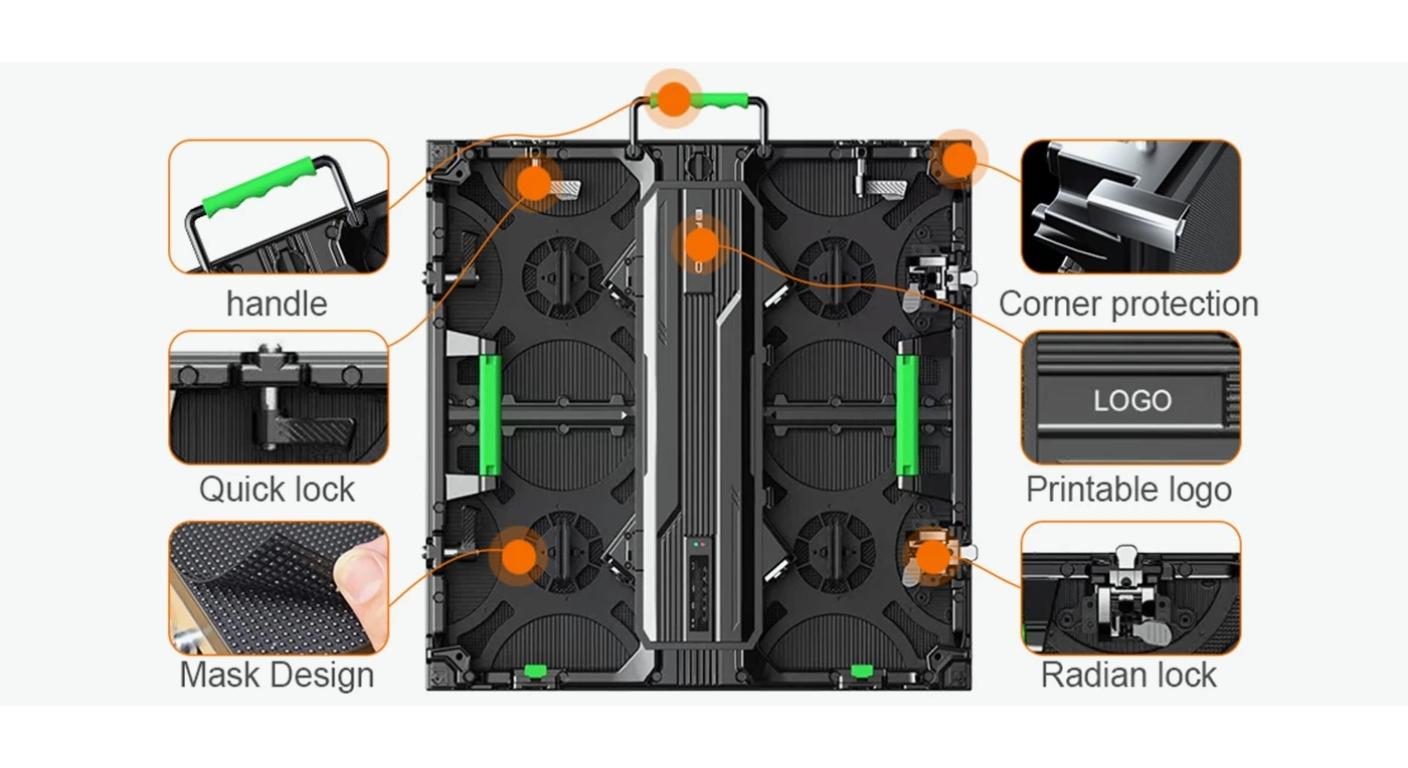
Corner Protection Rental LED Panel: Damage Prevention and Maintenance Guide
October 30, 2026
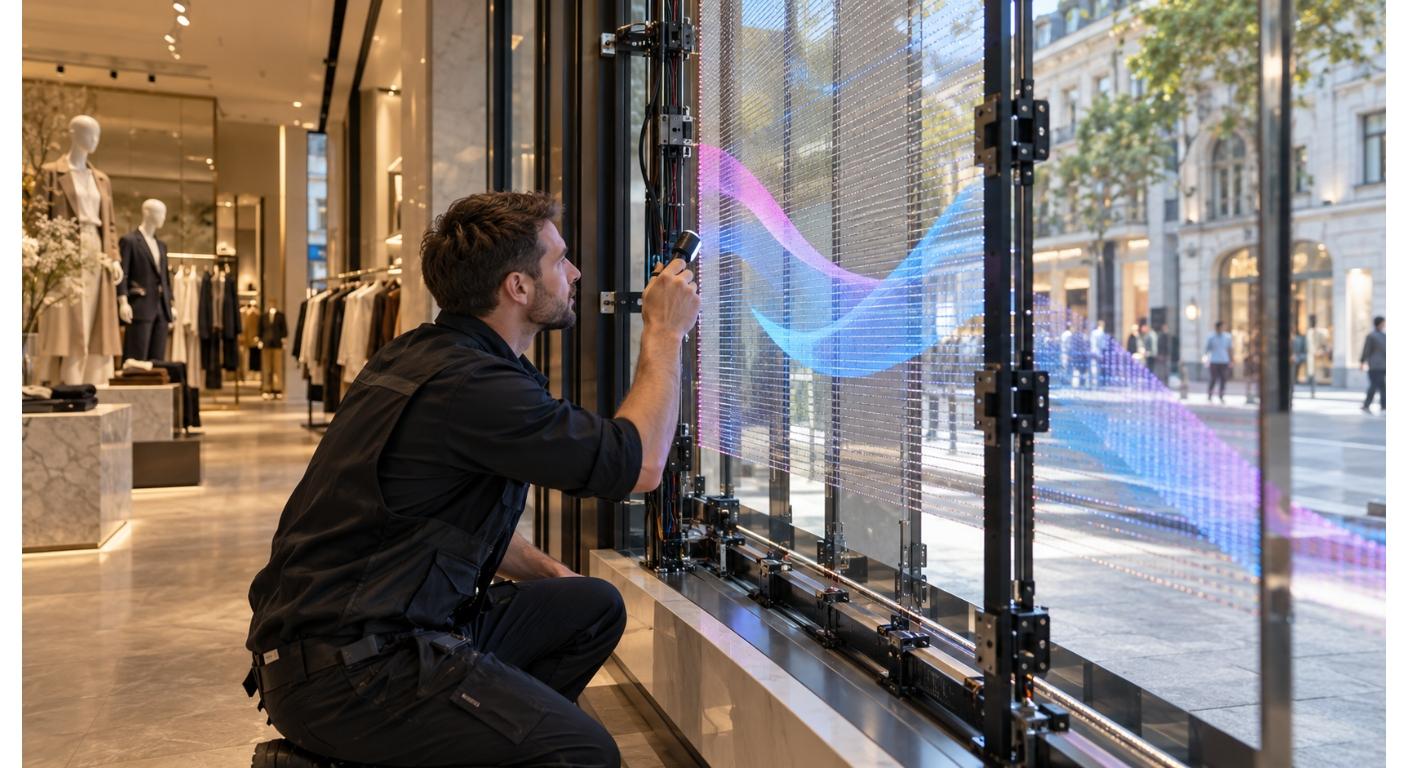
How to Choose a Shop Window Transparent LED Display for Retail Stores
October 29, 2026
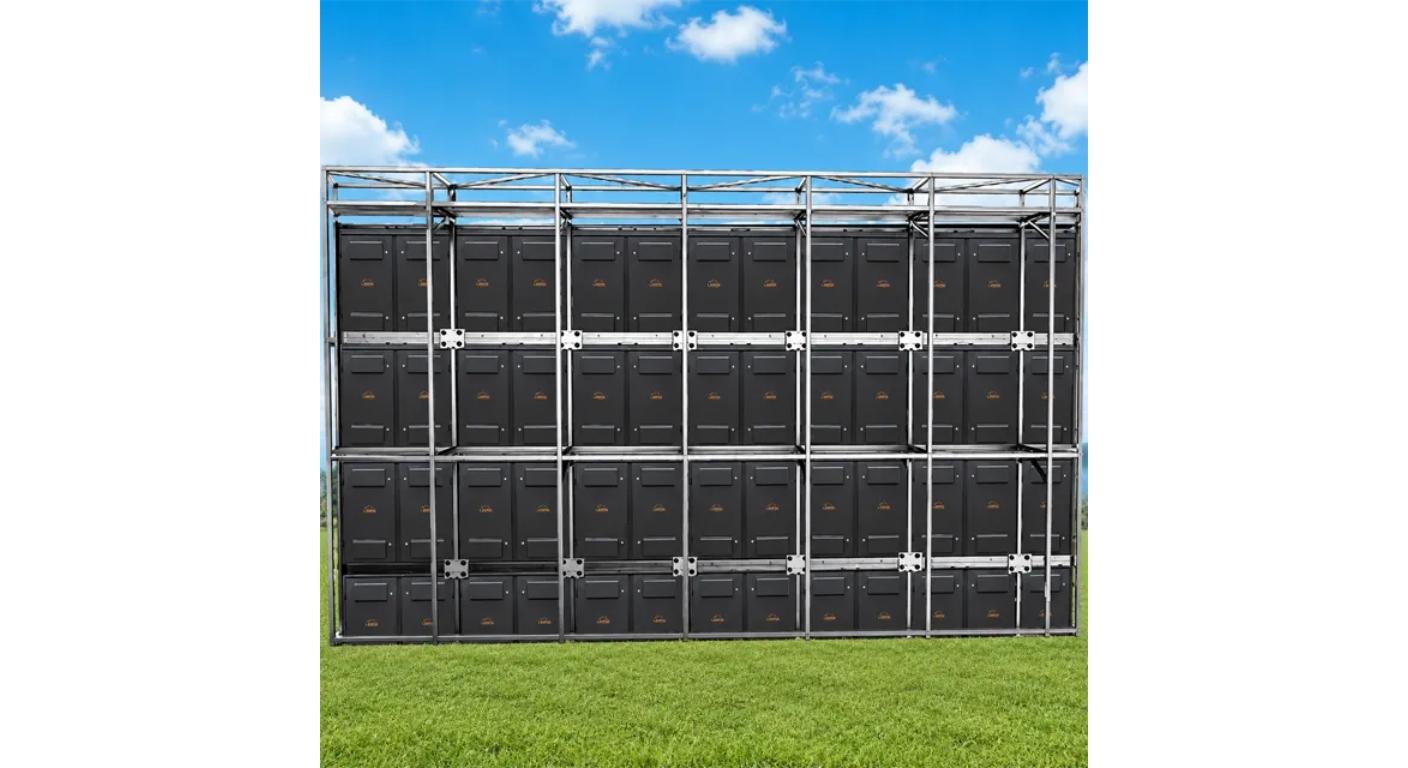
Iron vs. Aluminum Outdoor LED Display Cabinets: How to Choose
October 28, 2026
Direct-view LED is typically more suitable for commercial signage applications with large screens, flexible sizes and high lighting levels. OLED is suitable for installations in limited visibility, indoor environments, where deep blacks, fine detail, and slimness are the most important features.
This is a choice that is dependent upon the space, content, operating schedule and maintenance plan. The requirements for an advertising wall at a shopping mall are different to that of a boutique product display even if both are displaying the same campaign.
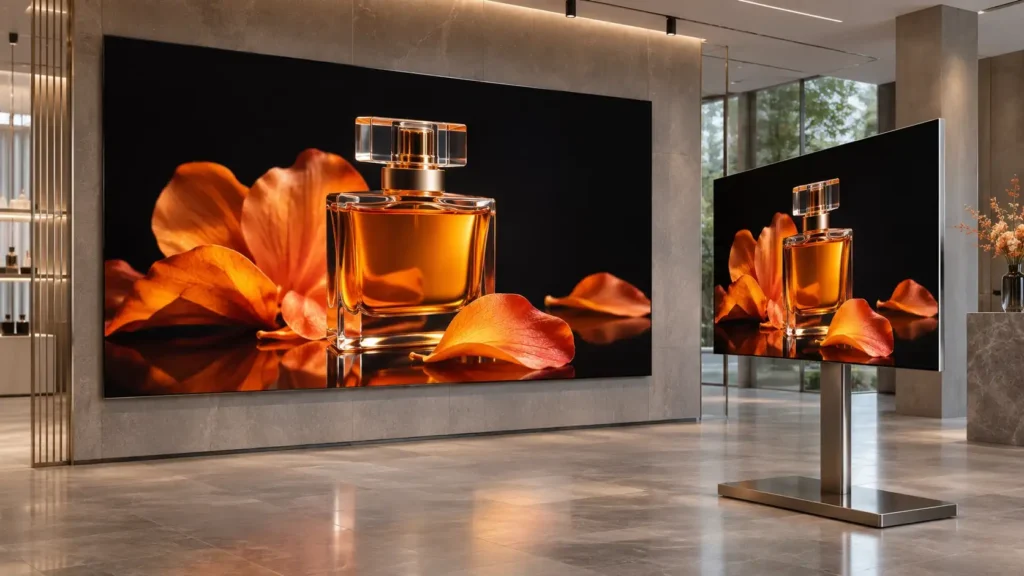
What Is the Difference Between LED and OLED?
LED display in this comparison refers to direct-view LED, which is a kind of inorganic LED that generates picture. It is not LCD screen that has led backlighting.
OLED is the name given to the organic light emitting diode. It self-illuminates its own pixels, and when rendering black, each pixel can be turned off.
Both technologies are self-emissive but the different construction presents different opportunities to commercial installations.
| Factor | Direct-view LED display | OLED display |
|---|---|---|
| Construction | Modules assembled into a larger screen | Panels with organic light-emitting pixels |
| Display dimensions | Configured around module and cabinet sizes | Determined by available panel formats |
| Close-viewing detail | Depends on pixel pitch | Often high pixel density |
| Black appearance | Influenced by packaging and ambient light | Individually switched-off pixels produce deep blacks |
| Large installations | Modular construction supports large canvases | Multiple panels introduce panel boundaries |
| Maintenance | Selected components can be replaced | Panel replacement may be necessary |
Brightness: Consider the Actual Location
A screen can look excellent in a dark showroom and struggle beside a sunlit entrance.
Direct-view LED offers configurations for bright interiors and outdoor advertising. However, an indoor LED screen should never be assumed suitable for outdoor exposure.
OLED can deliver striking images in controlled indoor lighting. Reflections and strong daylight can reduce the visible contrast advantage, so evaluate the complete installation rather than a dark-room demonstration.
For either technology, compare sustained brightness using representative content. A small bright highlight and a mostly white advertisement may produce different results. For example, a commercial transparent OLED specification lists different brightness values at different average picture levels.
For a large lobby or retail feature wall, MIC’s MC-PRO indoor LED video wall provides a modular option to assess against the site’s lighting and dimensions.
Image Quality: What Will Customers Actually See?
OLED's darkest blacks can add tons of depth to product photography and cinematic advertising – especially for darker interior photos.
Unlike conventional displays which have a framed panel grid, Direct-view LED provides a seamless surface over an extended area. Even alignment or calibration of the installation still matters: module boundaries can be seen if there is any misalignment or miscalibration.
The distance at which the view is taken also affects the comparison.
A customer standing near a cosmetic display could observe that the structure of the pixels fade out from the display from the view of one shop to another through a shopping mall atrium. Fine-pitch LED cuts down on that structure and also presents a new budget.
| Commercial application | Main display priority | Starting point |
|---|---|---|
| Large shopping mall wall | Scale and visibility | Direct-view LED |
| Boutique product presentation | Close detail and dark-scene contrast | OLED |
| Corporate reception | Architectural fit and image continuity | Compare both |
| Outdoor advertising | Weather protection and daylight readability | Outdoor-rated LED |
| Museum installation | Content, reflections, and viewing distance | Test both |
These are starting points, not automatic specifications. Bring actual advertisements to the demonstration. Fine product labels reveal more than a colorful landscape reel.
Static Content and Long Operating Hours
ComThe logos, prices, directions and menus can be repeated on commercial signage. That makes content behaviour a buying problem.
Under special circumstances OLED may suffer from temporary image retention or permanent uneven ageing, especially if fixed elements are in use for long periods of time. The content and operating instructions of the model must be adhered to by the buyer, and screen protection functions help to manage the risk.
The D-V-Lamp is not immune from aging either. Over time, long-term uniformity can be impacted by uneven usage, temperature and operating conditions. It shouldn't be said to be immune to degradation of its image.
Before ordering, confirm:
Approved daily operating hours.
Limits to static content.
Cycles of required protection or compensation.
Warranty for the purpose for which the product is intended.
Consumer TV spec is not a commercial signage operating spec.
Screen Size, Resolution, and Installation
LED dimensions follow the selected cabinet and module layout. This makes it practical for wide reception walls and other spaces that do not fit standard panel proportions.
However, a large LED screen does not automatically provide high resolution.
For example, a nominal 4,800 mm-wide display at P1.25 contains approximately 3,840 horizontal pixels. The final resolution depends on the actual cabinet arrangement.
MIC’s fine-pitch COB LED display is another option to evaluate when nearby viewing and detailed content are priorities.
OLED installation depends on the panel format, mounting requirements, orientation approval, and handling instructions. A thin panel still needs appropriate support and service access.
For both technologies, plan ventilation, cable routing, electrical supply, and replacement access before finishing the surrounding wall.
Compare Ownership Costs
There is no dependable rule that OLED or LED always costs less.
Compare complete systems delivering the required image size, detail, and operating performance.
| Cost item | What the quotation should explain |
|---|---|
| Display hardware | Dimensions, native resolution, and operating rating |
| Processing | Players, controllers, inputs, and software fees |
| Installation | Mounting, power, cabling, and commissioning |
| Electricity | Typical consumption under stated conditions |
| Maintenance | Labor, spare parts, and replacement procedures |
| Downtime | Repair response and component availability |
For permanent commercial projects, MIC’s MC-S indoor fixed LED display provides another configuration to compare against the installation requirements.
Neither technology universally consumes less electricity. Screen area, brightness, content, and operating hours all affect the result.
Which Display Fits Your Signage Project?
Choose direct-view LED when a large continuous image, adaptable dimensions, or bright-environment visibility drives the project.
Consider OLED when close-range detail, deep blacks, and a slim indoor presentation carry greater value.
Before requesting a recommendation, provide the screen dimensions, nearest viewing distance, lighting photographs, content samples, and daily operating hours. Those details turn a general comparison into a useful specification.
Frequently Asked Questions
Is OLED better than LED for retail signage?
OLED can suit close-viewing displays in controlled lighting. LED often suits larger advertising surfaces and brighter spaces.
Can OLED signage operate all day?
Check the specific model’s approved operating schedule, content restrictions, and warranty. Operating ratings vary.
Is COB LED the same as OLED?
No. COB describes an LED packaging method. OLED uses organic light-emitting materials.
Which technology displays small text more clearly?
Compare native pixel density, content scaling, and viewing distance. Neither technology guarantees readable text without an appropriate configuration.
Can OLED replace an outdoor LED billboard?
Standard indoor OLED signage should not be used for that purpose. Outdoor installations require equipment rated for the actual exposure.
Does LED require less maintenance?
Not automatically. Compare service access, replacement procedures, calibration needs, spare availability, and local labor.
What should buyers test before purchasing?
Test real content under normal lighting, from the closest and typical viewing positions. Include small text, dark images, and bright full-screen advertisements.
Share on Social:


Contact Us
In This Article
Related Posts
How to Choose the Right Pixel Pitch Based on Viewing Distance
November 14, 2026
Corner Protection Rental LED Panel: Damage Prevention and Maintenance Guide
October 30, 2026
How to Choose a Shop Window Transparent LED Display for Retail Stores
October 29, 2026
Iron vs. Aluminum Outdoor LED Display Cabinets: How to Choose
October 28, 2026


