




Railway Station LED Advertising Screens: Placement, Visibility and Maintenance
By hqt
Oct 27, 2026Related Posts

How to Choose the Right Pixel Pitch Based on Viewing Distance
November 14, 2026
Corner Protection Rental LED Panel: Damage Prevention and Maintenance Guide
October 30, 2026
How to Choose a Shop Window Transparent LED Display for Retail Stores
October 29, 2026
Iron vs. Aluminum Outdoor LED Display Cabinets: How to Choose
October 28, 2026
Railway stations are places where people who are waiting, walking, changing trains or looking for information about trains and journeys are concentrated. The various activities provide great advertising opportunities, but also make screen positioning more complex than in traditional stores.
The advertising screen for railway station may be used to share commercial campaigns, local advertising and planned digital content. But the effectiveness of advertising will be dependent upon the location of the screen, the amount of time a passenger is able to look at it and whether it displays information that is necessary for the station.
The key for railway operators and advertising contractors is to create a display network that is visible, manageable and that goes with the flow of passenger movements.
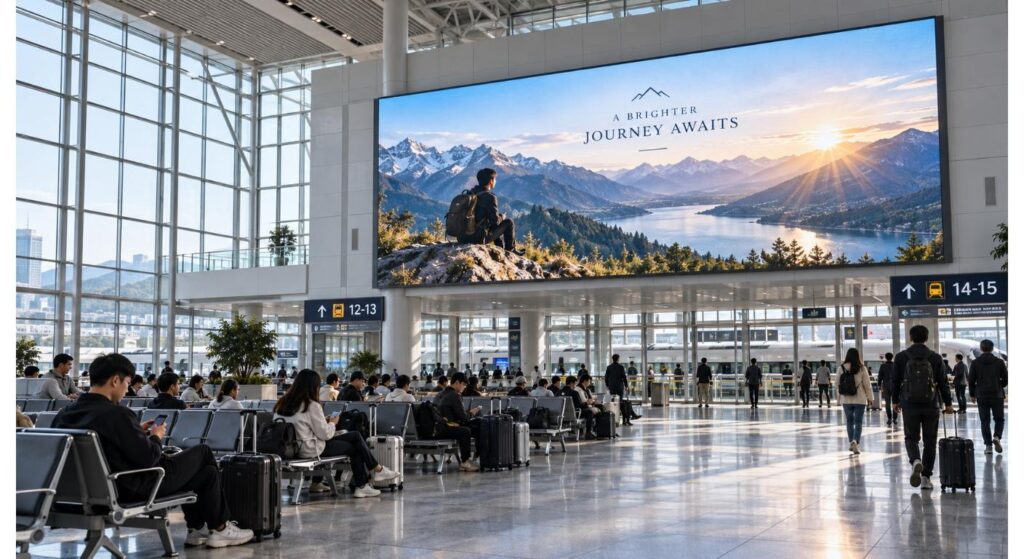
The working principle of Railway Station LED Advertising Screens.
The components of a railway station LED advertising screen are modular LED displays, control systems, power supply units and content management software for displaying digital ads.
There are a number of LED modules that create a continuous display surface. A connected control system is used to send images, videos, and pre-programmed ads to a single or multiple screens.
LED systems, unlike printed advertising boards, have the possibility to change ads without having to change the poster physically. When the software and network allow the operator to centralize control of the content, it can be coordinated between the various advertising positions.
MIC provides the advertising LED display solution to commercial sites and transit centres; the screen sizes can be configured and the control systems.
The key differentiator is that advertising displays are for the purpose of advertising; whereas official railway information systems must maintain an operational priority.
Always follow the Passenger Movement first, then choose their screen locations.
Not all high traffic areas are created equal when it comes to advertising value.
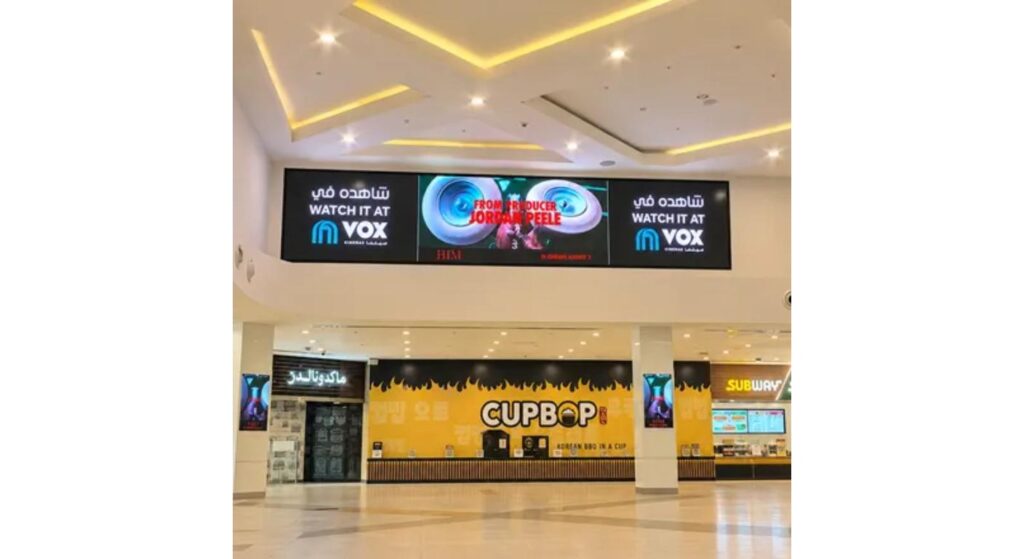
Passengers can sit in waiting hall for a few minutes. Larger visual ads and longer content sequences can perform well, as there is more time available.
People tend to walk in corridors and in transfer areas. Advertising messages should be short, visual and at a natural eyeline.
Passengers may be busy with 'tickets' and 'entry' and may have attention problems near ticketing and entry areas. Displays should not be in front of signs, and should not create additional clutter or distract from the required information.
Project planners should consider passenger flow, average passenger dwell time, viewing distance, and available unobstructed installation surface before deciding on the dimensions of the screens.
| Station Zone | Passenger Behavior | Recommended Content Format | Placement Concern |
| Waiting Hall | Extended waiting | Brand videos and sequential campaigns | Seated viewing angles |
| Main Concourse | Continuous movement | Short visual messages | Passenger circulation |
| Transfer Corridor | Brief passing exposure | Large graphics and concise text | Limited viewing time |
| Ticketing Area | Task-focused movement | Simple promotional visuals | Wayfinding interference |
| Station Entrance | Arriving and departing passengers | High-visibility campaigns | Ambient lighting and weather |
Move screens not to interfere with station information.
Railway stations rely on a number of factors to communicate departure times, platform numbers, boarding instructions and information about safety.
LED advertising needs to be clearly visible from the official passenger information displays. Caution: ads that look like operational announcements, use similar colors, or use similar symbols can be confusing.
Exits, accessible routes, emergency signage and passenger circulation space should also be maintained with the screen placement.
If you are installing overhead, you need to pay special attention to height, structure and access for maintenance.
Advertising that works on the train draws in their attention, but not so much that it interferes with the information that they need to travel safely.
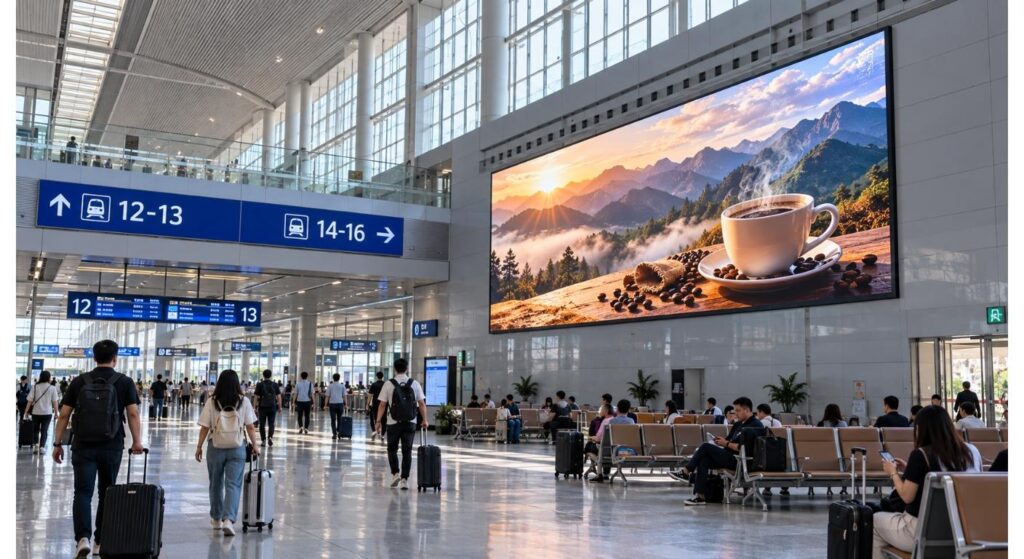
Click on Select Display Specifications for Indoor and Outdoor Zones.
Railway advertising networks can comprise from within concourses and enclosed waiting halls to partially sheltered and uncovered station entrances.
For indoor applications, maximum brightness, wide viewing angles and appropriate pixel pitch are usually necessary for the pedestrian at relatively short viewing distances.
MIC's MC-S Indoor Fixed LED Display provides modular solutions with front-service for the interior of commercial buildings and transportation environments.
The other challenges that outdoor installations encounter are direct sunlight, rain, dust and temperature changes. These conditions call for enclosures that are rated for the proper application and environmental protection.
The MC-S Outdoor Advertising LED Display is a reference to the configurations of outdoor advertising screens.
Specifications from each Station zone should be compared by buyers and not used as a single screen model throughout the project.
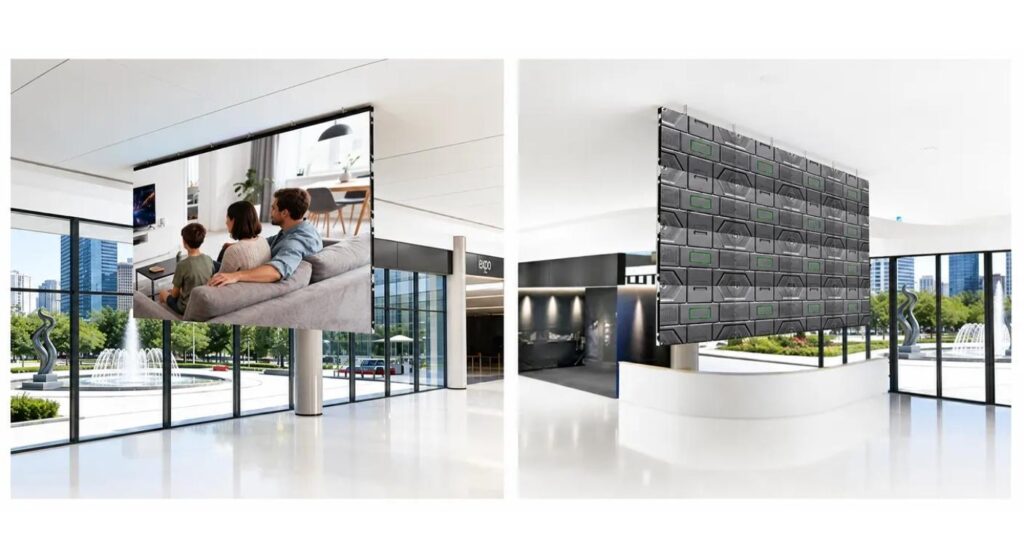
Match Advertising Content to Passenger Dwell Time
Ads should be based on passenger interactions at each location.
Waiting-hall screens can be used for product demo, destination promotion or sequential advertising messages. Most of the time, it is best to use images that can be recognized at a glance and short text in corridor screens.
Based on time of day, travel demand and commercial agreements, operators can put content together in scheduled advertising slots.
For instance, if it's a breakfast promotion, it could be appropriate to run it in the morning when people are leaving, and if it's a retail or hospitality promotion, it could be appropriate to run it in the afternoon or evening when everyone is coming back from work.
Please make sure content is accessible without audio as stations already have announcements etc.
There should also be an approved review process for campaign changes in order to avoid the display of misleading or inappropriate campaign content in public spaces.
Sustain the reliability of Advertising Screens during Station Operations
Railway stations are also usually open for a long period of time, from early morning to the end of evening and there is not much opportunity for disruptive maintenance.
An advertising screen failure could cause disruption to an ad campaign and increased workload for station operators. Hence, operators should consider the access to services, the available spare parts, the equipment monitoring, and fault recovery procedures prior to installation.
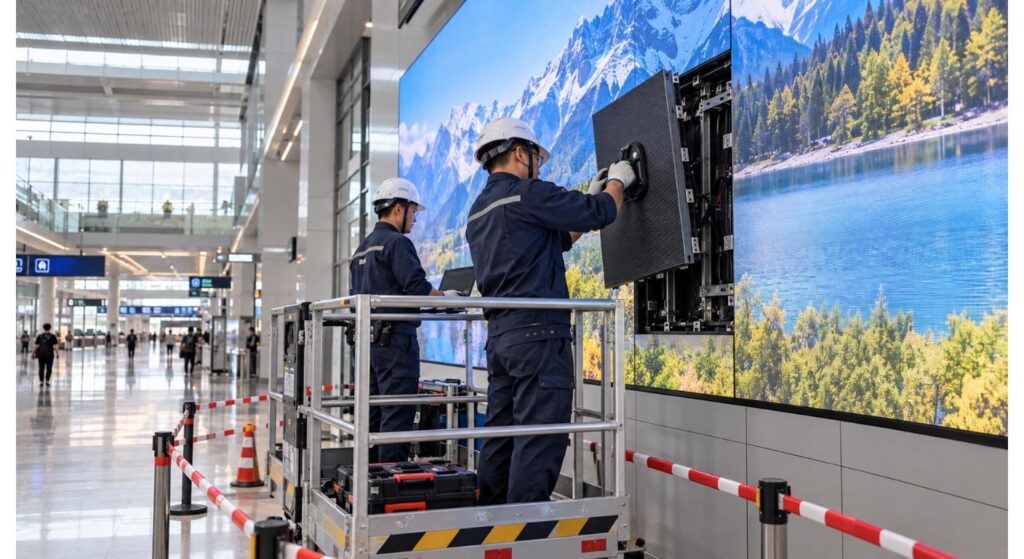
For wall mounted displays where there is limited back access, front-service modules may be helpful. But, technicians must still have a safe work environment, especially in high traffic passenger areas.
Depending on the control system, remote monitoring can be used to check for offline displays and/or abnormal operating conditions.
The maintenance planning should be in coordination with the station management so that maintenance does not affect the movement of passengers and railway operations.
| Inspection Item | Acceptance Check | Required Evidence |
| Display Quality | Brightness and image uniformity | On-site visual test |
| Content Control | Scheduling and remote updates | Software demonstration |
| Electrical Safety | Wiring, grounding and protection | Inspection records |
| Installation Security | Mounting stability and clearances | Approved installation report |
| Maintenance Access | Safe component replacement | Service demonstration |
| System Recovery | Restart and fault notification | Functional test record |
Analyse Advertising Value & Operating Costs
Size isn't the only criterion for a screen's value for station advertising operators.
Potential revenue is impacted by passenger exposure, screen location, campaign availability and advertising demand. A larger display screen outside the main passenger route might provide more viewing time than a smaller display screen in a centrally-located waiting-hall screen.
Operating costs consist of electricity, content software, connectivity, cleaning, repairs and even component replacement.
Project managers need to consider the expected availability and maintenance costs in addition to purchase and installation costs.
Often a smaller network of strategically placed and reliable screens can achieve better commercial results than a larger network with visibility issues or frequent downtime.
Put together a Railway LED Advertising Project Inquiry
A good purchasing enquiry should not just contain information about the size of the screen, but should contain information about the environment of the station.
Include photos of installation, space of wall or ceiling available, distance to be viewed, and how many hours the displays will be in use and how many displays are needed.
Also determine if the screens are to be installed inside, outside or in areas where they will be partially protected.
Ask for "cabinet drawings, power use data, maintenance access information, control system compatibility and proper documentation for the station's approval process".
MIC provides customized LED display project and engineering consultation service. Project buyers can post their technical requirements on the MIC Contact Page for further evaluation.
Conclusion
The passenger flow, visibility, information clarity and reliability of operation are all relevant factors to consider when planning a railway station LED advertising screen.
Each zone of the station needs to be configured differently, as well as targeted with different advertising. If operators can choose equipment, based on actual passenger behaviour, this will help them to maximise the exposure of their advertising and ensure that their stations are efficient.
In order to achieve a practical long term installation, early coordination between the teams of advertising, station management and display suppliers is important.
FAQs
Q1. In which areas of railway stations do you usually see LED advertising screens?
These include waiting halls, concourses, commercial corridors and station entrances. Final placement will be subject to approval by station, sightlines and passenger flow.
Q2. What is the right pixel pitch for ads at railway stations?
The distance of view and size of screen are dependent on pixel pitch. Small waiting rooms in buildings typically have a higher pitch than a large outdoor waiting space at an entry.
Q3. Is it possible to control advertising screens remotely on train?
Yes, it is possible to have compatible LED control systems that can be remotely scheduled, updated with content, and monitored. The functions available are based on the hardware and software configuration.
Q4. Should there be advertising screens to give train information?
Official railway information systems should NOT be replaced with commercial screens. If there is some kind of connection to passenger information, it must be permitted and created in a way that maintains the operation communication.
Q5. What can railway stations do to minimise disruption of LED screen maintenance?
Select cabinets that are easy to reach, store maintenance parts and schedule maintenance during off hours. The remote fault monitor can also be used to decrease troubleshooting time.


Contact Us
In This Article
Related Posts
How to Choose the Right Pixel Pitch Based on Viewing Distance
November 14, 2026
Corner Protection Rental LED Panel: Damage Prevention and Maintenance Guide
October 30, 2026
How to Choose a Shop Window Transparent LED Display for Retail Stores
October 29, 2026
Iron vs. Aluminum Outdoor LED Display Cabinets: How to Choose
October 28, 2026


