




Best LED Display Manufacturers in China: How to Shortlist
By miashuvo2077
Sep 15, 2026Related Posts
LED Window Display- The Complete Guide for Retail, Advertising, and Commercial Spaces
October 26, 2026
Mini LED Display- What It Is, How It Works, and Where It Fits
October 26, 2026
Naked Eye 3D LED Display - How It Works, Key Specs, Cost and How to Plan One (2026 Guide)
October 16, 2026
Transparent LED Displays for Storefronts
October 14, 2026
Shortlisting LED display manufacturers in China is a verification exercise, not a popularity contest. Use six checks—factory evidence, QC records, pitch and product fit, exact-model certifications, warranty support and export references—to compare Chinese LED display manufacturers on project-specific proof, then request quotes. This guide shows how to do that transparently.
Key Takeaways
- "Best LED display manufacturers in China" is a shortlisting prompt, not a verified global ranking.
- Supplier-list pages collect names, but the ones reviewed here are self-published and do not provide independent ranking evidence.
- Score candidates on factory evidence, QC records, pitch and product fit, exact-model certifications, warranty support and export references.
- Leyard, Unilumin, Absen and LianTronics recur in the UNIT LED and Linsn LED lists reviewed for this page; recurrence is a research lead, not an endorsement.
- MIC Display states a 10,000 m² production facility on its homepage, and its company information records an establishment year of 2011, a 5–8 year warranty and exports to more than 100 countries.
What "Best LED Display Manufacturers in China" Should Mean for Buyers
The best shortlist is not a universal ranking; it is the set of suppliers that can evidence the exact product, quality control process, certification scope, warranty terms and project support your installation requires. Two suppliers can both be genuine factories and still be a poor match if one does not build your product type or serve your destination market.
This matters in practice because the phrase "best LED display manufacturers in China" is used by buyers to mean at least three different things: the largest factories, the most frequently listed names and the suppliers best suited to one project. Only the third meaning produces a usable shortlist.
Manufacturer, Supplier or Integrator?
A manufacturer is the company that produces the display modules and cabinets; a supplier or reseller may only trade them; an integrator installs and services them. Before shortlisting any company, confirm who owns the factory, who assembles and tests the modules, and who is contractually responsible for warranty claims.
MIC Display's buyer checklist advises verifying certificates against the specific product or model and the destination market, and requesting quality control records, documentation, warranty and support details before committing to a supplier.
Why a Universal Ranking Is Weak Evidence
Treat inclusion in any supplier list as a research lead, not as proof of quality. According to UNIT LED, its supplier page lists 23 China LED screen suppliers with separate groupings for small-pitch, outdoor, rental and transparent screens. Linsn LED's guide states that its 10-company table lists Leyard, Unilumin, Absen, LianTronics, AOTO, INFiLED, Ledman, Linsn LED, Qiangli Jucai and QSTECH, and it includes the publisher's own company among them.
Neither page provides independent ranking evidence such as audited capacity, third-party inspection results or verified market share, so neither can establish which Chinese LED display manufacturer is objectively best.
How to Shortlist Chinese LED Display Manufacturers: 6 Verification Steps
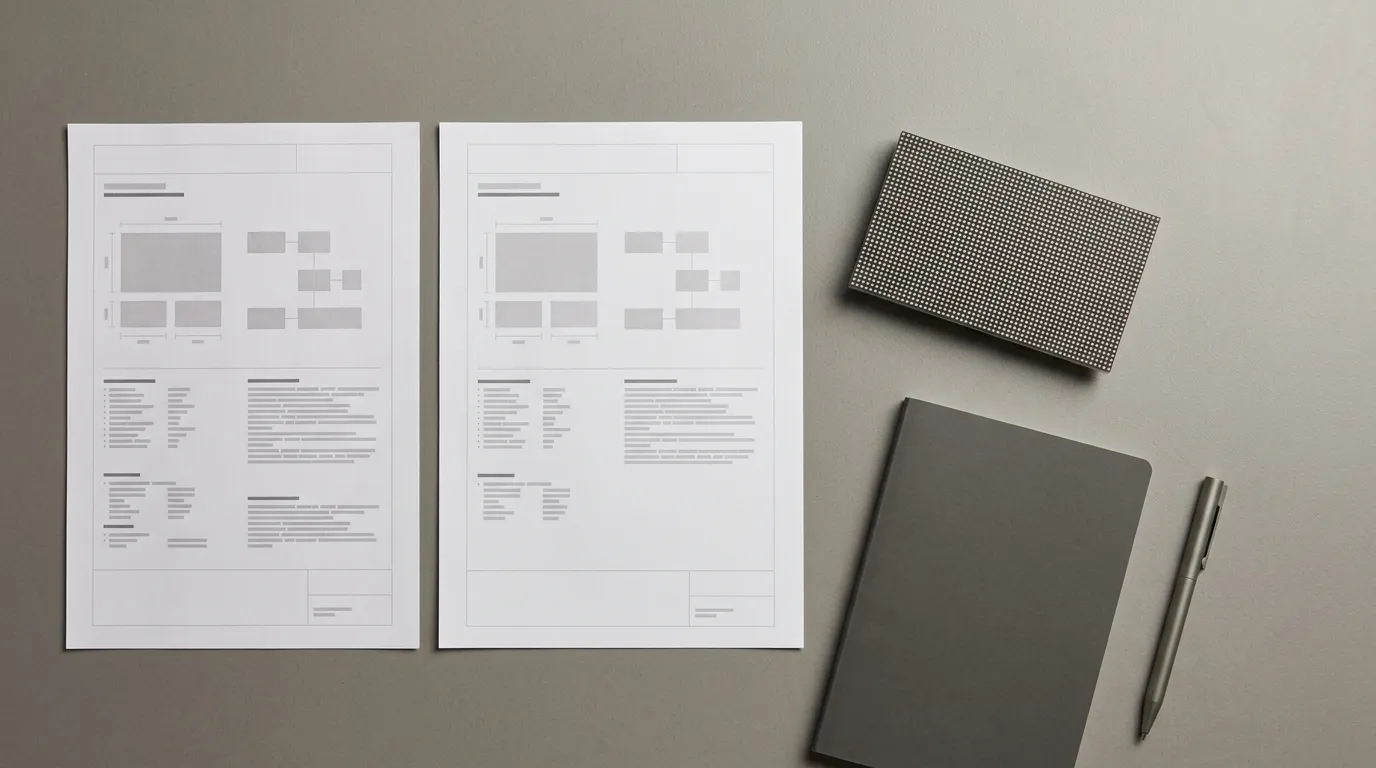
Use a six-stage filter—supplier role, factory evidence, QC records, product and pixel pitch fit, certification scope, and warranty plus export references—and score each candidate on documents rather than sales claims. The order is deliberate: each step removes suppliers before you spend time on detailed quotations.
- Confirm the supplier role. Ask who manufactures the quoted product and where it is produced.
- Verify factory evidence for your product type and delivery schedule.
- Request QC and pre-shipment testing records that apply to your order.
- Match product range and pixel pitch to the application and viewing distance.
- Check certification scope for the exact model and destination market.
- Compare warranty, support and export or project references before shortlisting.
Steps 2 to 6 are covered in detail in the sections below; the sections do not repeat each other's checks. The LED display manufacturer buyer's checklist adds component-level and documentation questions if you want a longer list.
What Factory Evidence Actually Proves
Factory area, photographs and team size are claims until they are tied to your product, production line, schedule and inspection process. A large facility does not prove that the specific display you are buying is assembled and aged on site, and a smaller facility does not automatically mean lower quality.
According to MIC Display's homepage, the company operates a 10,000 m² production facility and exports to more than 100 countries and regions. Uniview LED's buyer guide states that company was founded in 2011, is headquartered in Shenzhen and has an 8,000 m² production base with a team of more than 300 people. Both figures are company-reported, so a buyer should request evidence that connects the facility to the actual order.
[DIAGRAM: factory evidence ladder showing a marketing claim, a supporting document and independent third-party verification as separate levels]
Checklist for factory evidence:
- Dated or live factory video covering the lines used for your product type.
- A third-party audit report if one exists.
- Production-line confirmation for your specific product category, not the company's full catalogue.
- Records linking the facility to your order number or project.
- Current capacity and scheduling assumptions for your required delivery window.
- A named escalation contact for quality issues during production.
The LED display factory visit page outlines what buyers typically review during an in-person assessment.
QC and Testing: Documents to Request Before You Shortlist
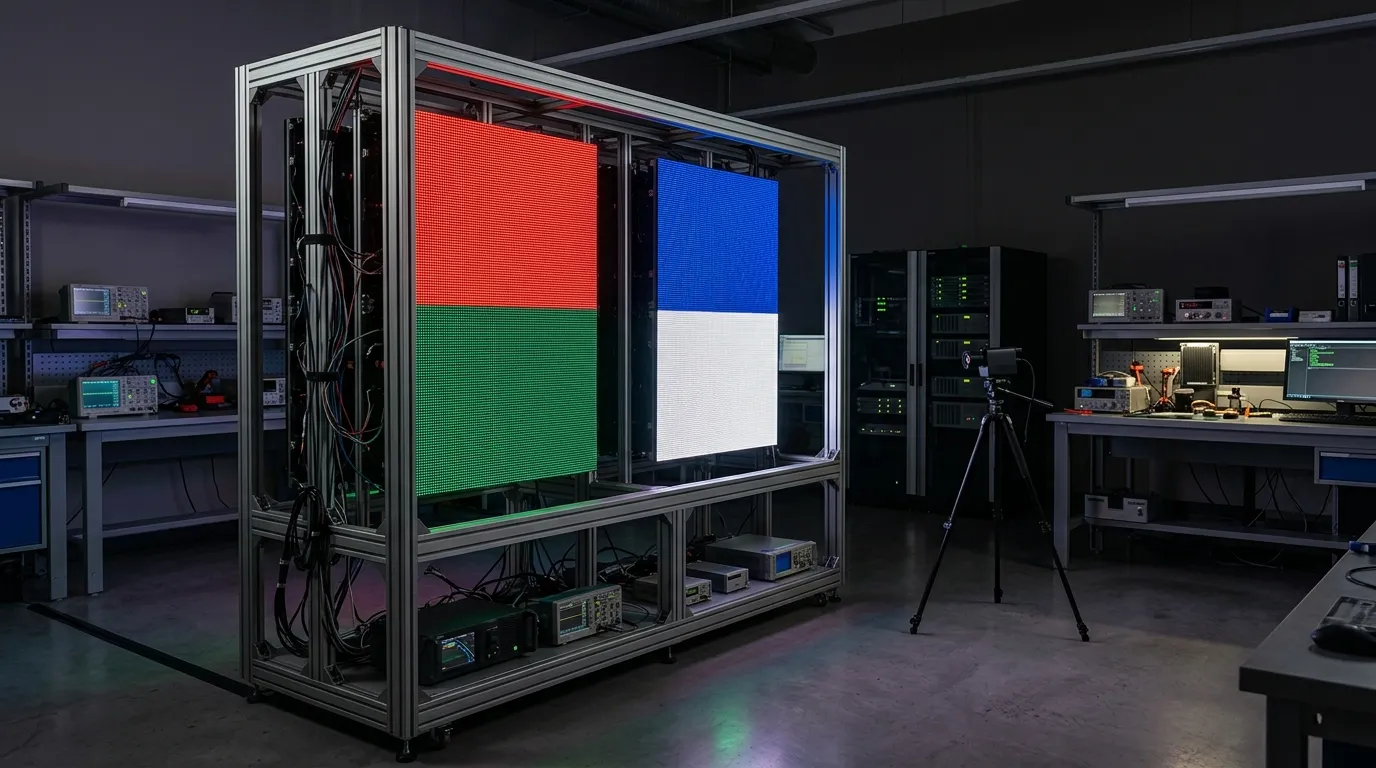
Ask for incoming component checks, aging or burn-in records, pixel and colour calibration, waterproof and IP-related checks where outdoor use applies, final inspection and packing records—then confirm that the records cover your order rather than a generic production run.
MIC Display's buyer checklist recommends requesting quality control records, documentation, warranty and support details as part of supplier evaluation. Uniview LED's buyer guide also covers manufacturing, certifications, delivery and after-sales as buyer-check topics.
Checklist for QC documents:
- Component traceability, including the source of LEDs and driver integrated circuits used in your build.
- Aging or burn-in duration and the pass/fail criteria applied.
- Calibration report covering brightness and colour uniformity.
- Waterproof and IP-related test documentation where the display will be exposed to weather.
- Final inspection report covering dead pixels and module-level faults.
- Packing and shock-protection records for export shipping.
If a supplier cannot produce these records for your product, treat that as a gap rather than an administrative delay. Records that exist only for a different model or a different market do not verify your order.
Match Product Range and Pixel Pitch to the Project
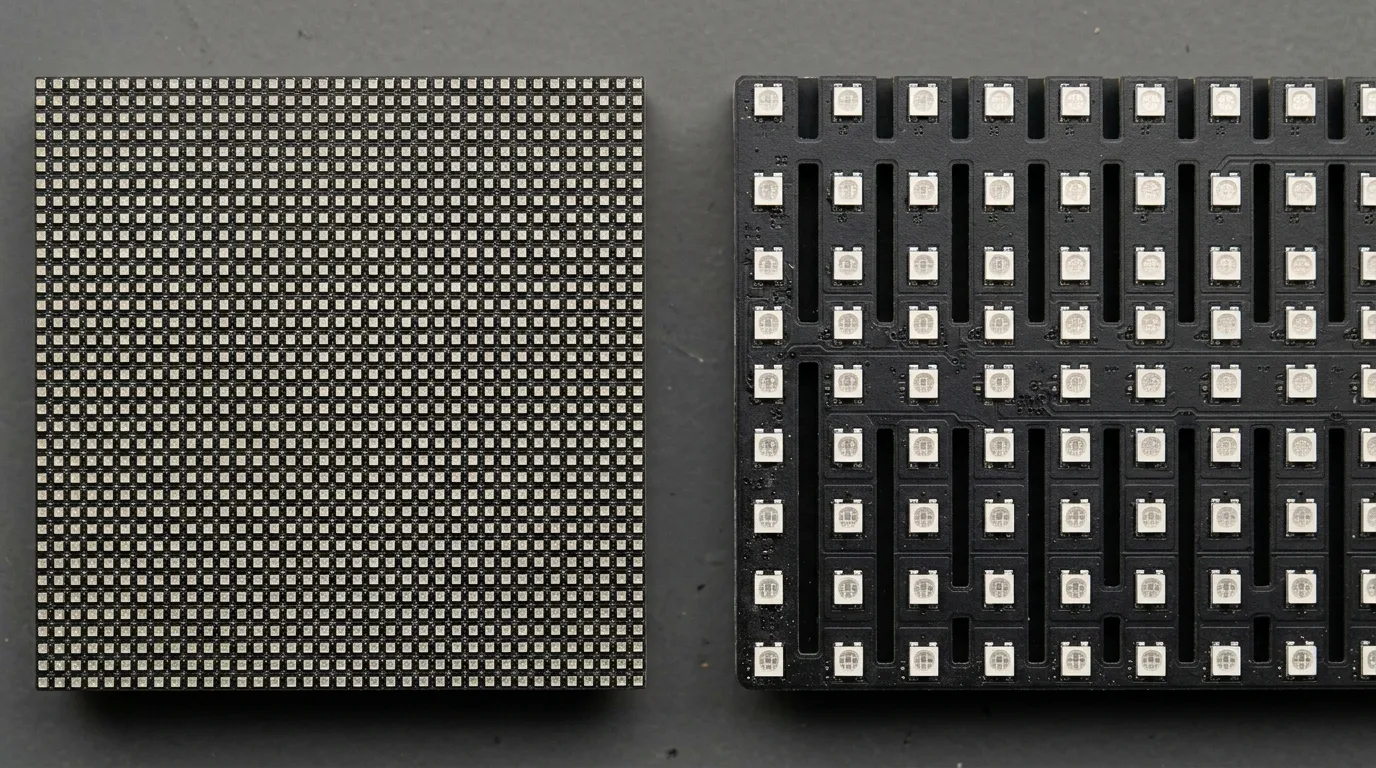
A manufacturer can be credible and still be wrong for your project if its pitch range or product category does not match your viewing distance, indoor or outdoor use, rental or fixed installation, or specialty format. Pixel pitch is the distance between the centres of adjacent pixels, measured in millimetres; smaller pitch values generally suit closer viewing distances.
MIC Display's stated range covers small-pitch P0.9375–P1.86, indoor P2–P10 and outdoor P2.5–P10, and its company information lists indoor, outdoor, rental, fine-pitch COB, transparent, LED floor tile and LED poster displays among the product categories it designs and produces. According to Uniview LED's buyer guide, rental, indoor fixed, outdoor fixed, fine-pitch and interactive floor displays are among the product and application types buyers commonly compare. For pitch and viewing-distance logic, see the LED pixel pitch guide.
| Application | Product category to request | MIC Display stated range or format | Evidence to request |
|---|---|---|---|
| Control room or close-viewing installation | Fine-pitch indoor display | Small-pitch P0.9375–P1.86 | Calibration and uniformity records for the exact pitch |
| Indoor commercial or fixed installation | Indoor fixed display | Indoor P2–P10 | Aging records and cabinet or module specification |
| Outdoor advertising or fixed installation | Outdoor fixed display | Outdoor P2.5–P10 | IP-related documentation and brightness test records |
| Stage, event or rental use | Rental display | Rental LED display listed among MIC Display product categories | Flight-case packing, cabinet handling and spare-parts details |
| Retail or architectural glazing | Transparent display | Transparent display listed among MIC Display product categories | Pitch: verify with the supplier; transparency and mounting documentation |
| Interactive or immersive floor area | LED floor tile | LED floor tile display listed among MIC Display product categories | Pitch: verify with the supplier; load and surface documentation |
| Entrance or narrow-space promotion | LED poster display | LED poster display listed among MIC Display product categories | Pitch: verify with the supplier; mounting and content-format details |
Only the three pitch ranges shown are stated by MIC Display; other categories are listed by product name without a published pitch range on this page, so confirm pitch and configuration directly with any supplier before shortlisting.
Certifications, Warranty and Export References: What to Verify
Certifications must match the exact product and destination market, warranty terms must state what is covered, and export references should be checkable beyond a country count. These three areas are where buyers most often accept a logo, a headline number or a verbal promise instead of a document.
Certifications
Request the certificate number, issuing laboratory, covered product or model, the standard applied and the validity date. MIC Display's buyer checklist advises verifying certificates against the specific product or model and destination market, because a certificate issued for one product family or one market does not automatically cover another configuration. Common market requirements include CE, FCC, ETL or UL and RoHS, but applicability depends on the product and the country of installation, so confirm the requirement for your own market before treating any certificate as decisive.
Warranty and Support
Compare what the warranty covers, not only its length: parts, labour, response time, remote diagnostic support, spare-parts supply and who pays return shipping. MIC Display's company information states that its displays carry a 5–8 year warranty with remote technical support and after-sales service; the exact terms for a specific display should be confirmed in writing with the supplier, and the warranty page sets out the terms MIC Display publishes.
Export Track Record
Ask for shipping records, named project references, destination-market experience and the local support arrangement available after delivery. MIC Display's homepage states that its products are exported to more than 100 countries and regions, and the company serves commercial, advertising, control room and stage or event projects for integrators, rental and event companies, advertisers and project owners. A country count describes reach, not performance, so request references in a comparable application where possible.
A Neutral Reference Table: Names You Will See Repeatedly
Several China manufacturer names recur across the supplier lists reviewed for this page. Use the table as a starting point for verification; it is not a ranking, and the profile fields are reported by the named source rather than independently confirmed.
| Company | Named in | Source-reported profile fields | What to verify next |
|---|---|---|---|
| Leyard | UNIT LED supplier list and Linsn LED guide | Linsn LED's comparison table reports founding year, headquarters and "known for" fields | Factory evidence, QC records, certification scope, warranty terms |
| Unilumin | UNIT LED supplier list and Linsn LED guide | Linsn LED's comparison table reports founding year, headquarters and "known for" fields | Factory evidence, QC records, certification scope, warranty terms |
| Absen | UNIT LED supplier list and Linsn LED guide | Linsn LED's comparison table reports founding year, headquarters and "known for" fields | Factory evidence, QC records, certification scope, warranty terms |
| LianTronics | UNIT LED supplier list and Linsn LED guide | Linsn LED's comparison table reports founding year, headquarters and "known for" fields | Factory evidence, QC records, certification scope, warranty terms |
According to UNIT LED, its comparison table names LianTronics, Leyard, Absen, Unilumin, LINSNLED, QSTECH, ROE Visual, Sansi, LEDMAN, Yaham, INFiLED and others, and its page states a May 12, 2026 date. Linsn LED's guide, dated September 17, 2026, states that its table lists Leyard, Unilumin, Absen, LianTronics, AOTO, INFiLED, Ledman, Linsn LED, Qiangli Jucai and QSTECH. Leyard, Unilumin, Absen and LianTronics appear in both lists, which is why they are shown above; appearing in two self-published lists is a reason to look closer, not a reason to rank them above anyone else.
How MIC Display Answers This Shortlisting Framework
MIC Display is a China-based LED display factory established in 2011, and its published information addresses the same shortlisting criteria buyers use on other suppliers. The table below states only what MIC Display's company information and homepage publish; certification status is left as a verification item because no exact-model certificate is published on this page.
| Shortlist criterion | MIC Display evidence | Source |
|---|---|---|
| Establishment and experience | Established in 2011 | MIC Display company information |
| Factory | 10,000 m² production facility | MIC Display homepage |
| Product range | Indoor, outdoor, rental, fine-pitch COB, transparent, LED floor tile and LED poster displays; small-pitch P0.9375–P1.86, indoor P2–P10, outdoor P2.5–P10 | MIC Display company information |
| Customization | Design team customizes screen structure, size and configuration to each project's installation environment | MIC Display company information |
| Certifications | Verify with the supplier | Not published on MIC Display pages reviewed for this page |
| Warranty | Displays carry a 5–8 year warranty | MIC Display company information |
| Export track record | Exports to more than 100 countries and regions | MIC Display homepage |
| Support | Remote technical support and after-sales service | MIC Display company information |
[DIAGRAM: two-column matching graphic placing each shortlist criterion next to the MIC Display evidence statement listed in the table]
The about us page carries the company background behind these statements. Read the table the same way you would read a competitor's claims: as company-reported information that should be confirmed with project-specific documents before a purchase decision.
Request for Quotation: What to Ask Before You Commit
Send every shortlisted supplier the same evidence request so the replies are comparable. Identical questions make it easier to spot which supplier answered with documents and which answered with assurances.
Checklist for a comparable quotation:
- Proposed model and pixel pitch, mapped to your viewing distance and application.
- Price breakdown showing the display, control system and structural components separately.
- Lead-time assumptions and the production start date those assumptions depend on.
- QC documents covering your order: aging, calibration and final inspection.
- Certificate copies tied to the exact model and destination market.
- Warranty coverage, response terms and spare-parts arrangements in writing.
- Export packing specification and shipping responsibility.
- Project references in a comparable application.
MIC Display's buyer checklist recommends requesting warranty, support and documentation details as part of this comparison. When your project details are ready, you can send the application, viewing distance, indoor or outdoor use and installation conditions through the contact us page so MIC Display can respond with project-specific product and documentation guidance.
FAQ
Are the "top LED display manufacturers in China" lists reliable?
Supplier-list pages help you collect names, but they are usually self-published and may include the publisher. The UNIT LED and Linsn LED lists reviewed here name companies without providing independent ranking evidence. Treat repeated names as research leads, then verify factory evidence, QC records, certification scope, warranty terms and project references for your own application.
How do I verify a Chinese LED display manufacturer's factory?
Ask for live or dated factory video, a third-party audit report if available, production lines for your product type, and records linking that facility to your order. MIC Display's homepage states a 10,000 m² production facility. Apply the same test to any supplier: confirm current capacity and scheduling for your exact project rather than relying on facility size alone.
What certifications should a China LED display manufacturer have?
There is no single universal set of certifications. MIC Display's buyer checklist advises verifying certificates against the specific product or model and the destination market. Request certificate numbers, issuing laboratories, covered models and validity dates. Confirm whether requirements such as CE, FCC, ETL or UL and RoHS apply to your configuration and country before treating any certificate as sufficient.
How long should an LED display warranty be?
Warranty length varies by supplier and product. MIC Display's company information states that its displays carry a 5–8 year warranty, but length alone does not answer the question. Compare what is covered: parts, labour, response time, remote support, spare-parts supply and who pays shipping. Obtain the exact terms for your model in writing.
Can a Chinese LED display supplier also be a manufacturer?
Not always. Some companies assemble, rebrand or resell displays rather than producing them. Ask who owns the factory, who controls module assembly and aging tests, and whether the quoted product is made in that facility. MIC Display describes itself as a factory established in 2011; verify any supplier's role the same way, through documents and inspection.
Share on Social:


Contact Us
In This Article
Related Posts
LED Window Display- The Complete Guide for Retail, Advertising, and Commercial Spaces
October 26, 2026
Mini LED Display- What It Is, How It Works, and Where It Fits
October 26, 2026
Naked Eye 3D LED Display - How It Works, Key Specs, Cost and How to Plan One (2026 Guide)
October 16, 2026
Transparent LED Displays for Storefronts
October 14, 2026


