




China LED Display Manufacturer with OEM Services
By miashuvo2077
Sep 18, 2026Related Posts
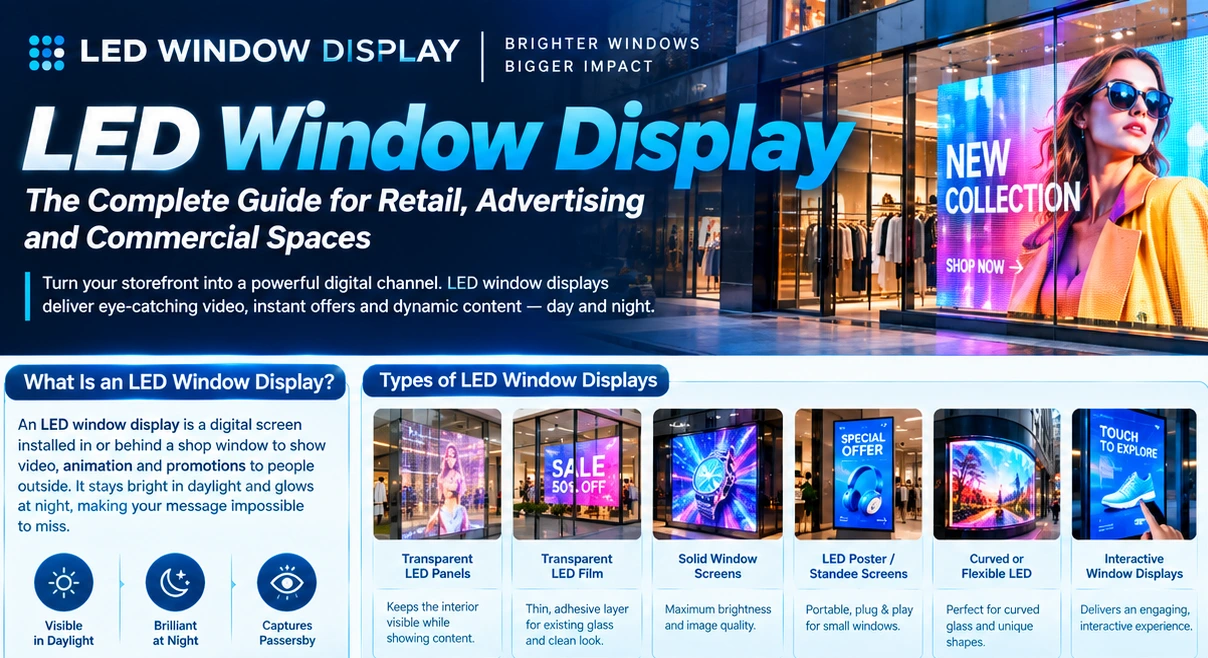
LED Window Display- The Complete Guide for Retail, Advertising, and Commercial Spaces
October 26, 2026
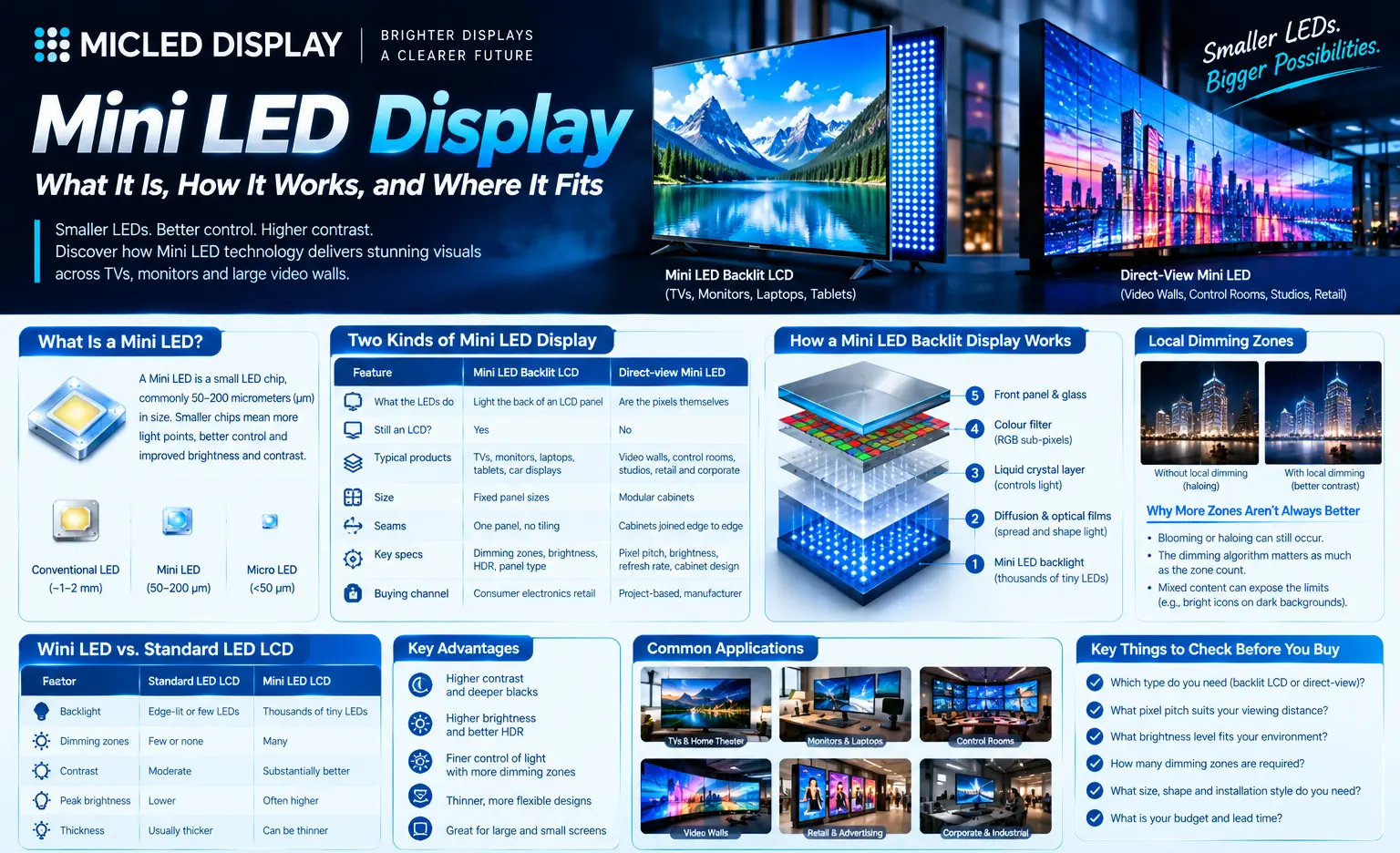
Mini LED Display- What It Is, How It Works, and Where It Fits
October 26, 2026
Naked Eye 3D LED Display - How It Works, Key Specs, Cost and How to Plan One (2026 Guide)
October 16, 2026
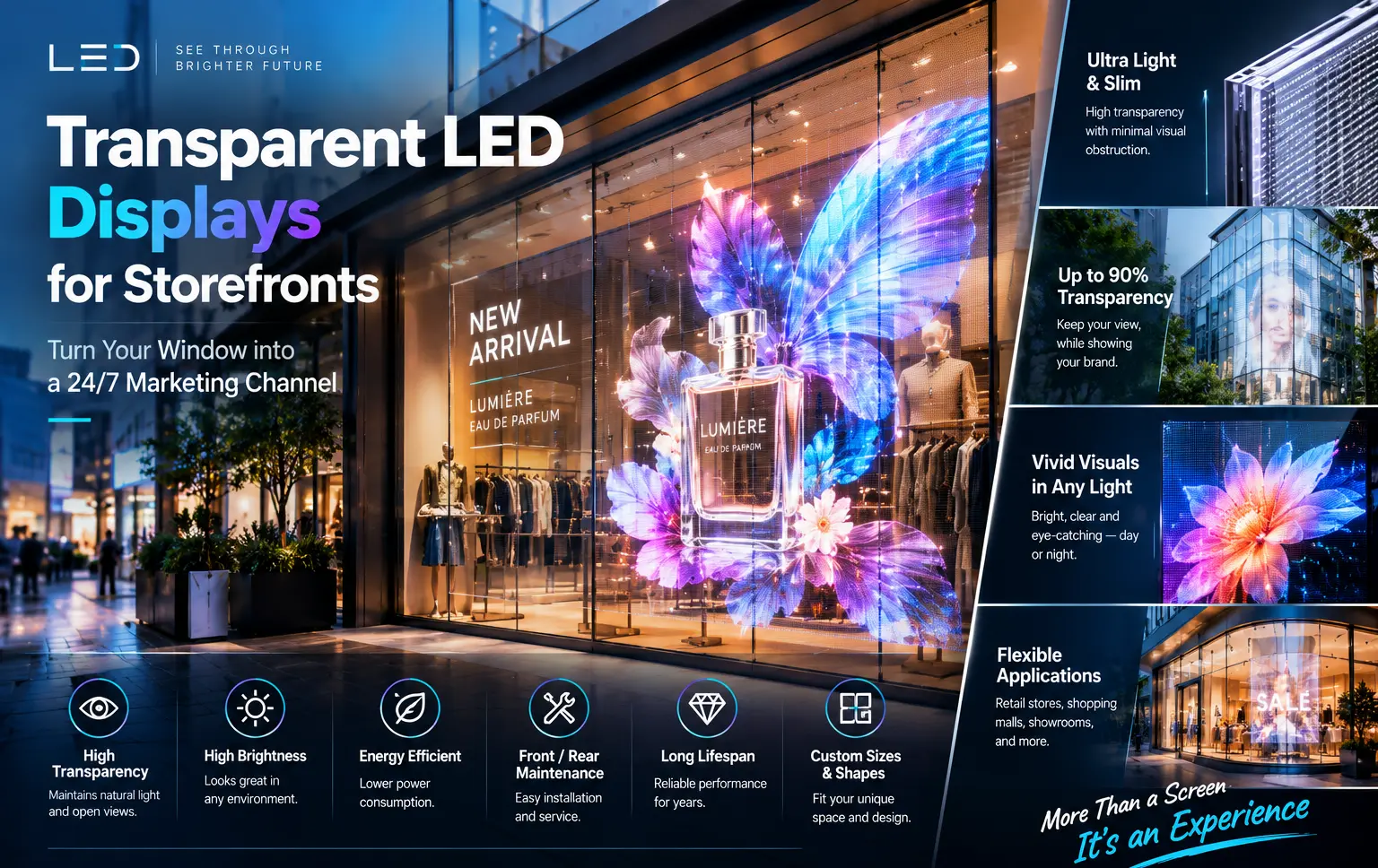
Transparent LED Displays for Storefronts
October 14, 2026
MIC Display is a China LED display manufacturer with OEM services for resellers and integrators, supporting indoor, outdoor, rental, fine-pitch COB, transparent, LED floor tile and LED poster displays. The OEM/ODM process covers project definition, specification approval, customization review, quality-control planning, and commercial terms such as samples, MOQ and lead time confirmed by quotation.
Key takeaways
- MIC Display is a China LED display factory established in 2011 that exports to more than 100 countries and covers a 5–8 year warranty with remote technical support.
- MIC Display's published range includes small-pitch P0.9375–P1.86, indoor P2–P10 and outdoor P2.5–P10 displays, plus rental, fine-pitch COB, transparent, LED floor tile and LED poster formats.
- An OEM order becomes comparable only after application, dimensions, installation environment, configuration, branding scope and approval steps are fixed in writing.
- Sample availability, MOQ, lead time and private-label branding scope are quote-specific and must be confirmed for the exact product and order.
What OEM Services Mean for LED Display Resellers and Integrators
LED display OEM services let a reseller or integrator buy a display built to an agreed specification and brand arrangement instead of choosing only from a finished catalog. OEM (original equipment manufacturing) is a supply arrangement in which the buyer defines or co-defines the product and the factory builds it to that specification. ODM (original design manufacturing) starts from a design the manufacturer already owns, which the buyer selects and adapts.
According to MIC Display's homepage, the company provides OEM/ODM manufacturing and engineering support alongside its display products. The definitions vary by contract, so the practical difference lies in who leads the design and what the buyer must approve before production begins.
| Model | Who leads design | Buyer role | What must be locked | Typical fit |
|---|---|---|---|---|
| OEM | Buyer or jointly defined | Approves specification and brand scope | Product type, dimensions, environment, configuration, branding | Resellers with a defined product or project plan |
| ODM | Manufacturer-originated design | Selects and adapts a platform | Performance, configuration, branding and order terms | Buyers entering a category faster |
Which LED Display Products and Applications Can MIC Display Supply for OEM Projects?
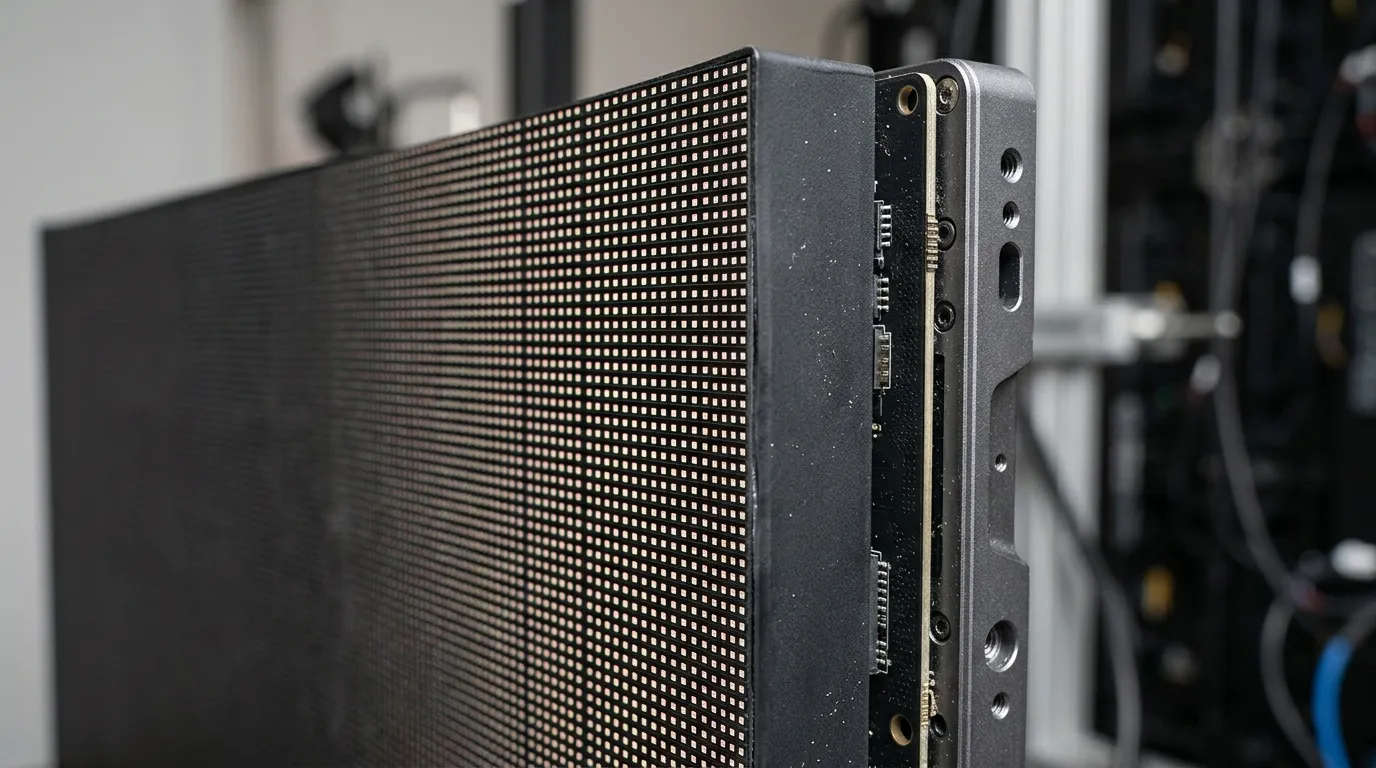
MIC Display designs, produces and sells indoor, outdoor, rental, fine-pitch COB, transparent, LED floor tile and LED poster displays. Its published range covers small-pitch P0.9375–P1.86, indoor P2–P10 and outdoor P2.5–P10, and its homepage lists rental, aluminum outdoor, outdoor, COB, indoor, poster, flexible, transparent and floor-tile categories.
That breadth matters for OEM work because the project should start from a defined product family rather than a generic screen request. Resellers comparing formats before committing can review MIC Display's products range to match a family to the installation.
| Product family | Evidenced scope | What the buyer confirms |
|---|---|---|
| Fine-pitch COB | Small-pitch P0.9375–P1.86 | Pitch, viewing distance, room conditions |
| Indoor | Indoor P2–P10 | Size, mounting, content and control |
| Outdoor | Outdoor P2.5–P10 | Weather exposure, structure, service access |
| Rental | Listed by MIC Display | Touring, assembly and transport needs |
| Transparent | Listed by MIC Display | Verify with the supplier |
| LED floor tile | Listed by MIC Display | Load, interaction and indoor or outdoor use |
| LED poster | Listed by MIC Display | Standalone or networked content requirements |
What Can Be Customized in an OEM LED Display Project?
MIC Display's design team customizes screen structure, size and configuration to each project's installation environment. In practice that covers how the screen is mounted, how it is serviced, and how the cabinet and pixel configuration suit the space — the variables that most often decide whether a specification can be built as drawn.
Branding sits at the edge of that scope. A MIC Display commercial-display page describes customization that may include cabinet design, screen size, branding, packaging and system configurations. The exact private-label scope should be confirmed in writing for the selected product before it is treated as part of the order.
| Customization area | Buyer should specify | Status |
|---|---|---|
| Screen structure | Mounting, service access, installation environment | Confirmed in MIC Display's design scope |
| Size and configuration | Dimensions, pitch, cabinet, control setup | Confirmed in MIC Display's design scope |
| Branding, labels, packaging | Logo, label content, artwork rights | Verify with the supplier |
| System configuration | Content source, signal path, redundancy | Confirm per project in the quotation |
Branding, Labels and Packaging: What to Confirm
Ask MIC Display in writing whether the selected display supports private-label branding, which artwork files are required, where labels may be applied, and whether packaging can be customized. Until the quotation states these items, treat them as open questions rather than included features. Buyers who plan repeat orders should also confirm that artwork approval applies to future batches.
What to Prepare Before Requesting an OEM Quote
A comparable OEM quotation starts with a written project brief. Without it, two suppliers can quote the same headline product and still deliver very different screens, which makes the prices impossible to compare.
Prepare these items before contacting a factory:
- Application and use case
- Indoor or outdoor environment
- Viewing distance and audience position
- Target screen size and resolution or pixel pitch
- Installation method and structural constraints
- Content source and control requirements
- Branding, label and packaging needs
- Target quantity and repeat-order plan
- Destination and delivery conditions
- Required schedule and approval contacts
Sending this as one document shortens the back-and-forth and gives the factory a basis for a written specification.
How Specifications Are Locked and Approved Before Production
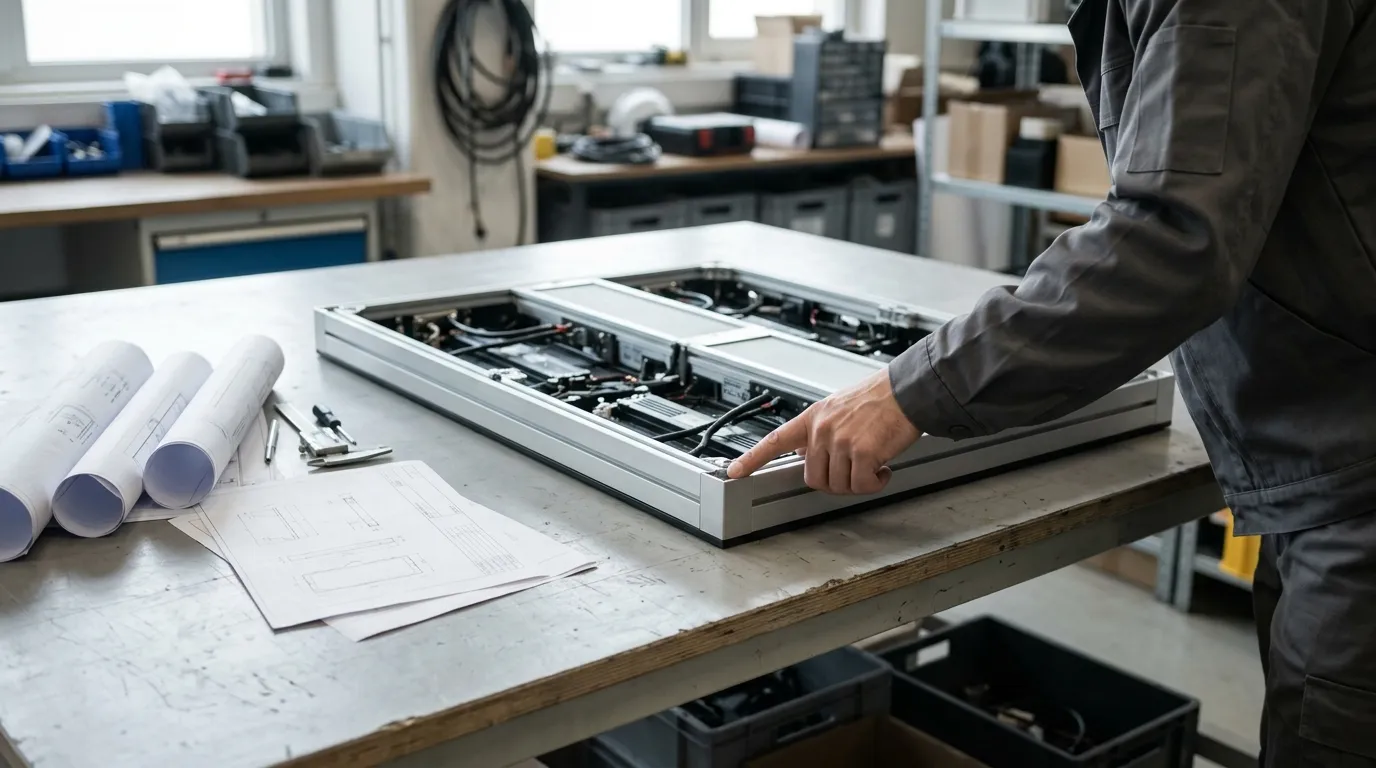
A specification lock turns the brief into a written production reference: the approved model and configuration, dimensions, pixel pitch, cabinet, control system, branding and packaging scope, plus a revision sign-off. MIC Display's homepage cites engineering support and customized solutions; the exact approval stages for a given OEM order should be confirmed in the quotation.
A workable sequence looks like this:
- The buyer submits the technical brief and use case.
- The supplier proposes a product and configuration.
- Both sides review a written specification sheet.
- The buyer approves revisions in writing.
- The approved version becomes the production reference.
Common mistake: approving a specification verbally or in a chat thread. If a dimension or configuration changes later, the written version is what protects both sides during production and inspection.
Sampling, MOQ, and Lead Time for OEM LED Display Orders
Sample availability, MOQ and production lead time are order-specific in LED display OEM work and were not confirmed for MIC Display in the sources reviewed here. Ask for these terms in writing for the exact product, customization level, quantity and destination.
Supplier terms vary widely, which is why they cannot be assumed. The Made-in-China supplier profile for Shenzhen Seny lists OEM/ODM service and sample availability, and its product listings show different minimum orders, including 1 piece for some listed goods and 200 pieces for a module listing. Those are that supplier's terms, not MIC Display's, and they show why MOQ must be quoted per item rather than requested as a single company-wide number.
| Term | What to ask MIC Display | Why it varies |
|---|---|---|
| Sample or prototype | Is a sample available, and what cost, timeline and approval does it involve? | Product type and customization level |
| MOQ | What is the minimum order by product, module or cabinet, configuration and branding? | Component sourcing and production setup |
| Lead time | What is the written schedule with its stated assumptions? | Quantity, complexity, inspection and destination |
Sample or Prototype Stage
Ask whether a sample is available for the chosen product and what changes after approval. Do not assume a sample is offered until MIC Display confirms it for that order.
MOQ
Request MOQ in writing for the exact product and branding scope. Published supplier examples show MOQ can differ from one item to the next, so a single figure rarely applies across a catalog.
Lead Time
Ask for a written schedule that states its assumptions rather than a general duration. No MIC Display lead-time figure was verified for this page.
Quality-Control and Inspection Questions to Agree Before Production
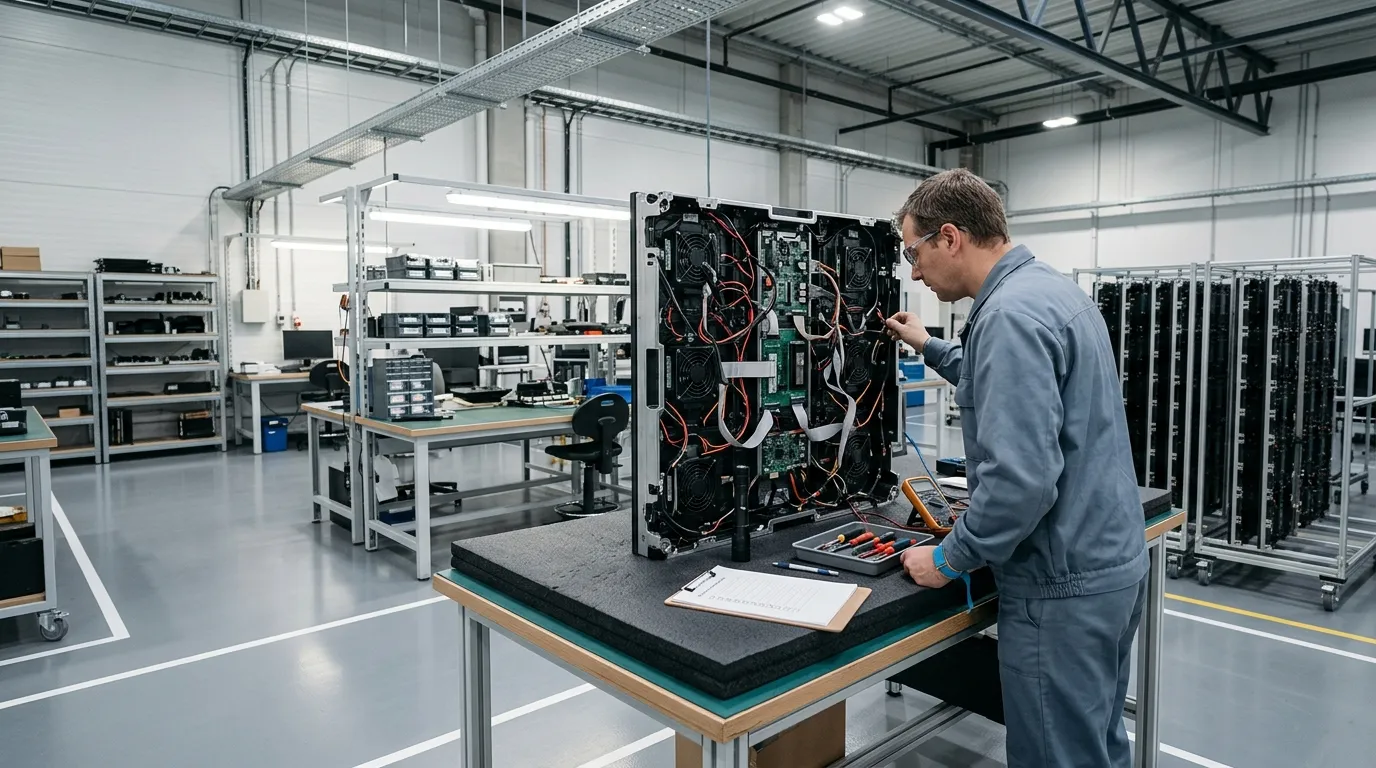
For OEM LED display orders, agree the inspection stages, records, acceptance criteria, nonconformity handling and shipping release before production starts. These are buyer-protection questions, and MIC Display's specific QC documentation was not verified in the sources reviewed here.
Point to agree in writing:
- Incoming component checks
- Pre-production sample or first-article review
- In-process checks
- Aging or burn-in testing, where the product type calls for it
- Final visual and functional inspection
- Packaging and shipping-release check
- Records supplied with the order
- Nonconformity and escalation route
Ask how each stage connects to the warranty and support route, so that inspection records remain useful after delivery rather than only at the factory gate.
MIC Display's Verified Factory and Support Capabilities
MIC Display is a China LED display factory established in 2011 that exports to more than 100 countries and serves commercial, advertising, control room and stage or event projects for integrators, rental and event companies, advertisers and project owners. Displays carry a 5–8 year warranty with remote technical support and after-sales service.
According to MIC Display's homepage, the company provides OEM/ODM manufacturing and engineering support, and states a 10,000 m² production facility; the facility figure is company-published. More background is available on the about us page, and buyers evaluating several suppliers at once can work from this led display manufacturer checklist before requesting quotes.
If you are a reseller or integrator with a defined project, send your technical brief and required branding scope through contact us to request an OEM/ODM quotation and written terms covering samples, MOQ, lead time, quality control and support.
Share on Social:


Contact Us
In This Article
Related Posts
LED Window Display- The Complete Guide for Retail, Advertising, and Commercial Spaces
October 26, 2026
Mini LED Display- What It Is, How It Works, and Where It Fits
October 26, 2026
Naked Eye 3D LED Display - How It Works, Key Specs, Cost and How to Plan One (2026 Guide)
October 16, 2026
Transparent LED Displays for Storefronts
October 14, 2026


