




Custom LED Display Manufacturers for Global Projects
By miashuvo2077
Sep 17, 2026Related Posts
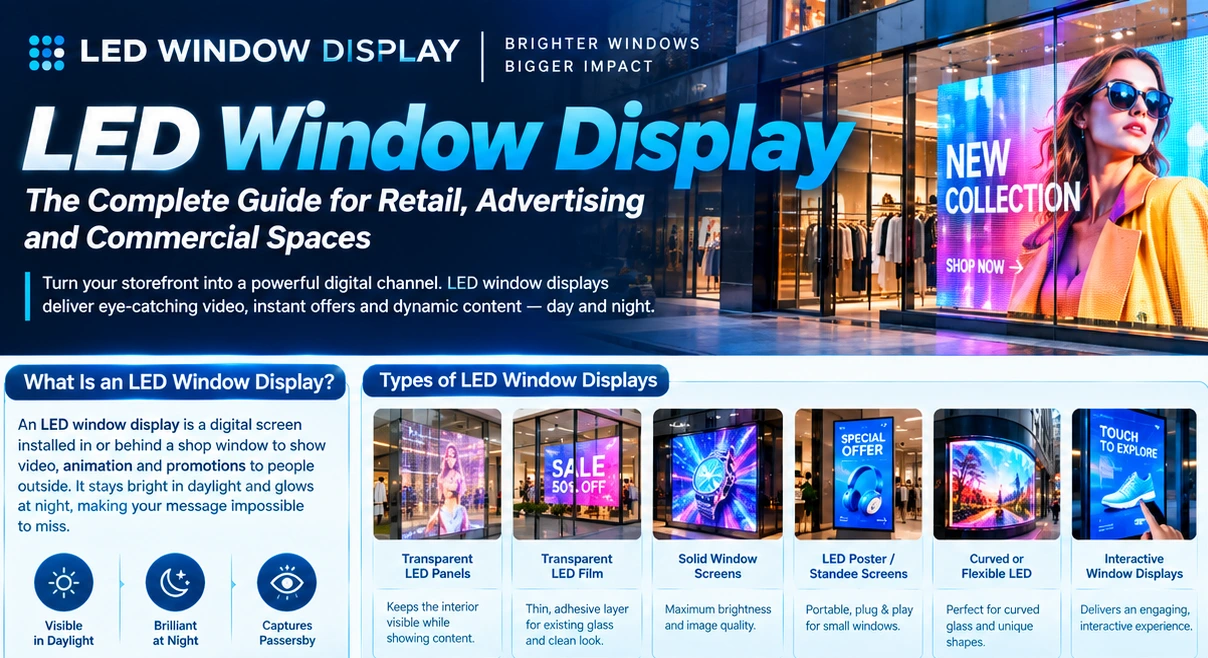
LED Window Display- The Complete Guide for Retail, Advertising, and Commercial Spaces
October 26, 2026
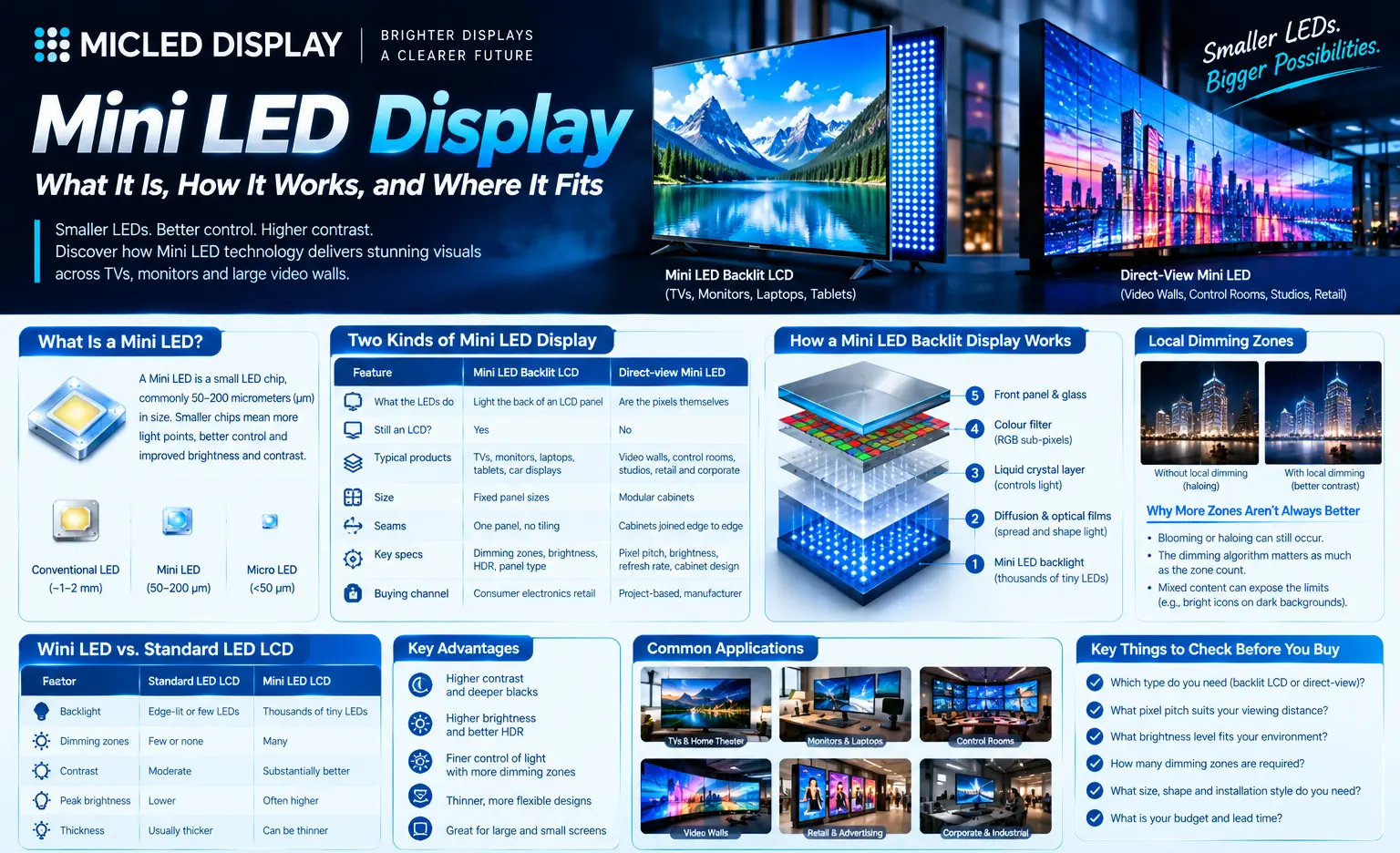
Mini LED Display- What It Is, How It Works, and Where It Fits
October 26, 2026
Naked Eye 3D LED Display - How It Works, Key Specs, Cost and How to Plan One (2026 Guide)
October 16, 2026
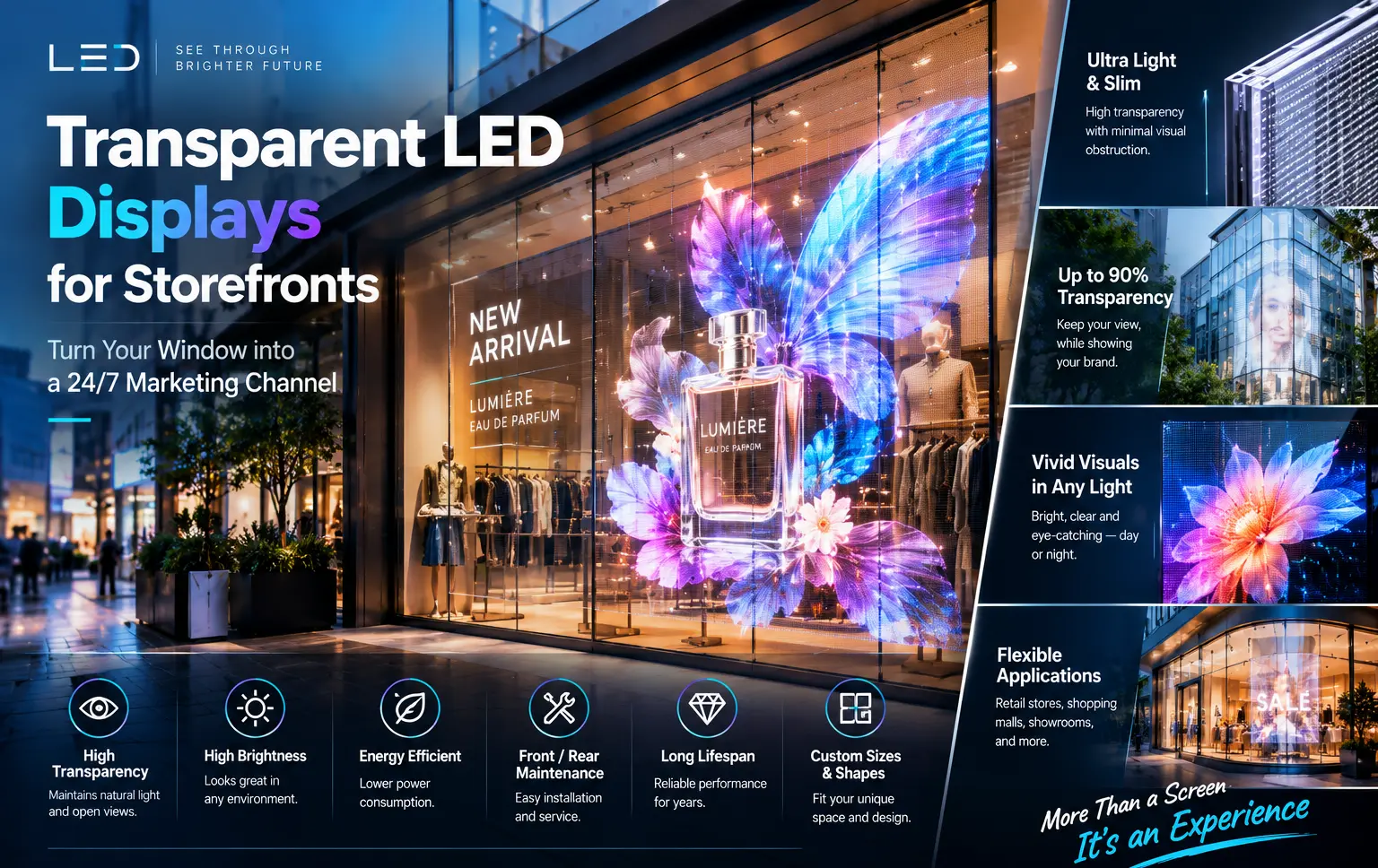
Transparent LED Displays for Storefronts
October 14, 2026
Custom LED display manufacturing means tailoring the screen structure, size, configuration and installation method to your project, rather than choosing a fixed catalog product. MIC Display, a China-based LED display factory established in 2011, designs these project-specific displays for overseas integrators, rental companies, advertisers and project owners, exporting to more than 100 countries.
Who this is for and what it covers
- MIC Display is an LED display factory established in 2011 that designs, produces and sells indoor, outdoor, rental, fine-pitch COB, transparent, LED floor tile and LED poster displays.
- The range covers small-pitch P0.9375–P1.86, indoor P2–P10 and outdoor P2.5–P10.
- MIC Display's design team customizes screen structure, size and configuration to each project's installation environment.
- MIC Display serves commercial, advertising, control room and stage or event projects, and exports to more than 100 countries.
- Displays carry a 5–8 year warranty, with remote technical support and after-sales service.
What Custom LED Display Manufacturing Involves for an Overseas Project
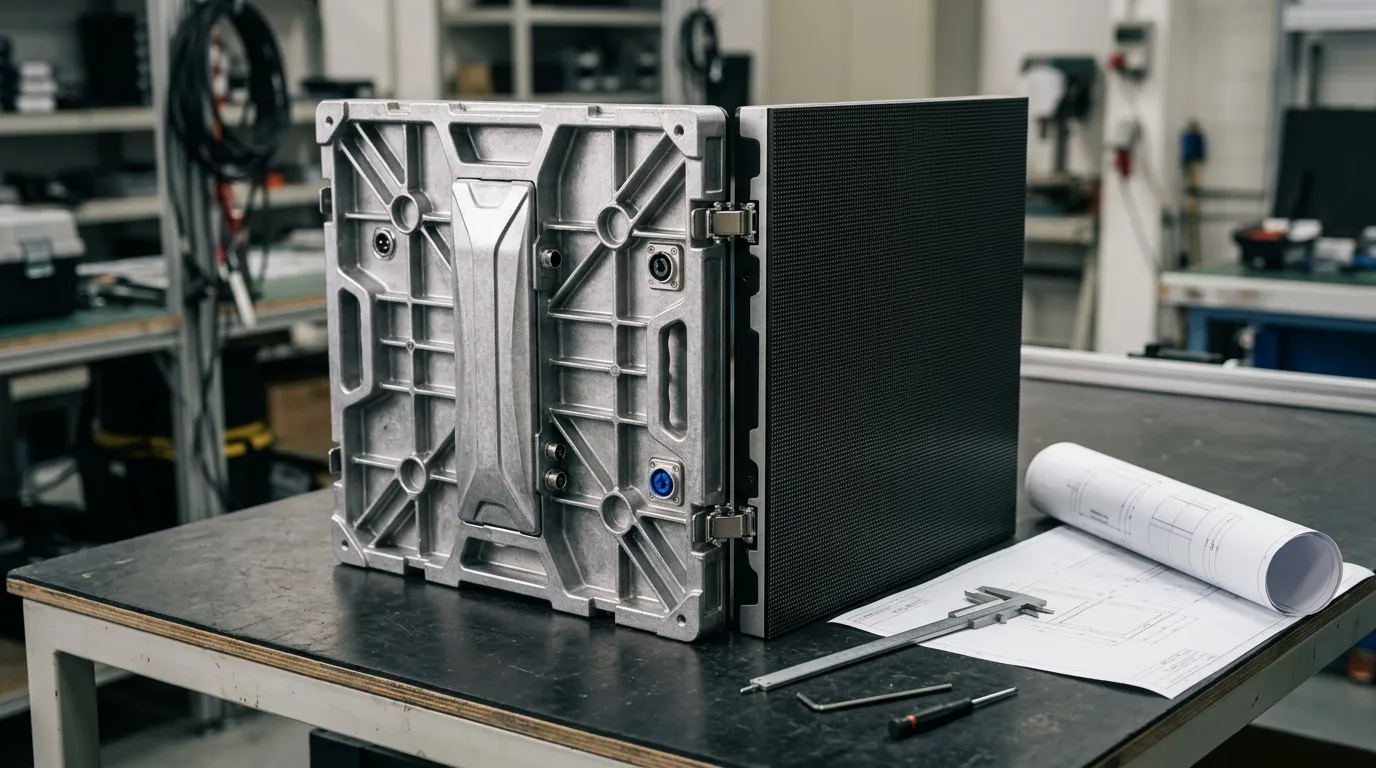
Custom LED display manufacturing is the process of designing, producing and configuring a display around one specific installation environment instead of selling a single standard size to every buyer. For an overseas project it also covers the structure and installation method, plus how the finished display will be supported after delivery.
According to MIC Display, the factory was established in 2011 and produces indoor, outdoor, rental, fine-pitch COB, transparent, LED floor tile and LED poster displays. The MIC Display homepage describes customized sizes and modular configurations rather than one fixed format.
Two limits are worth knowing before you brief anyone. Custom work does not replace a needs assessment — if a standard display size already fits the space and viewing distance, a custom structure may not be necessary. And building, electrical and import requirements differ by country; MIC Display does not publish country-specific compliance claims, so the buyer or a local partner should confirm those requirements directly.
What Project Inputs Change the Structure, Size and Configuration?
Three inputs drive most custom work: the installation environment, the visible area you need to cover, and the route technicians will use to service the screen.
[DIAGRAM: Project inputs — mounting surface, visible area, viewing distance, service access and destination country — feeding into structure, size and configuration decisions.]
How Site Conditions and Installation Method Shape the Structure
The mounting surface and the installation method determine the support structure, the cabinet depth and how technicians reach the screen for maintenance. MIC Display states that its design team customizes screen structure to each project's installation environment, which is why a wall-mounted, ceiling-hung, floor-supported or rental-rigged display can need different engineering even when the visible area is identical.
If the mounting surface, the maintenance path or the destination country is still unknown, the proposal is incomplete. Ask the supplier to list those items as open questions rather than filling them with assumptions.
How Screen Size and Configuration Are Set
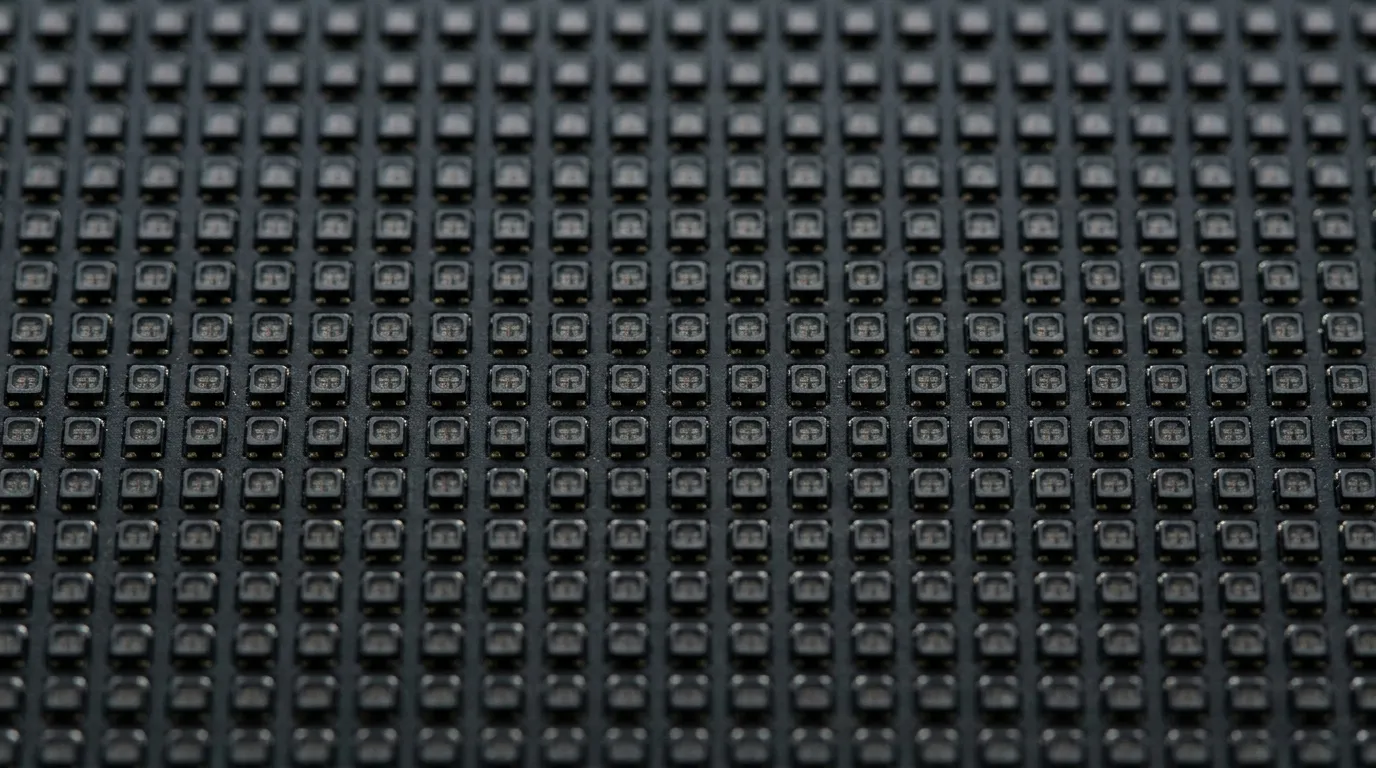
Screen size and configuration follow the visible area, aspect ratio, resolution requirement, viewing distance and content type. According to MIC Display, the available range covers small-pitch P0.9375–P1.86, indoor P2–P10 and outdoor P2.5–P10, which gives the design team room to match a project rather than force one cabinet format.
Choose pixel pitch from viewing distance and content first, not from the smallest pitch available. If the expected viewing distance is not yet known, record it as an open question in the brief.
Display Types and Environments Available for Global Projects
MIC Display designs and produces indoor, outdoor, rental, fine-pitch COB, transparent, LED floor tile and LED poster displays, and its work covers commercial, advertising, control room and stage or event projects. The display families in the products range let the design conversation start from the environment — a control room, a storefront, a stage or a building facade — instead of from one product family.
| Display family | Typical environment | Customization focus |
|---|---|---|
| Indoor fixed LED display | Commercial interiors, control rooms and venue walls | Screen size, cabinet configuration and service access set per project |
| Outdoor fixed LED display | Building facades and public-area advertising | Structure and size set per project; confirm site and local requirements with the supplier |
| Rental LED display | Concerts, exhibitions, conferences and touring events | Cabinet handling and configuration set per project |
| Fine-pitch COB | Close-viewing commercial and control-room installations | Screen size and configuration set per project |
| Transparent LED display | Storefronts and glazing where see-through visibility matters | Screen size and structure set per project |
| LED floor tile display | Stages, walkways and interactive floor areas | Size, tile layout and structure set per project |
| LED poster display | Retail, showrooms and advertising stands | Size and configuration set per project |
MIC Display's published material does not state environmental ratings for individual outdoor models. Confirm the rating your site requires with the supplier before ordering.
What to Include in a Project Brief Before You Request a Custom LED Display
A project brief is the set of site and usage details a manufacturer needs before it can size and configure a display; without them, any price or proposal is based on assumptions.
- Application and content type — advertising, control-room data or stage visuals, for example.
- Indoor or outdoor environment.
- Installation surface or rigging arrangement: wall, ceiling, floor, truss or freestanding structure.
- Approximate screen dimensions or the visible area you need to cover.
- Expected viewing distance for the closest and furthest viewers.
- Service access and the maintenance path technicians will use.
- Destination country, plus any local documentation your project requires.
- Project timing and decision milestones.
If the destination country or the site conditions are missing, a supplier cannot confirm the structure, the installation method or documentation requirements. Mark those items as open in the quotation instead of accepting filler answers.
How to Assess Whether a Custom LED Display Proposal Fits Your Project
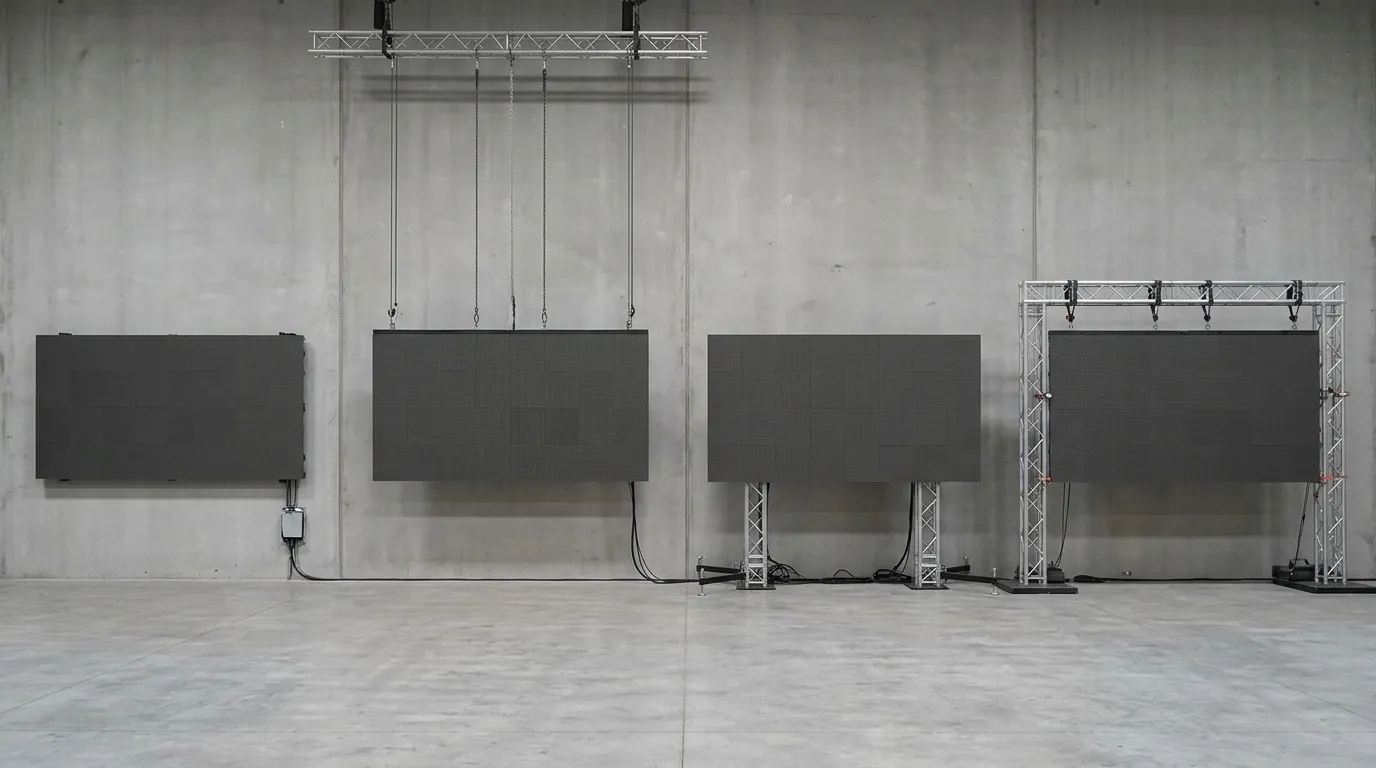
A proposal fits when it answers your brief in specific terms: a structure and installation method for the actual site, a size and configuration that match the expected viewing distance and content, and a workable service path.
- Does the proposal respond to each item in your brief, or does it repeat catalog specifications?
- Does it state the installation method and the maintenance route in writing?
- Does it confirm the warranty period and the support channel for your country?
Judging the supplier as a business — documentation, testing, engineering and factory checks — is a separate decision path covered in the led display manufacturer checklist. If you plan to verify production first, a led display factory visit can be requested rather than assumed.
A proposal that leaves the installation method, the service access or the destination documentation unstated is incomplete.
Warranty, Remote Support and After-Sales for Overseas Projects
MIC Display states that its displays carry a 5–8 year warranty, with remote technical support and after-sales service. Because the figure is a range, confirm the term that applies to the specific display type and configuration in your order instead of treating 5–8 years as one standard number.
For an overseas installation, get three things in writing: the warranty period for your order and the warranty terms covering it, the remote escalation path, and how spare parts will be handled. The support page shows the technical support options, and time-zone differences are worth planning around when scheduling remote sessions.
Frequently Asked Questions
How do I know which pixel pitch my custom LED display needs?
Pixel pitch is the spacing between individual LED pixels, and it should follow viewing distance and content type rather than sharpness alone. MIC Display states that its range covers small-pitch P0.9375–P1.86, indoor P2–P10 and outdoor P2.5–P10; the final choice depends on your project brief.
Can MIC Display customize a display for an unusual installation?
MIC Display states that its design team customizes screen structure, size and configuration to each project's installation environment, so non-standard sizes and unusual mounts can be reviewed. That review still needs site details, the maintenance path and the destination country before any structure or installation method can be confirmed.
What should an overseas buyer check in a custom LED display warranty?
Confirm the term that applies within MIC Display's stated 5–8 year warranty, what the warranty covers, and the remote support channel available for your country. Ask for those details in writing before ordering, and check local expectations for spare parts and response times.
If you are preparing a custom LED display project, share the installation environment, approximate size, viewing distance and destination country with MIC Display through contact us to request a project-specific configuration discussion.
Share on Social:


Contact Us
Related Posts
LED Window Display- The Complete Guide for Retail, Advertising, and Commercial Spaces
October 26, 2026
Mini LED Display- What It Is, How It Works, and Where It Fits
October 26, 2026
Naked Eye 3D LED Display - How It Works, Key Specs, Cost and How to Plan One (2026 Guide)
October 16, 2026
Transparent LED Displays for Storefronts
October 14, 2026


