




How to Evaluate a Die-Cast Aluminum LED Display Cabinet for Rental Use
By hqt
Oct 21, 2026Related Posts

How to Choose the Right Pixel Pitch Based on Viewing Distance
November 14, 2026
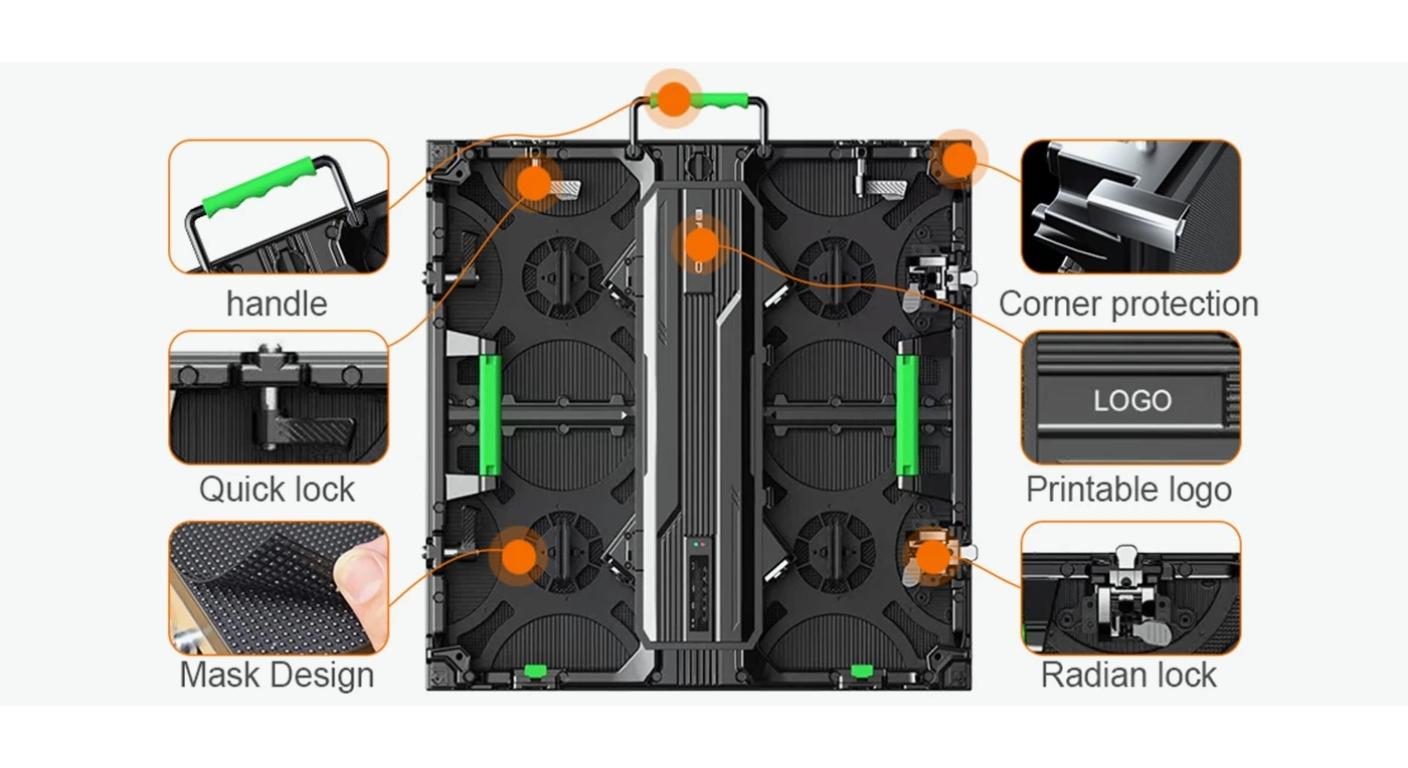
Corner Protection Rental LED Panel: Damage Prevention and Maintenance Guide
October 30, 2026
How to Choose a Shop Window Transparent LED Display for Retail Stores
October 29, 2026
Iron vs. Aluminum Outdoor LED Display Cabinets: How to Choose
October 28, 2026
Even if an LED wall has great display modules, it will be unbalanced if the cabinets are not accurately connected. An edge difference is more noticeable when it's displayed as a large image. Quick construction can also result in less than ideal fittings and/or locks, which can delay the crew and make modules vulnerable.
The die-cast aluminum LED display cabinet forms the structural frame to support the modules and link the one section of the wall to another section. When it comes to rentals, it's not just the type of metal used for the frame. It's about the accuracy, safety and continuity of the entire cabinet, assembled and reassembled, moved and serviced over and over.

The Cabinet has the responsibility to take decisions on the following matters:
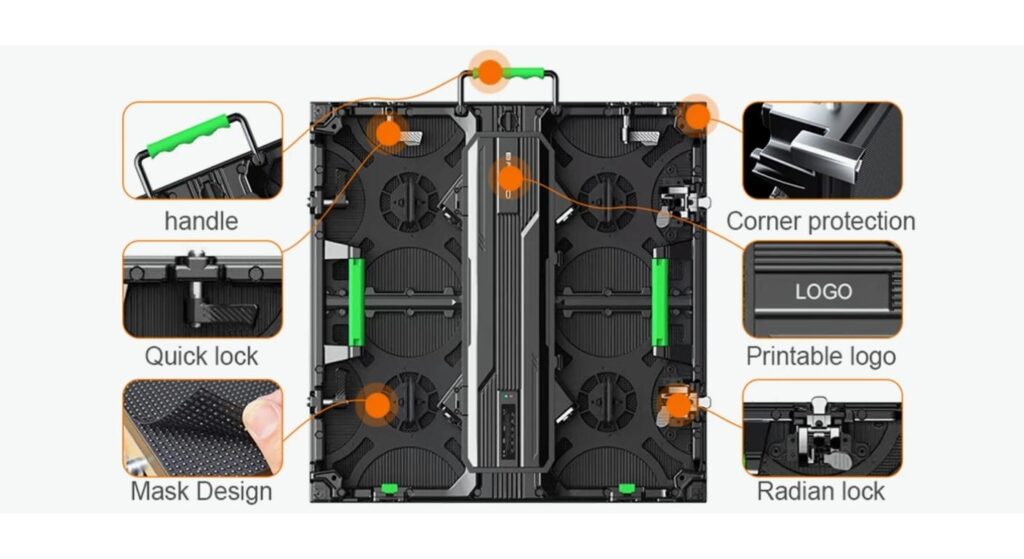
The cabinet secures the LED modules and contains or connects to the electrical components necessary due to the design of the display. It also offers handles, positioning points and locks which crews use to connect panels to form a wall. It has a geometry that determines if neighbouring image surfaces meet cleanly.
This allows the cabinet to be a functional component of the display and not just an empty space. While a lightweight frame can make for easier lifting, it can be a disadvantage if it is too flexible, misaligned or ends up with some of the connections exposed during lifting.
The screen for indoor events by MIC is composed of 500 × 500 mm and 500 × 1000 mm die-cast aluminum cabinets. It also has integrated handles, positioning parts, locks and power connections on its product page. When considering complete cabinets, these are the details that the buyer should look into.
Check Alignment at Joints
It is important to be precise where two cabinets meet. Request multiple units in a wall; don't just want to see one cabinet in a white room. Consider horizontal and vertical joints, flatness of image faces and corners where four cabinets meet.
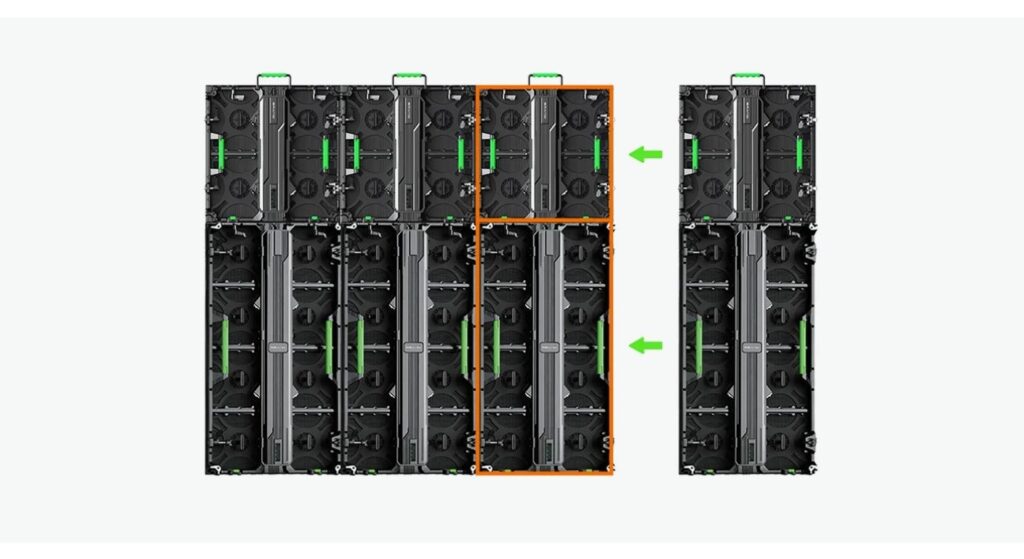
Create a consistent pattern of color and thin line work throughout the wall. A line or raised edge will be visible if there is an alignment problem, which might not be apparent when the screen is off. Inspection after dis-assembly and re-assembly; rentals are required to fit consistently with more than one adjacent cabinet.
Inspect the ways positioning pins and locks fit the cabinets together. Fully operation of the mechanism by the crew without forcing panels in place. If mixed cabinet sizes are supported, ask for a sample of the horizontal/vertical mixes required by your projects. The proposed layout is valid for MCR-S indoor series mixed-size splicing (MIC), although this must be checked with the configuration selected.
| Sample check | Test condition | Observed result |
| Horizontal seam | Several cabinets connected in one row | |
| Four-cabinet corner | Complete 2 × 2 assembly | |
| Image surface | Uniform color and fine-line content | |
| Repeated fit | Disassemble and rebuild once |
Judge Handling is the Complete Cabinet.
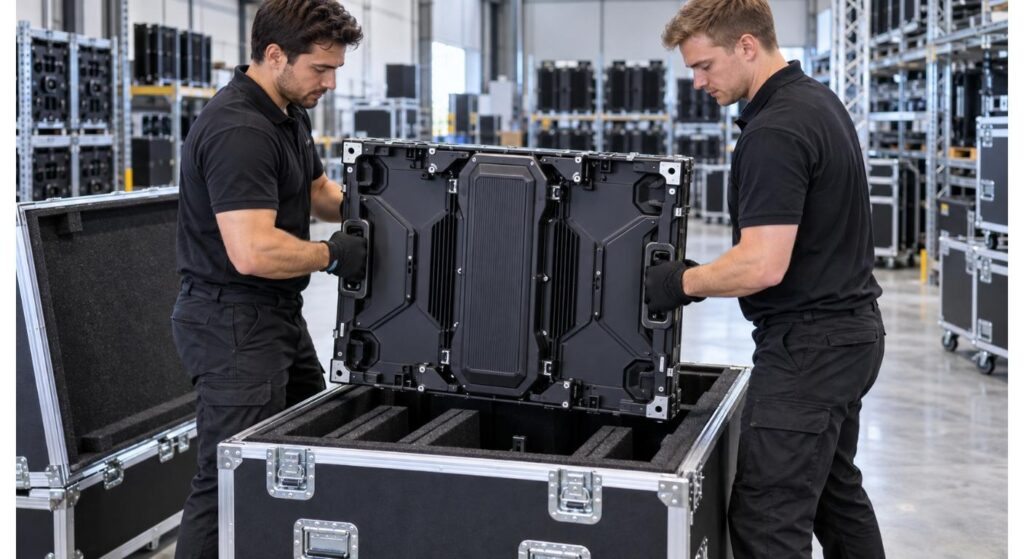
The weight of the cabinets should be determined with the modules and working components in place. Verify the configuration the weight is referring to then allow technicians to lift, rotate and lock a sample at a realistic working height. Think about how many lifts is your wall asking for as opposed to only one lift per unit.
Handle position is related to control in those lifts. Test to see if a technician can lift the cabinet and maneuver fingers clear of locks and sensitive edges on the modules. See the cabinet in and out of its flight case. If the panel is not easily moved into and out of its packing position, it will be less useful to have a convenient handle on stage.
Similar care needs to be taken with protective corners. MIC points out that the edges of the LED are vulnerable, and can be hit when transporting or installing or dismounting the rental cabinet. Protection minimizes exposure to damage due to routine handling but it is not a substitute for careful packing and crew procedures.
Test Locks and Connections in Trial Build
Quick locks need to save time, but not leave a doubt as to security of connection. In a test assembly, have a technician who is not familiar with the cabinet assemble and disassemble a number of cabinets following the procedure provided. Be aware of unobtainable controls, or controls that require pushing against the LED face or that are inconsistent.
Discuss the location of the power and signal connections when two cabinets are connected. Cable routing should be placed so there is no sharp strain, or interference with supporting structure. Verify if there are any links that are inbuilt or if they need to be carried separately. All these differences make a big difference in a crew putting together dozens of cabinets in a fixed venue schedule.
Quick-lock structure and frequent installation are the key features of MIC's rental LED display products. Make that feature description an actual test: construct that short wall, wire it up, power it up and come back down with the team and tools that will be used for future events.
Check the Installed Position: Service Access.
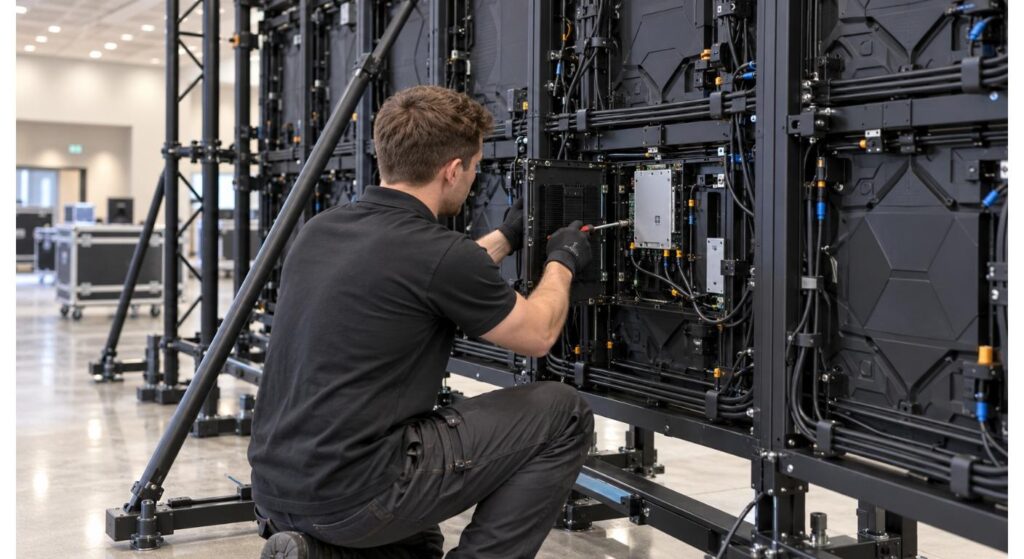
A cabinet which is easily repairable on a workbench might be difficult to work on when it is hung or fixed to a wall. Decide whether the chosen model can be accessed from the front, back or both and what components can be accessed from either side.
Then compare this access route with your installation plans. For a rear-maintenance design, sufficient space should be provided behind the screen. While front access may be helpful in a limited space environment, the technicians must have the appropriate tools, replacement parts and a safe means of accessing the cabinet that has the problem.
MIC provides maintenance for its MCR-S indoor cabinet both from the front and the back. Prior to ordering, request replacement procedure for model being proposed and have the tech team do it on an assembled sample. Use the timer module to time a routine module change for an actual task based service plan.
Verify that compatibility prior to adding Stock
A rental company can purchase additional cabinets several months after the initial purchase. It is not possible to presume that a later batch will fit with existing stock, simply due to the fact that they are the same exterior size. Verify the cabinet type, modules, locks, receiving system, connectors and screen configuration.
Inquire about identification of replacement parts and extra cabinets. A list of model numbers, production versions, and approved components are of great assistance to the warehouse in order to prevent mixing parts that may look the same but have different settings or connections.
If it's creative layouts that's included in the purchase plan, confirm the hardware needed. The flexibility of the interior of MIC's rental screen is an additional alternative for shaped displays, and a normal flat-wall cabinet cannot be taken for granted to produce all of the curved and corner displays.
| Item to verify | Existing stock | Proposed new batch |
| Cabinet model and version | ||
| Module model and pixel pitch | ||
| Lock and positioning design | ||
| Power and signal connectors | ||
| Receiving system and configuration |
Conclusion
Die-cast aluminum is a good cabinet material to use, but by itself does not provide rental performance. Examine a multi-cabinet wall, re-construct and test the wall with full cabinets and perform a repair in the wall in situ. Those checks establish if the cabinet will be suitable to the crew for its working life.
FAQs
Q1. Is every die-cast aluminum LED cabinet lightweight?
No. The weights are dependent on the size and installed configuration of the cabinet. Make comparisons of stated weights on the same basis and check actual handling.
Q2. Will die-cast construction mean no exposed seams?
No cabinet material is going to be able to assure you of that. The alignment relies on the manufacturing accuracy, positioning hardware, locking and correct installation.
Q3. Can 500 × 500 mm and 500 × 1000 mm cabinets be combined?
This is supported by some series of product, such as MIC's MCR-S indoor series. Please double check the exact model, the direction of connections and the layout you require prior to ordering.
Q4. Does a front maintenance always provide a better maintenance than a rear maintenance?
The route of better access will depend on the installation. Pick the cabinet and service procedure that you can use at your usual venues without worry.
Q5. Will newer cabinets work with the older rental cabinets?
Always verify the complete product version and controllers' compatibility. There is no guarantee that dimensions match will mean that modules, locks and electrical components will function together.


Contact Us
In This Article
Related Posts
How to Choose the Right Pixel Pitch Based on Viewing Distance
November 14, 2026
Corner Protection Rental LED Panel: Damage Prevention and Maintenance Guide
October 30, 2026
How to Choose a Shop Window Transparent LED Display for Retail Stores
October 29, 2026
Iron vs. Aluminum Outdoor LED Display Cabinets: How to Choose
October 28, 2026


