




How to Choose an LED Display Manufacturer: A Buyer's Checklist

Related Posts
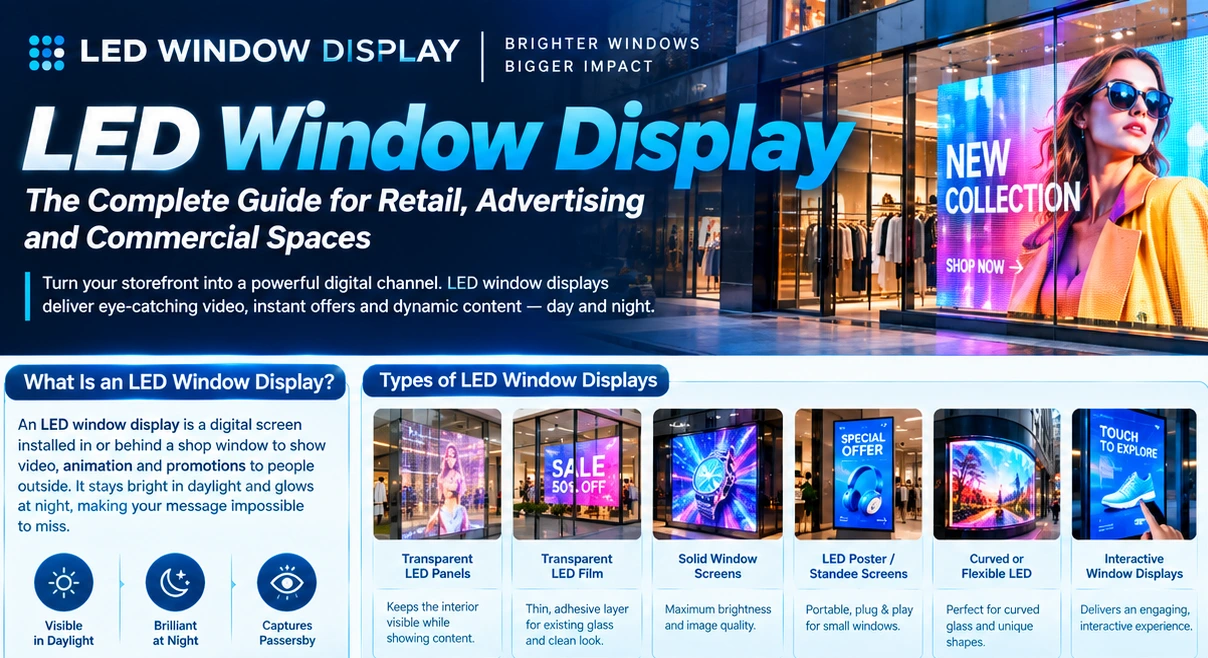
LED Window Display- The Complete Guide for Retail, Advertising, and Commercial Spaces
October 26, 2026
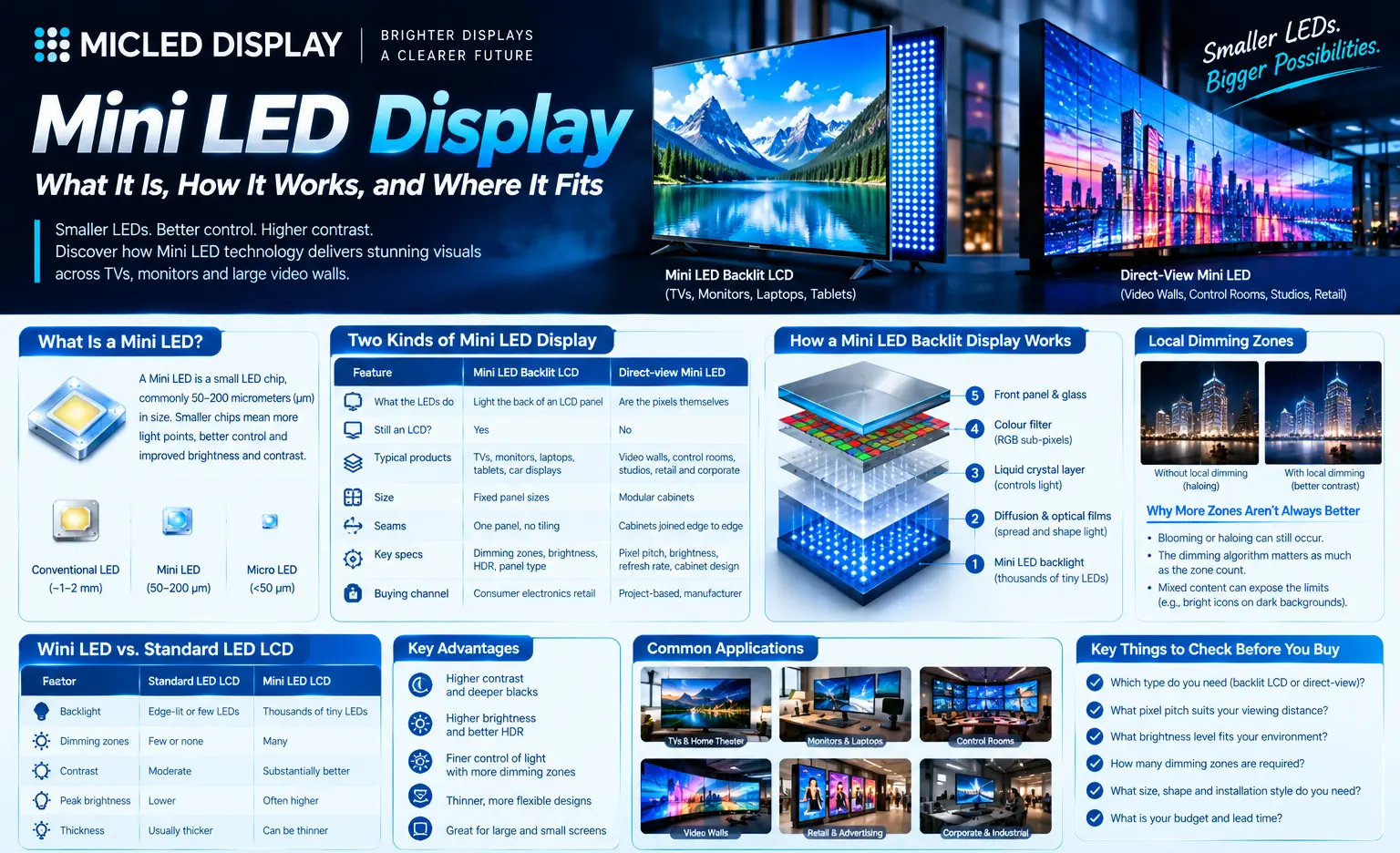
Mini LED Display- What It Is, How It Works, and Where It Fits
October 26, 2026

Naked Eye 3D LED Display - How It Works, Key Specs, Cost and How to Plan One (2026 Guide)
October 16, 2026
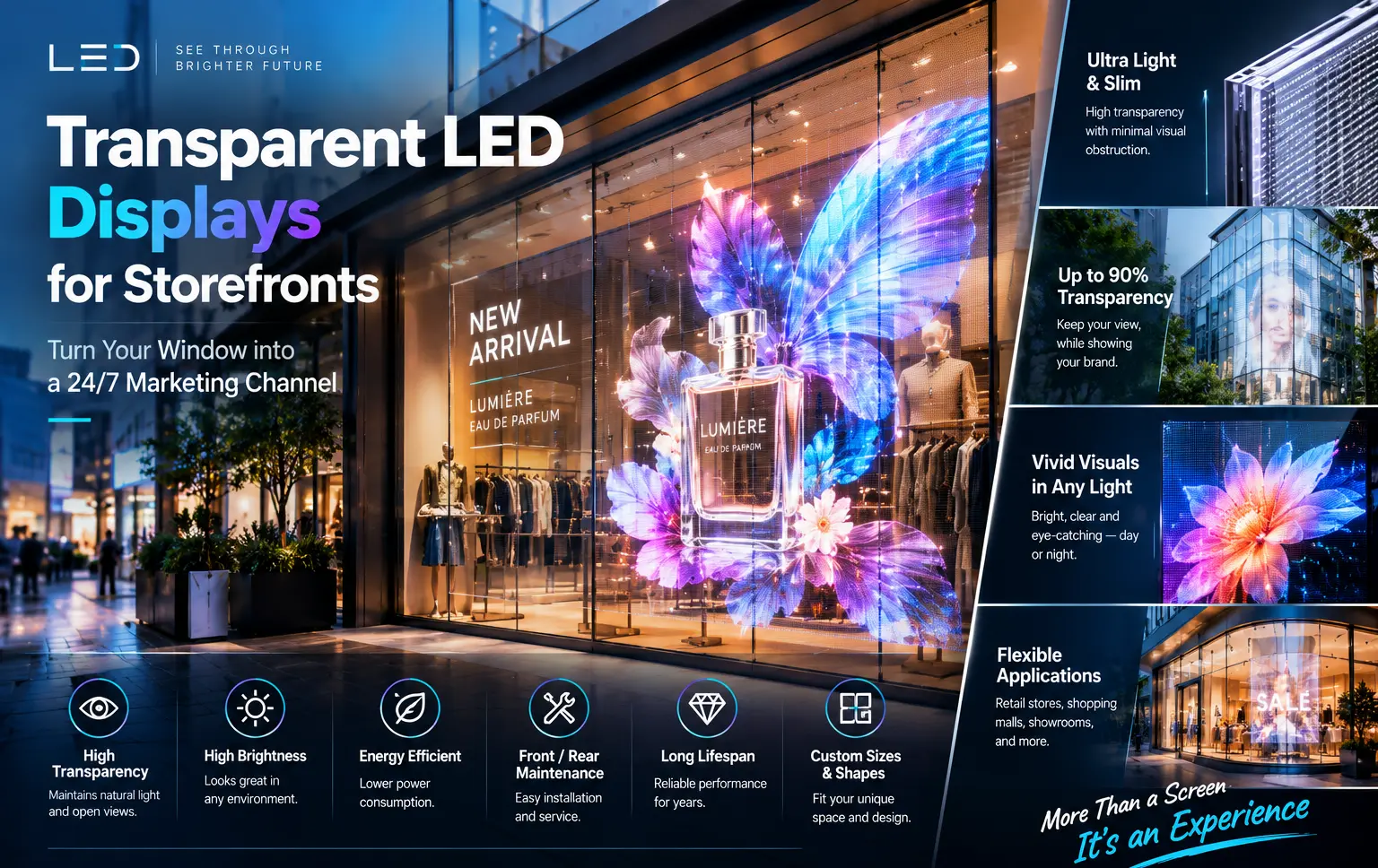
Transparent LED Displays for Storefronts
October 14, 2026
Two LED screens can look identical on a spec sheet — same pixel pitch, same brightness rating, same glossy sample photo — and still perform completely differently once they're running eight hours a day in direct sunlight or under constant AC power fluctuation. The gap between them usually isn't in the marketing brochure. It's in the manufacturing process, the components sourced, and the support structure standing behind the product after the invoice is paid.
If you're planning a video wall, a digital storefront, a control room display, or any large-scale LED installation, the manufacturer you select will matter more than almost any other decision in the project. Here's what to actually evaluate.
Why the Manufacturer Matters More Than the Spec Sheet
Anyone can print "4000 nits" or "1.9mm pixel pitch" on a datasheet. What separates a dependable supplier from a risky one is what happens behind that number: which grade of diode was used, how consistent the calibration is across modules, whether the power supply can survive a voltage spike, and whether a failed component can be replaced in a day or in six weeks.
Buying on price alone tends to produce displays that look fine at installation and degrade — through color drift, dead pixels, or flickering — within the first year. A capable manufacturer sells reliability over the full lifecycle of the screen, not just a working unit on delivery day.
1. Component Quality and Sourcing
Ask the manufacturer to be specific about what's actually inside the panel:
- LED diodes – The diode grade drives color consistency and long-term brightness decay. Ask which chip supplier is used and whether the diodes are binned for uniformity.
- Driver ICs – Low-quality driver chips cause visible flicker on camera and video capture, a serious issue for retail, broadcast, and event use. Look for high refresh-rate driving (generally above 3,840Hz) and good grayscale performance at low brightness.
- Power supplies – Power supply failure is one of the most common causes of field failures, especially outdoors. Ask about efficiency rating, surge protection, and power factor correction.
- PCB and cabinet build quality – Ask how modules are protected against moisture, dust, and thermal expansion, particularly for outdoor or semi-outdoor deployments.
A manufacturer that can answer these questions with specifics — brand names, model numbers, test data — is a very different supplier from one that answers only with "premium quality."
2. Certifications That Are Actually Verifiable
Certifications matter, but only if they apply to the exact product and market you're buying for.
- Safety and EMC compliance (e.g., CE, FCC, ETL/UL depending on your market) confirms the product won't create electrical or interference risks in your building.
- RoHS confirms the absence of restricted hazardous materials.
- IP rating (IP65/IP67, etc.) matters for any outdoor or exposed installation — verify it applies to the specific cabinet, not just the module.
Don't take a certification logo on a website at face value. Ask for the actual certificate and confirm it lists the product model you're purchasing, since certifications are often tied to specific configurations.
3. Quality Control and Testing Procedures
This is where the real difference between manufacturers shows up. Ask directly:
- Does the manufacturer run a burn-in / aging test on fully assembled displays (commonly 72+ hours at full brightness with color cycling) before shipment? This is what catches early component failures before they reach your site.
- Is there a final inspection report or QC documentation provided with the shipment?
- How are non-conforming units handled — are they reworked, discarded, or shipped anyway?
A manufacturer that treats quality control as a checkbox rather than a documented process is far more likely to ship batch inconsistencies — the "patchwork" color variation across panels that's difficult and expensive to fix after installation.
4. Engineering and Pre-Sale Support
A good manufacturer asks you questions before quoting a price. If a supplier is willing to quote purely off square footage without asking about your environment, viewing distance, structural constraints, or signal requirements, that's a signal they're not engineering the solution — they're just selling a commodity.
Look for a manufacturer able to support:
- Custom dimensions and non-standard configurations
- Control system and signal-processing recommendations
- Structural and installation guidance
- Project drawings and technical documentation before you commit
5. Spare Parts, Warranty, and What Happens After Something Fails
Every LED display eventually needs a module, power supply, or receiving card replaced. What matters is how prepared you are for that moment.
- Batch matching – Ask whether spare modules from the exact same production batch are reserved for future repairs. Mixing batches later can cause visible color mismatches.
- Spare parts ratio – It's common for manufacturers to ship a percentage of extra components (modules, power supplies, cables) with the original order.
- Warranty length and terms – Confirm what's covered, for how long, and who is responsible for shipping costs on replacement parts.
- Response time – A manufacturer with excellent hardware is still a liability if a support ticket takes weeks to get a reply. Ask about typical response times, time zone coverage, and whether local or regional support exists.
6. Documentation You Should Receive
Before placing an order, request:
- Final, approved product specification sheet
- Cabinet/module layout and configuration drawings
- Power and signal wiring diagrams
- Installation and structural guidance
- Controller/receiving-card configuration details
- QC/inspection reports
- Packing list and spare parts list
- Warranty terms and a support contact path
If a supplier can't produce these documents before shipment, that's worth treating as a warning sign, not an oversight to fix later.
7. If You Can, Audit the Factory (In Person or by Video)
A showroom tells you very little. A meaningful factory audit follows the actual production path: incoming material inspection → SMT and module assembly → cabinet assembly → calibration → aging → final inspection → packing. Ask to see real, current customer orders on the floor — not just a demo wall — and ask how the team tracks and resolves defects during production.
Red Flags to Watch For
- Specifications shift between the quotation, the datasheet, and the final production drawing
- The supplier can't clearly explain which stages of production are in-house versus outsourced
- Certification documents are generic, expired, or can't be matched to the quoted product
- No documented aging test or final inspection record exists
- Spare parts and service terms are only discussed after the order is placed
- The supplier quotes purely by square meter with no project-specific questions
- Support promises are vague, with no clear escalation path or response time
Quick Buyer's Checklist
- Component traceability (diodes, ICs, power supplies) confirmed with datasheets
- Certifications verified against the exact product and destination market
- Documented burn-in/aging test and final QC report provided
- Pre-sale engineering support and project-specific questions offered
- Spare parts ratio and batch-matching policy confirmed
- Warranty terms, coverage, and support response time clearly stated
- Full documentation package available before shipment
- Factory production process verifiable (visit, video audit, or detailed walkthrough)
The Bottom Line
The cheapest quote and the best-looking sample panel are rarely the same thing as the most reliable long-term investment. A manufacturer worth partnering with will welcome hard questions about components, testing, certifications, and after-sales support — because they already have good answers.
For businesses looking for a reliable LED display manufacturer, MICLED Display offers professional LED display solutions backed by manufacturing expertise and technical support.
Share on Social:


Contact Us
In This Article
Related Posts
LED Window Display- The Complete Guide for Retail, Advertising, and Commercial Spaces
October 26, 2026
Mini LED Display- What It Is, How It Works, and Where It Fits
October 26, 2026
Naked Eye 3D LED Display - How It Works, Key Specs, Cost and How to Plan One (2026 Guide)
October 16, 2026
Transparent LED Displays for Storefronts
October 14, 2026


