




Where to Buy Outdoor LED Displays for Advertising?
By miashuvo2077
Oct 01, 2026Related Posts
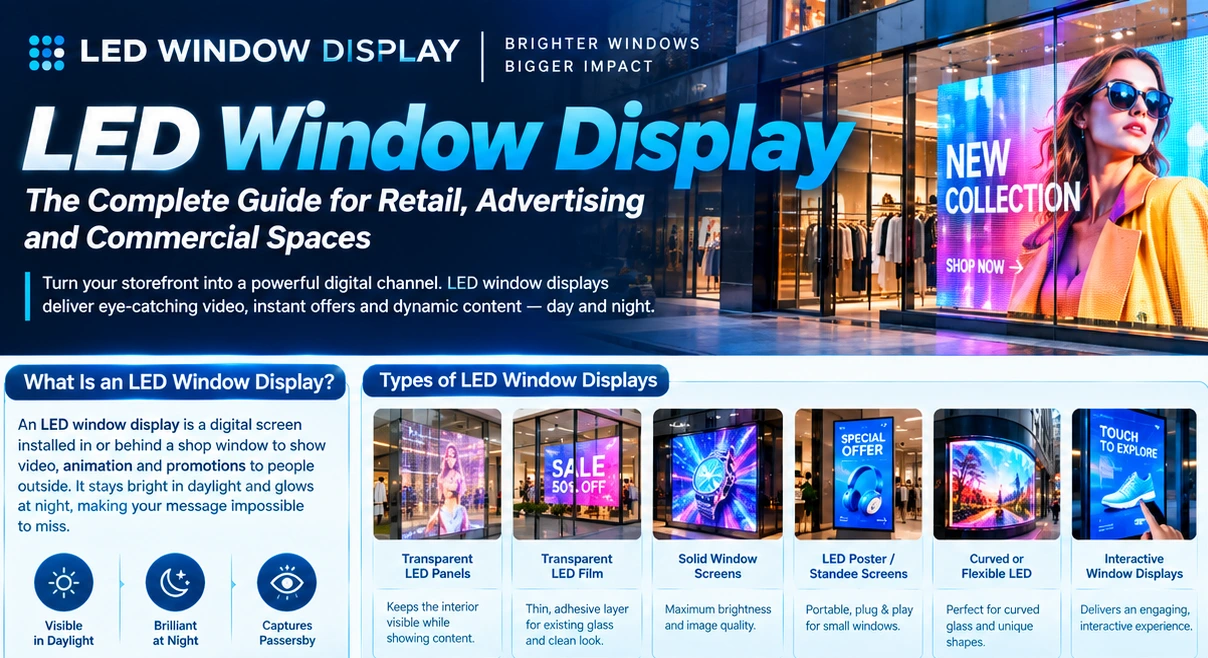
LED Window Display- The Complete Guide for Retail, Advertising, and Commercial Spaces
October 26, 2026
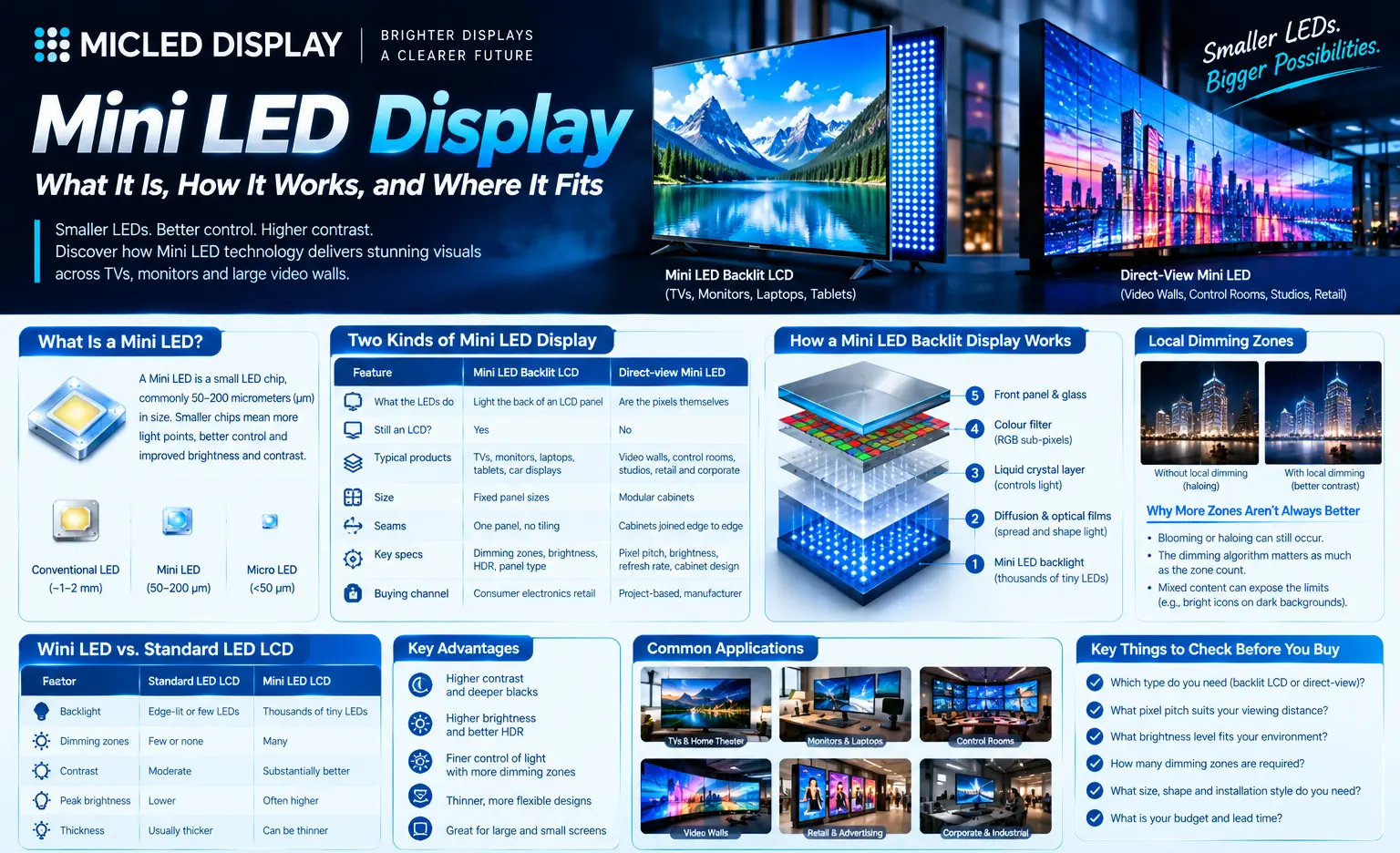
Mini LED Display- What It Is, How It Works, and Where It Fits
October 26, 2026
Naked Eye 3D LED Display - How It Works, Key Specs, Cost and How to Plan One (2026 Guide)
October 16, 2026
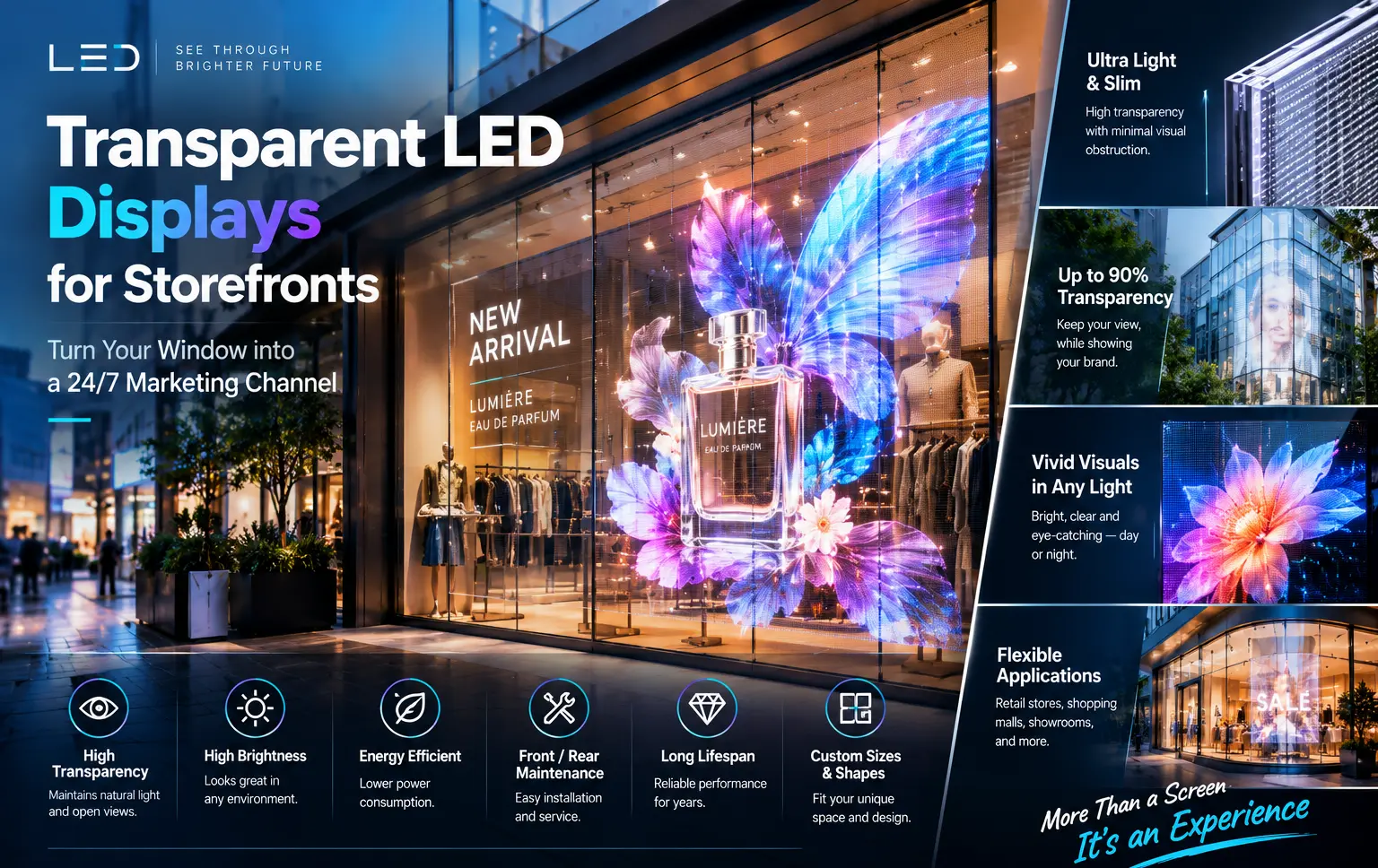
Transparent LED Displays for Storefronts
October 14, 2026
To buy outdoor advertising displays, choose the route that matches your project: for large or custom billboards, buy factory-direct from an LED display manufacturer; where installation, structure and permits are involved, buy through a local integrator or turnkey supplier. Both routes need the same checks: brightness, IP rating, content control and after-sales terms.
Key takeaways
- Factory-direct buying usually fits large or custom screens; a local integrator or turnkey supplier usually fits projects that need site coordination, installation and permit support.
- Ask every seller for a quote that separates display hardware, control system, mounting, freight, installation, commissioning, permitting support, warranty and service.
- Verify brightness against the site. MIC Display's outdoor LED display page lists series at 5,500 cd/m², 7,500 nits and above 5,000 nits, and Planar states its outdoor LED models deliver brightness as much as 6,000 nits — both are product-page claims for specific configurations.
- Request front and rear ingress-protection ratings: EagerLED's outdoor LED screen guide states that an IP rating does not certify the whole installation.
- Confirm warranty length, remote technical support and spare-parts terms in writing before paying a deposit.
Where can you buy outdoor advertising displays?
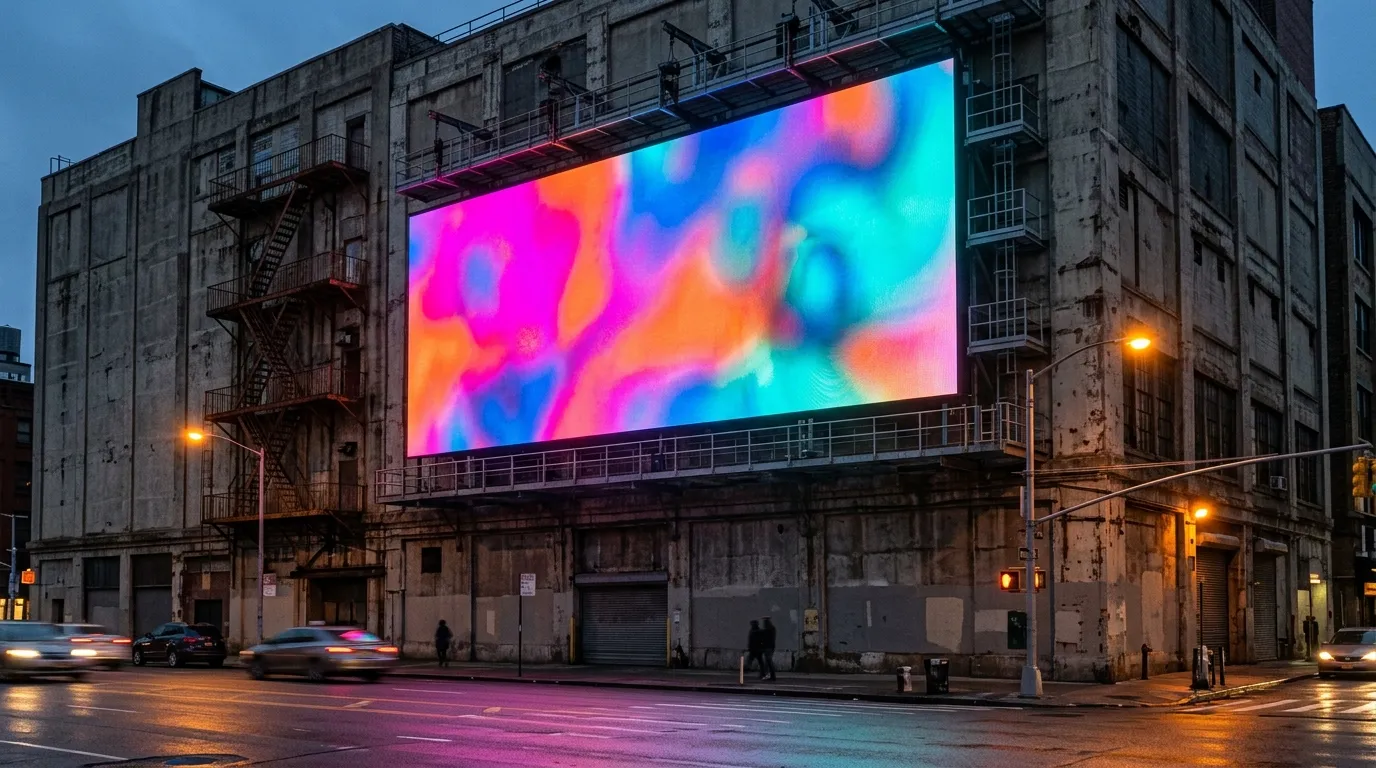
You can buy outdoor advertising displays factory-direct from an LED display manufacturer, or through a local sign company, systems integrator or turnkey supplier. Factory-direct suits large, custom or repeat orders; an integrator suits projects where installation, structure and permits must be handled locally.
An outdoor advertising display is a weather-exposed LED screen built for fixed public viewing, such as a roadside billboard, a street-pole sign, a monument sign or a building-mounted video wall. Chipshow NA presents outdoor display options for billboard, street-pole, monument and video-wall applications and discusses installation and delivery planning on the same page.
[DIAGRAM: project conditions — large or custom screen, installation capability, structural work, permits — branching to factory-direct or local integrator]
| Buying route | Typically fits | What the seller usually handles | What you must confirm |
|---|---|---|---|
| LED display factory / manufacturer direct | Large, custom or repeat orders | Screen hardware, cabinet configuration, control system | Freight, installation, commissioning, local approvals |
| Local sign company or systems integrator | Sites needing local site work | Site survey, structure, install coordination | Which screen brand and specification is quoted |
| Turnkey display supplier | Buyers wanting one point of responsibility | Consultation, design, permitting, site preparation and final inspection stages as described by Electro-Matic Visual | The exact inclusion list in writing |
| Online marketplace listing | Hardware-only purchases | Order fulfilment of the listed item | Verify with the supplier |
If you are starting from the hardware side, the outdoor LED display range page is a useful reference for the formats and configurations sellers quote against.
Buying factory-direct from an LED display manufacturer
Factory-direct buying fits large, custom or repeat orders where you or your own contractor will handle installation, because you buy the screen and its control system rather than a managed project. MIC Display, a China-based LED display factory established in 2011, designs and produces outdoor advertising LED display hardware across an outdoor range of P2.5 to P10, and its design team customizes screen structure, size and configuration to each project's installation environment.
This route is common in advertising work because screens are rarely standard sizes. Prismaflex states that its outdoor advertising displays are designed for the out-of-home advertising market and that module production, hardware production and assembly take place at facilities in China, France and Germany — an example of how production stages can be split across sites.
Choose factory-direct if three conditions hold: your screen specification is already defined, you have a competent local installation and structural partner, and you can manage freight, commissioning and site approvals yourself. If any of those is missing, the integrator route below is usually the lower-risk choice. Advertising screen formats and applications are covered in more depth under advertising display solutions.
Buying through a local integrator or turnkey supplier
Use a local integrator or turnkey supplier when your project needs site surveys, structural and electrical coordination, permitting help, installation and one party accountable for the finished sign. Electro-Matic Visual's outdoor LED signs page describes a turnkey process covering consultation and design, permitting, manufacturing, site preparation, installation and final inspection, and lists 6 mm and 10 mm pixel-pitch options with additional pitches stated for custom projects.
Integrators often buy the screen from a manufacturer and resell the completed installation, so you are buying a project rather than a product. That is not a disadvantage — it is the point when the site has approvals to obtain and steelwork to engineer.
Choose an integrator if the site has structural, electrical or permitting requirements you cannot resolve in-house. The specification checks stay yours either way; they are covered in the next section.
What to confirm before you request a quote
Send the seller the site location, the intended viewing distance and the screen orientation, then require a written quote that states separately what is and is not included. This single step is what makes two offers comparable.
- Is display hardware included, and at what pixel pitch and cabinet size?
- Is the control system or content-management hardware and licence included?
- Are mounting, structure and steelwork included or excluded?
- Is freight, insurance and customs handling included?
- Is installation, commissioning and on-site training included?
- Is permitting, structural or electrical sign-off support included?
- What warranty period, remote support and spare-parts arrangement applies?
Because turnkey scopes can include permitting, site preparation and final inspection, as Electro-Matic Visual's process description shows, every line above has to be marked in or out rather than assumed. For deeper due diligence on the seller itself, the buyer's checklist for choosing an LED display manufacturer covers the questions to ask before an order.
Outdoor advertising display checks: brightness, IP rating and content control
Before ordering, confirm that brightness suits the site's ambient light, that ingress-protection ratings are stated for the specific components you are buying, and that the content-control method lets you schedule and update advertising remotely.
Brightness and viewing conditions
Ask the supplier to state brightness in cd/m² or nits for the exact configuration you are buying, and to justify it against the site's sun exposure and viewing distance. MIC Display's outdoor LED display page lists brightness values of at least 5,500 cd/m², 7,500 nits and above 5,000 nits across its displayed series; Planar states its outdoor LED models deliver brightness as much as 6,000 nits. Treat any brightness figure without a stated configuration and viewing condition as unverified, and match pixel pitch to viewing distance before comparing sellers.
Front and rear ingress protection (IP rating)
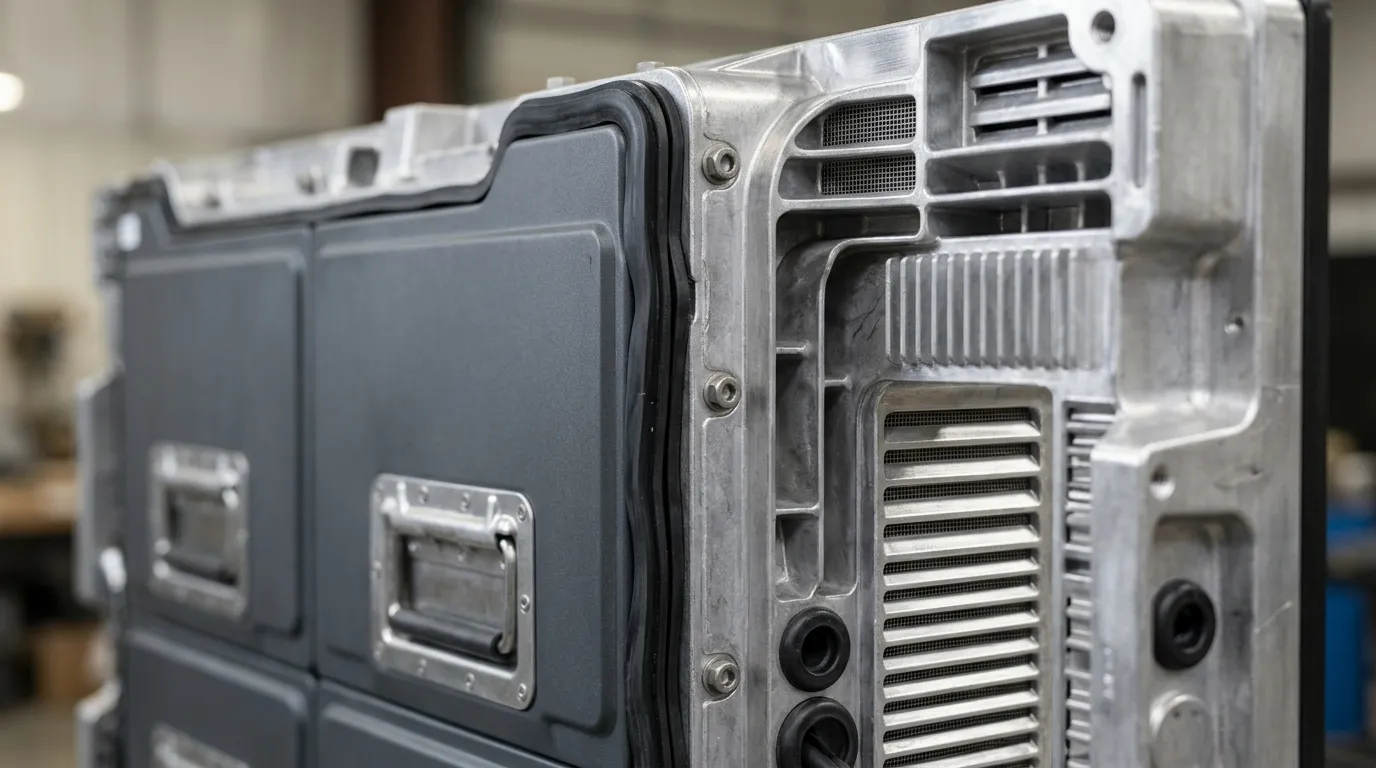
Request front and rear IP ratings separately, check that they apply to the modules and cabinet you are ordering, and treat them as a product rating rather than proof that the finished installation is weather-tight. EagerLED's outdoor LED screen guide states that the IP rating does not certify the whole installation and advises checking which parts of the display were tested.
Content control and remote advertising management
Confirm who supplies the content-management system, whether scheduling and remote updates are supported, and what the screen does if connectivity fails. Ask for the control-system make and model plus a written statement of how advertising content is uploaded, scheduled and changed after handover — this decides whether you can sell airtime easily or need staff on site.
Installation, structure and permits: who owns what
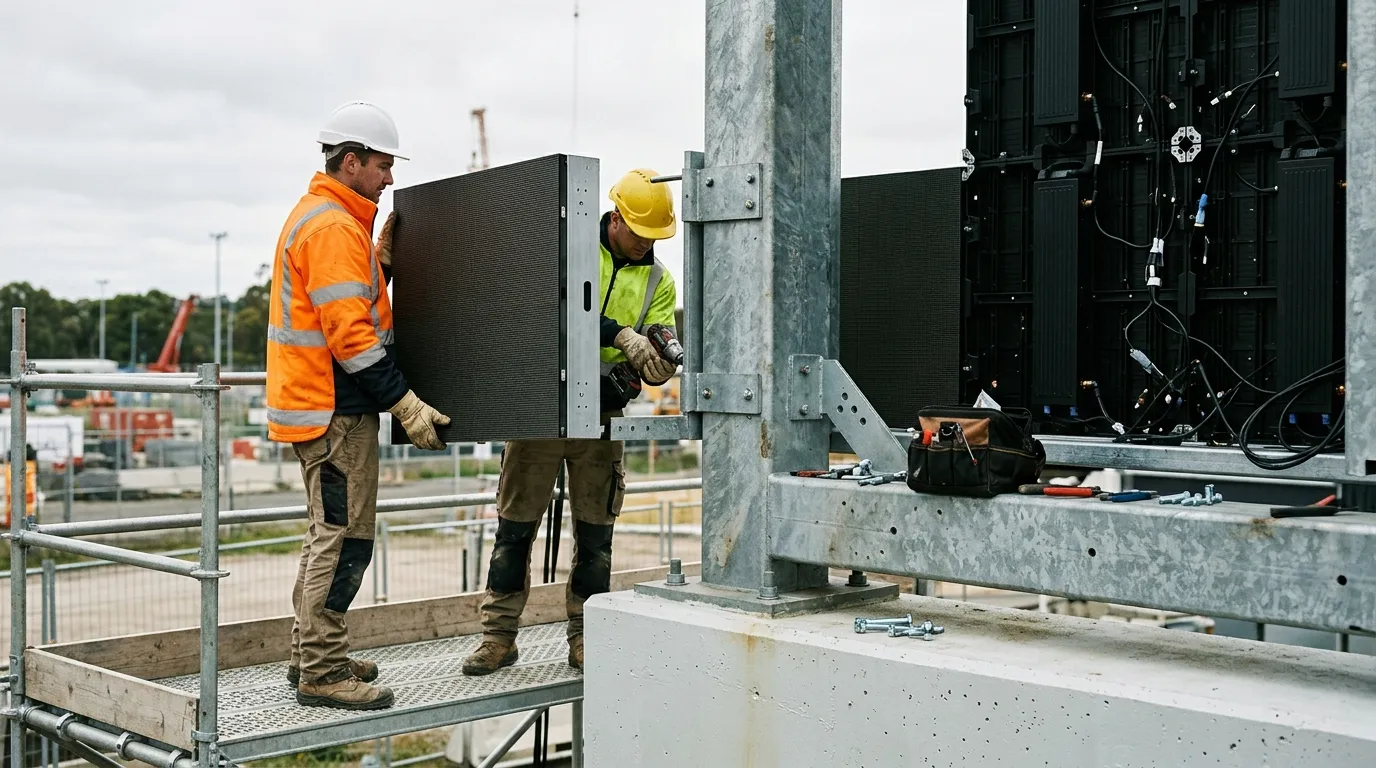
Installation, structural mounting, electrical supply and permits are usually local responsibilities, so confirm in writing which party owns each before the order is placed. Permitting and site preparation appear as stages in Electro-Matic Visual's turnkey process description, which shows they can be handled by the supplier — but only if the contract says so. Remember that a product IP rating does not certify the completed installation, so ask for the site-level weather and structural detail separately.
After-sales support, warranty and spare parts
Confirm the warranty period in writing, what remote technical support covers, how quickly spare modules and parts can be supplied, and who pays freight on replacements. MIC Display covers outdoor displays with a 5–8 year warranty, remote technical support and after-sales service, and has exported to more than 100 countries since being established in 2011. For any supplier, ask for both sides of the promise: a short warranty with a fast spare-parts path can serve an advertising screen better than a long warranty with no route to replacement modules.
FAQ
How much do outdoor LED displays for advertising cost?
Cost depends on pixel pitch, screen area, brightness configuration, cabinet type and control system, and on whether the quote includes structure, freight, installation and commissioning. There is no single price band that covers a street-pole sign and a large billboard. Request itemised quotes from each seller so you compare like for like rather than headline figures.
What is the best outdoor LED display for advertising?
There is no single best model, because suitability depends on the site. Check that brightness matches the ambient light and viewing distance, that front and rear IP ratings are stated for the components, that the control system supports the scheduling you need, and that spare parts and technical support are available after handover. Fit to conditions beats brand preference.
Is a consumer marketplace listing enough for an advertising installation?
A marketplace listing can supply hardware, but an advertising installation also needs documented brightness and IP information, a specified control system, and a named party responsible for structure, installation and after-sales. Confirm each of those in writing before ordering, because listings rarely define who handles site work, permits or replacement parts.
If you are specifying a fixed outdoor advertising screen and already know your site conditions, you can send your requirements through contact us for a factory-direct quotation. If your project needs local installation and permitting, ask your integrator to confirm the same inclusion list above.
Share on Social:


Contact Us
Related Posts
LED Window Display- The Complete Guide for Retail, Advertising, and Commercial Spaces
October 26, 2026
Mini LED Display- What It Is, How It Works, and Where It Fits
October 26, 2026
Naked Eye 3D LED Display - How It Works, Key Specs, Cost and How to Plan One (2026 Guide)
October 16, 2026
Transparent LED Displays for Storefronts
October 14, 2026


