




Best Indoor LED Displays for Shopping Malls
By miashuvo2077
Oct 05, 2026Related Posts
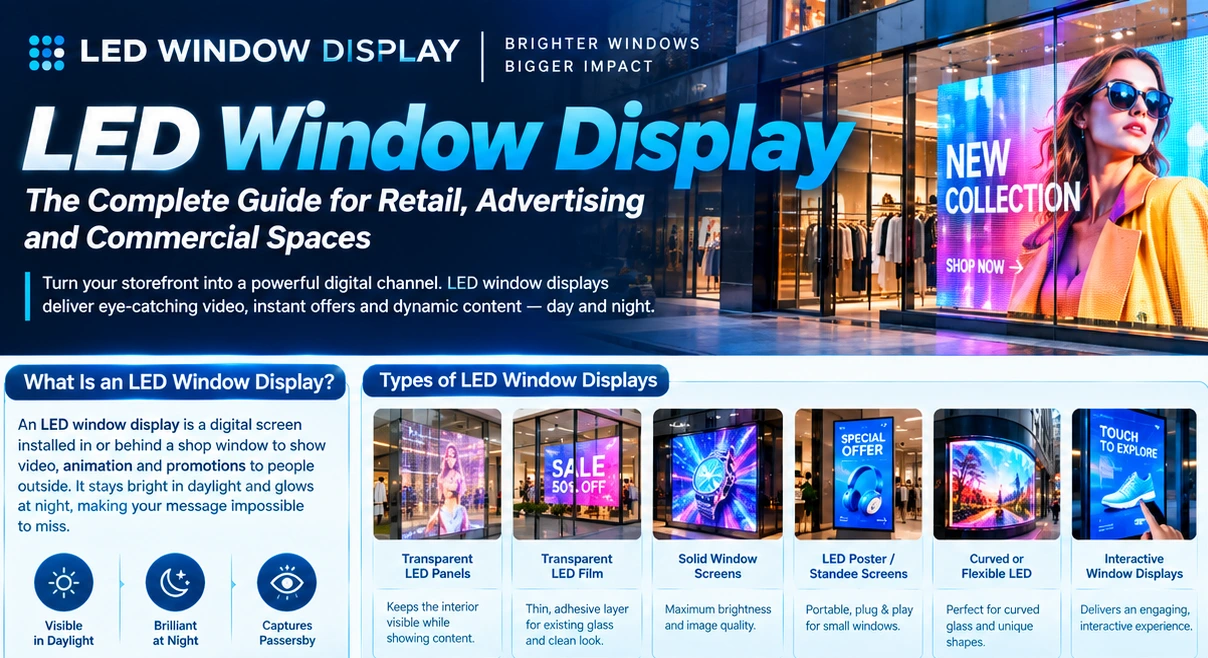
LED Window Display- The Complete Guide for Retail, Advertising, and Commercial Spaces
October 26, 2026
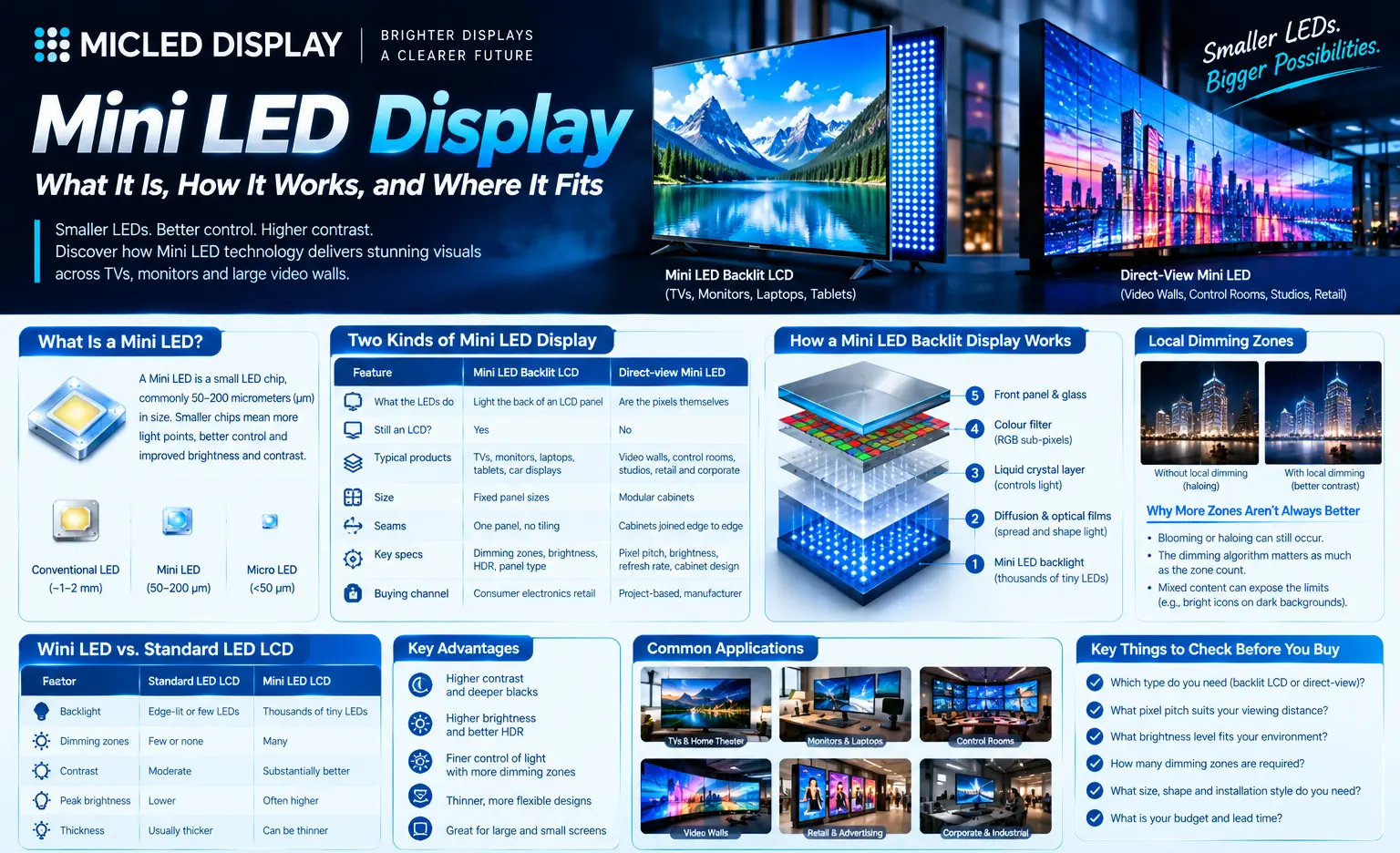
Mini LED Display- What It Is, How It Works, and Where It Fits
October 26, 2026
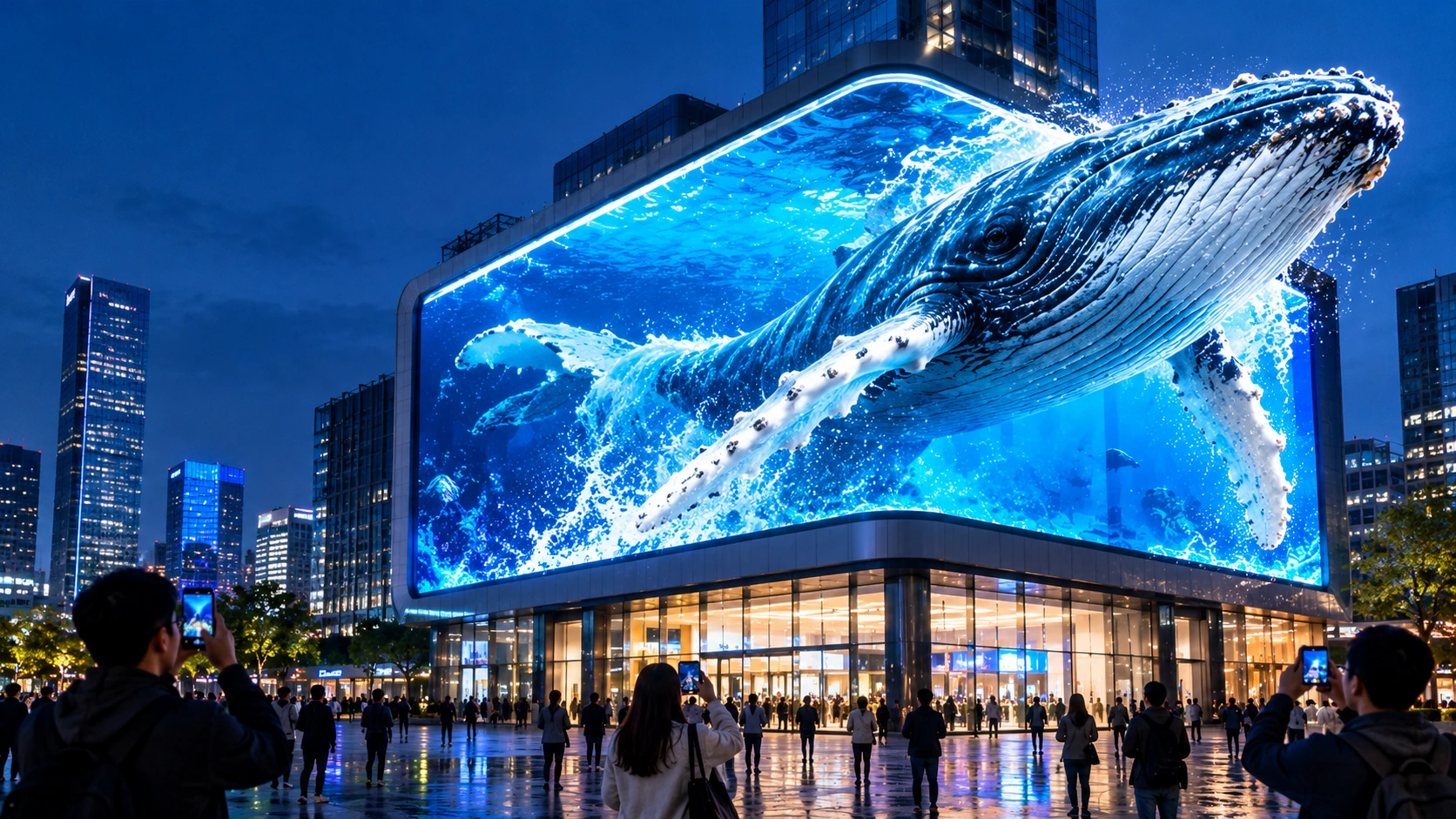
Naked Eye 3D LED Display - How It Works, Key Specs, Cost and How to Plan One (2026 Guide)
October 16, 2026
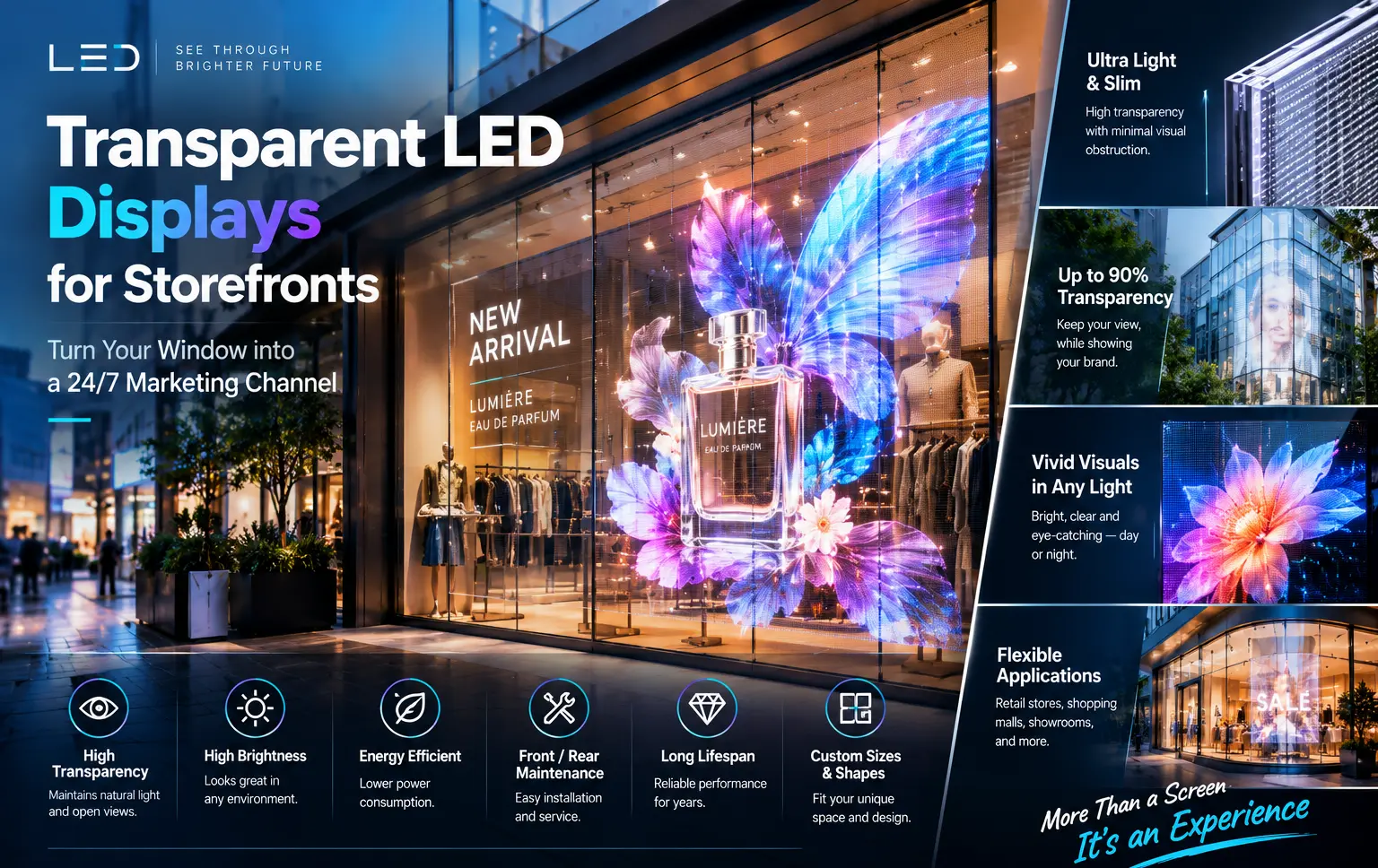
Transparent LED Displays for Storefronts
October 14, 2026
For shopping malls, there is no single best indoor LED display: the right choice depends on where it goes. Atriums, glass storefronts, corridors and floor zones each suit a different format — fixed video wall, transparent display, LED poster or floor tile — and each is specified against viewing distance, ambient light and service access rather than brand. Start with the location, not the product.
Key takeaways
- MIC Display's indoor fixed MC-S series spans pixel pitches P1.25–P5, including P1.53, P1.667, P1.86, P2, P2.5, P3.076 and P4, according to MIC Display's indoor LED display page.
- MIC Display lists the MC-S module at 320 × 160 mm with brightness greater than 800 nits, while its MC-PRO listing gives 600–3,000 nits and 10,000:1 contrast.
- Brightness is a design decision rather than a number to maximise: NSE LED's mall display page recommends 800–1,500 nits for standard indoor mall environments and higher near glazing or skylights — that is supplier guidance, not a universal standard.
- DDW's article on mall screens states 60%–95% permeability for the transparent LED screens in its examples, without naming a model or test condition.
- Match format to location: atriums suit fixed video walls, glass frontage suits transparent displays, corridors and promotions suit LED posters, and floor areas use LED floor tiles.
Which Indoor LED Display Fits Each Shopping Mall Location?
The mall location sets the format. A large open atrium favours a fixed LED video wall, glass frontage favours a transparent LED display, a corridor or promotional spot favours an LED poster display, and a floor or interactive zone uses LED floor tiles. Screen size, pitch and brightness are then specified against that location rather than against a product family.
An indoor LED display is any LED screen built for controlled-light interior use. The full range of options MIC Display builds for interior spaces is set out on its indoor LED display page, which lists both the MC-S fixed series and the MC-PRO series. According to MIC Display, the MC-S series suits retail stores, showrooms, shopping malls and general indoor projects.
[DIAGRAM: Mall zone map labelling atrium, storefront glass, corridor and floor area against the four display formats.]
| Mall location | Display format | Why it fits | Main check |
|---|---|---|---|
| Atrium / open concourse | Fixed LED video wall | Long viewing distances and large surfaces | Pitch from the longest viewing distance in the space |
| Storefront / glass frontage | Transparent LED display | Adds motion without blocking the shop interior | How much of the surface the image can occupy |
| Corridor / promotional zone | LED poster display | Close viewing and frequently changing content | Whether the screen must be re-sited |
| Floor / interactive zone | LED floor tile | Allows content underfoot in a defined area | Structure, traffic and access, confirmed with project professionals |
| Temporary event or pop-up | Rental LED display | Screen is needed for a limited period | Re-use and transport rather than permanent mounting |
Atriums and Open Concourses: Fixed LED Video Walls
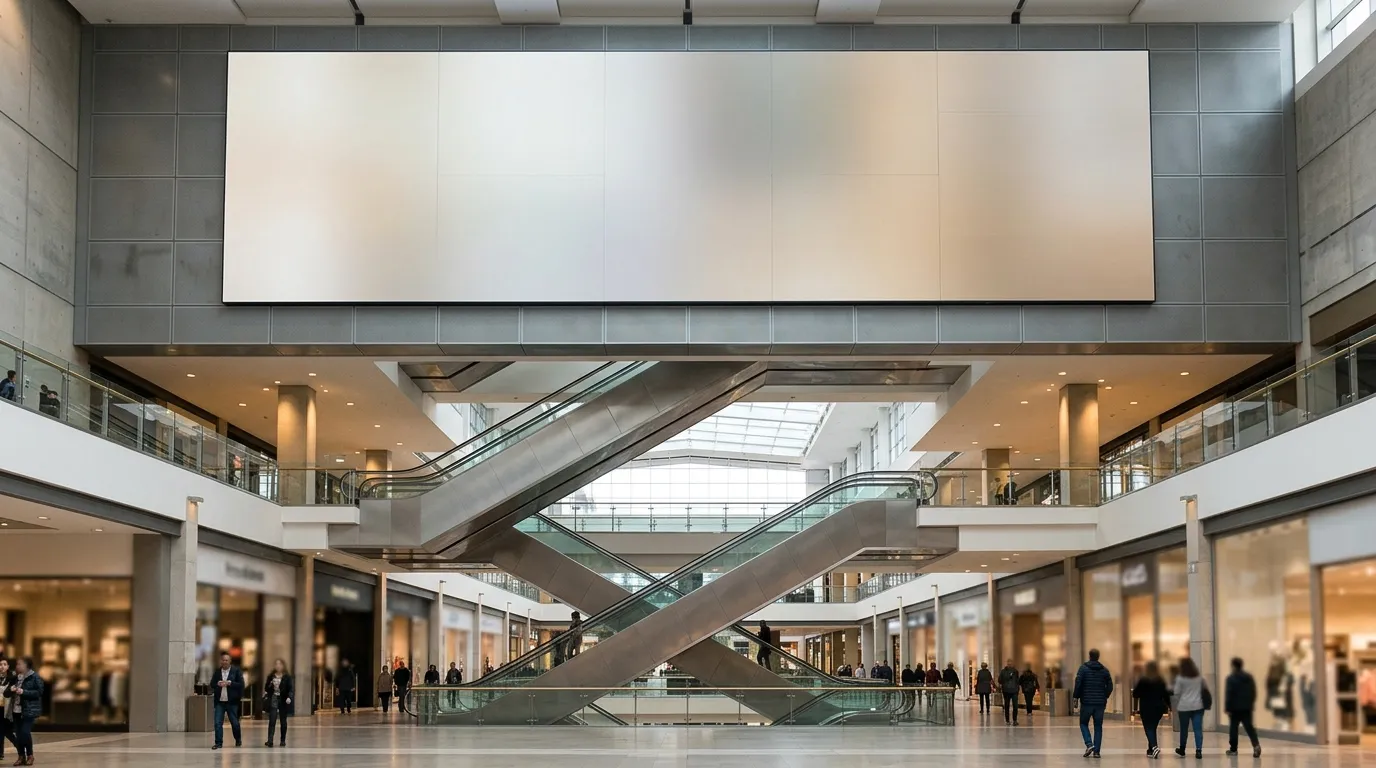
Atriums are viewed from long distances and often from below, so a fixed LED video wall with a coarser pitch and larger cabinet format usually delivers the required scale more efficiently than a small-format screen. The aim is to cover a large surface at the distance the audience actually stands at.
According to MIC Display, the MC-S indoor fixed series covers pixel pitches from P1.25 to P5, and its module measures 320 × 160 mm with brightness greater than 800 nits. A practical rule when sizing an atrium screen is to choose the pixel pitch from the longest viewing distance in the space, not from the closest seat or escalator landing. MIC Display's shopping mall immersive LED display project is one example to inspect; treat the project page as a reference for structure and layout, not as a specification you can copy directly into another building.
Storefronts and Glass Frontage: Transparent LED Displays
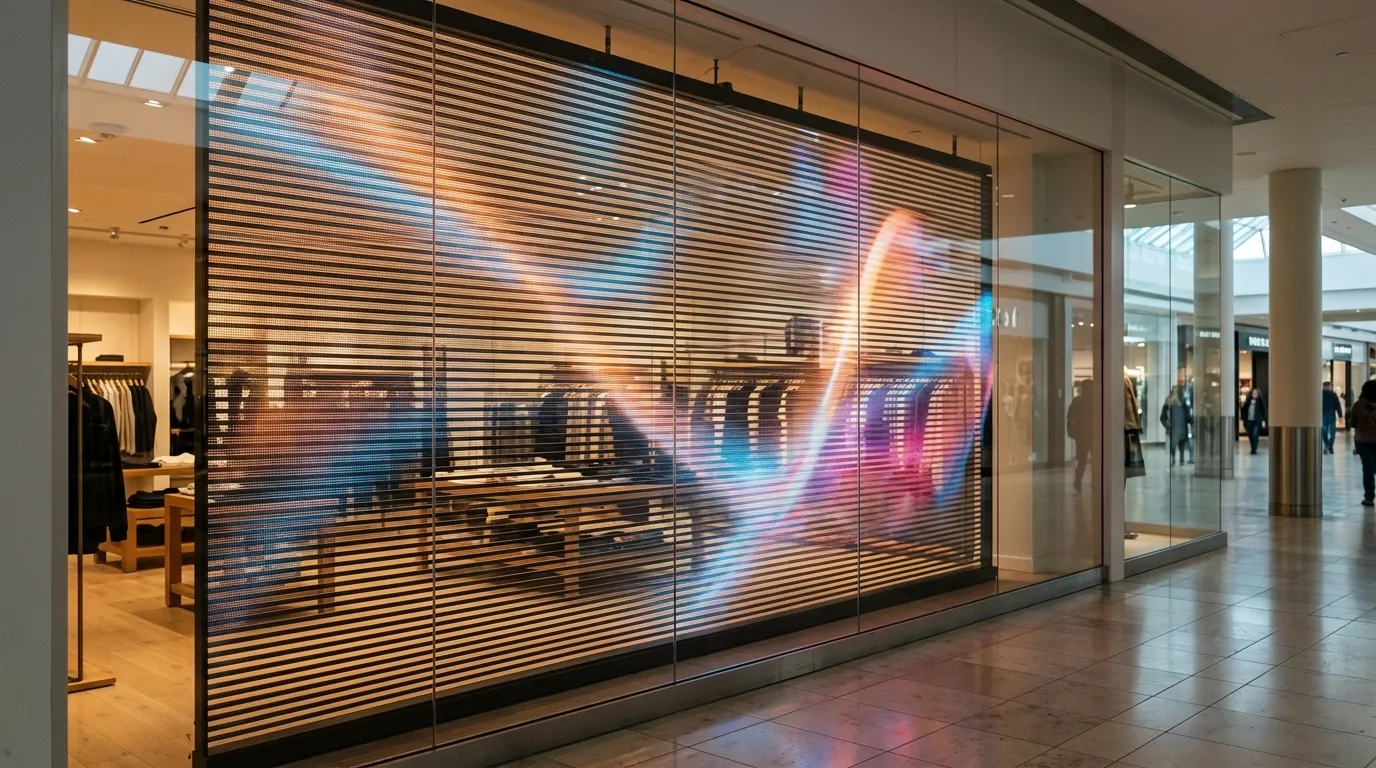
A transparent LED display suits a mall storefront when the glass has to stay visually open, because the screen adds motion without blocking the view of the shop interior. The screen becomes a layer over the window rather than a wall in front of it.
According to DDW's article on the four most common LED screens in shopping malls, the transparent screens in its examples have 60%–95% permeability, and the page does not give a model or a test condition for that range. Transparency has a cost: the open area reduces the surface available for image, so simple, high-contrast content reads better than dense detail. There is no verified "best" transparency figure, and it should be matched to what the storefront content needs to show. MIC Display builds an indoor transparent LED display for this kind of glass-mounted application.
Corridors and Promotional Zones: LED Poster Displays
Corridors are viewed close up and their content changes often, so a freestanding or slim LED poster display fits better than a permanently mounted wall. It can be moved to a new promotion, a new tenant or a new season without rebuilding a structure.
Choose a poster format when the screen must be re-sited, is content-led, and is viewed from roughly one to three metres. At those distances, detail matters more than scale, which points to the finer end of MIC Display's stated MC-S range of P1.25 to P5. MIC Display's indoor poster display is the format to compare against a fixed wall in this situation.
Floors and Interactive Zones: LED Floor Tiles
LED floor tiles suit interactive or branded floor areas, but the decision is as much about the floor as about the screen. UNIT LED lists floor and ceiling displays among indoor mall uses, which is why the format appears in mall plans at all.
Before specifying a floor screen, confirm surface flatness, the load path, surrounding foot traffic, cable routing and the route used to install and later remove or service the tiles with the project's structural and safety professionals. Do not assume load ratings or durability for a specific product without written confirmation. MIC Display builds an indoor floor tile screen for this application.
Fixed Video Wall or LED Poster Display: How to Decide
Choose a fixed video wall when the position, size and content are permanent and the audience views it from a distance. Choose an LED poster display when the message changes, the position may move, or the audience stands close to the screen.
The decision turns on four questions. Is the position permanent? Will the content refresh often? Is the closest realistic viewing distance under about three metres? Does the screen also need to be seen from far away? Under three metres, a finer pitch and a smaller format are usually needed; where the audience stands five metres or more away, larger cabinets and a coarser pitch cover the area more efficiently. MIC Display's stated MC-S range of P1.25 to P5 covers both ends of that conversation.
What to Compare Before You Specify an Indoor Mall LED Display
Compare five things against the site before choosing a product: pixel pitch against viewing distance, brightness against ambient light, contrast, screen size against content aspect ratio, and transparency against content readability. Service access is the sixth item and is covered in its own section below.
According to MIC Display, the MC-S module measures 320 × 160 mm with brightness greater than 800 nits, while the MC-PRO listing gives 600–3,000 nits and 10,000:1 contrast. According to NSE LED's shopping mall LED display solutions page, standard indoor mall environments call for 800–1,500 nits, with higher brightness near glass façades or skylights; that figure is one supplier's guidance, not a universal standard. Premteco's article on indoor LED displays, published 19 May 2025, lists P0.9, P1.25, P1.56 and P1.875 options for its SP1 Pro series and states refresh rates up to 7,680 Hz, which is a product-page claim for that series rather than a requirement for mall screens.
Pixel pitch is the distance between the centres of adjacent pixels and sets how close a viewer can stand before the image breaks into visible dots. Refresh rate is how many times per second the screen redraws the image; it matters when screens appear on camera or on video.
| Factor | Why it matters in a mall | What to confirm |
|---|---|---|
| Pixel pitch vs viewing distance | Sets whether the image reads cleanly at the closest audience position | Longest and closest viewing distances in the space |
| Brightness vs ambient light | Over-bright screens look harsh; under-lit ones wash out | Glazing, skylights and the site's typical light levels |
| Contrast | Affects legibility against bright surroundings | Contrast figure for the specific product, in writing |
| Screen size and aspect | Content has to fit without stretching or cropping | Content aspect ratio before the screen is sized |
| Refresh rate | Prevents banding when the screen is filmed | Whether the screen will appear on camera |
| Content and control system | Determines how often and how easily messaging changes | Who updates content, and how |
How Installation Position and Viewing Angles Change the Choice
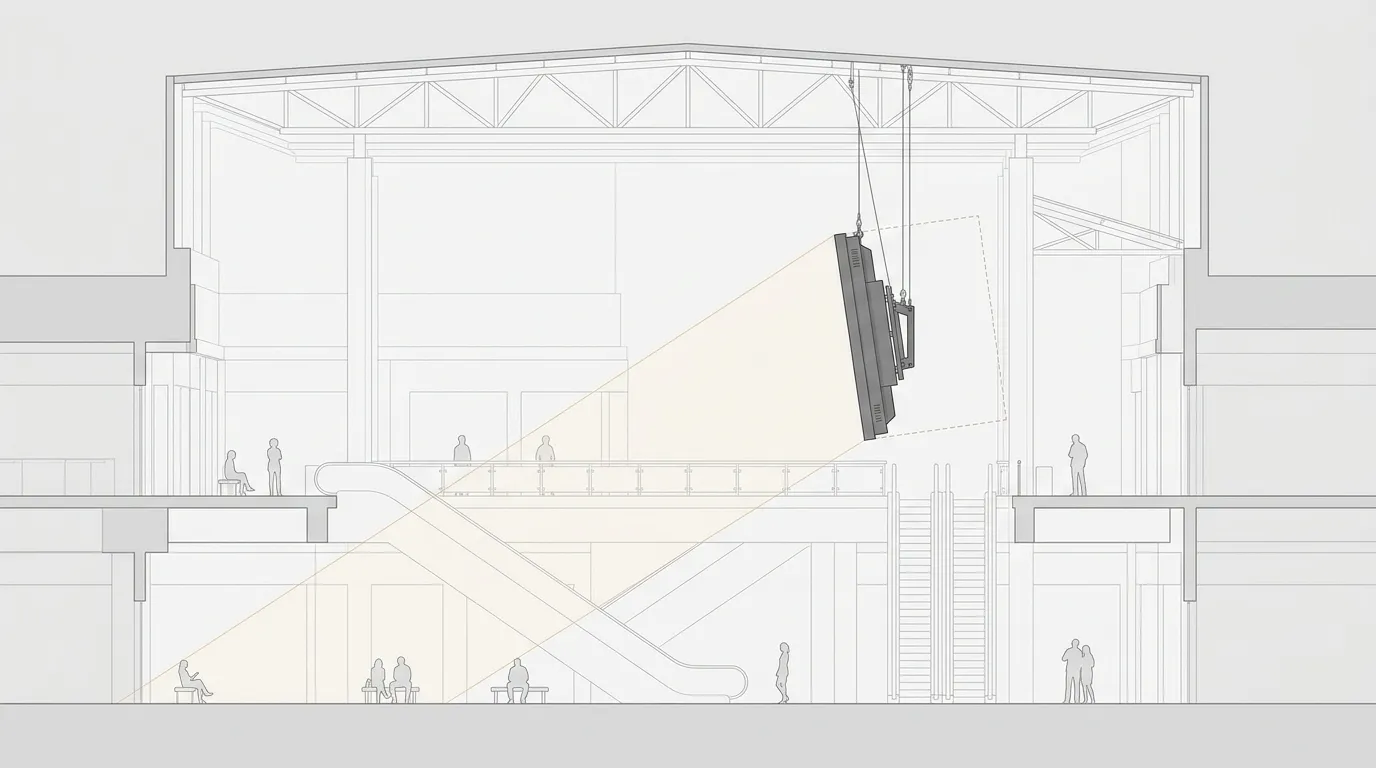
A screen seen from directly in front behaves differently from one seen from below or at an angle, so mounting height, tilt and distance decide pitch and brightness more than the product family does.
According to MIC Display, the MC-PRO indoor display listing states 10,000:1 contrast, which matters most when a screen faces bright glazing or a skylight. Three rules keep the choice practical. Set the mounting height from the lowest realistic sightline, not the average. Check that high-mounted or suspended screens are not viewed at extreme angles where brightness falls off at the edge of the audience area. Confirm that columns, escalators and hanging signage do not block sightlines from the positions people actually occupy.
Maintenance Access: Settle It Before the Structure Is Finalised
Decide how each cabinet will be reached before the mounting structure is approved. Front access, rear access or a lift-and-reach arrangement determines both the structure and the space behind the screen, and it is far cheaper to plan than to retrofit.
According to MIC Display's indoor LED display page, front-maintenance configurations are an option and can simplify servicing and reduce the space required behind the screen. Three questions settle the rest: is there usable space behind the wall or above the ceiling; can a lift reach the top row safely; and who will clean the screen and swap modules, and how often? Answer them in writing before the structure is signed off.
What to Gather Before Requesting a Mall Display Recommendation
A supplier or integrator can only recommend a format once the location, viewing distance, light conditions, structure, service access and content plan are known. Gather these seven inputs first, and the first conversation becomes a design discussion rather than a guess.
- Location and purpose — atrium, storefront, corridor or floor, and what the screen is for.
- The closest and longest viewing distances in that space.
- Ambient light conditions, including glazing and skylights.
- Available mounting points and the type of structure behind them.
- Required screen size and the content aspect ratio it must display.
- The service access route, and whether front or rear maintenance is possible.
- Expected operating hours and any content or control system requirements.
According to NSE LED's mall display page, commercial mall displays may operate 12–18 hours a day, seven days a week; treat that as one supplier's statement about operating patterns, not an industry requirement. Electrical, structural, fire and local code requirements must be verified with qualified professionals and the relevant authorities — this guide does not certify compliance with any of them.
Common Specification and Placement Mistakes in Mall Projects
Most mall display mistakes are made before manufacture, not after installation. Pitch gets chosen from price rather than viewing distance, brightness is pushed higher than the space needs, an atrium specification is copied into a corridor, and service access is decided last.
Four corrections cover most of them. Choose pitch from viewing distance first and let budget shape the rest. Match brightness to the site's ambient light rather than to the highest available figure, using NSE LED's 800–1,500 nit guidance for standard indoor mall environments as supplier-specific context only. Do not reuse an atrium specification in a corridor, where viewers stand much closer and need a finer pitch. And settle service access before the structure is finalised, using the maintenance section above as the checkpoint.
Mall Display Examples and Next Step
MIC Display has delivered mall immersive and 3D LED display projects, and both are useful to look at before briefing your own project because they show how the display type follows the location. The shopping mall 3D LED display project is one reference point alongside the immersive case linked earlier.
MIC Display is a China-based LED display factory established in 2011. Its design team customizes screen structure, size and configuration for each project's installation environment, it exports to more than 100 countries, and its displays carry a 5–8 year warranty with remote technical support and after-sales service. Case pages are references for layout and structure, not specification sheets you can copy into another building.
If you share your mall location, viewing distances, ambient light conditions and content plan, MIC Display's design team can recommend a structure, size and configuration for the installation environment.
Frequently Asked Questions
How much does an indoor LED display for a shopping mall cost?
Cost is set by variables rather than by a list price: the display format, pixel pitch, screen size, mounting structure and installation complexity, and the control system that drives content. Because these differ for every mall space, an indoor mall display has to be quoted per project. A supplier needs your location, viewing distances and size before any meaningful figure exists.
Who makes the best LED displays for shopping malls?
There is no single best supplier, so the useful question is which supplier fits your project. Compare design and customisation capability for the installation environment, warranty length, spare-part availability, and remote technical support. MIC Display is a China-based LED display factory established in 2011 that exports to more than 100 countries and offers a 5–8 year warranty with remote support and after-sales service.
Which type of LED display is best for a shopping mall?
It depends on location. Atriums suit fixed LED video walls, glass storefronts suit transparent LED displays, corridors and promotional spots suit LED poster displays, and floor zones use LED floor tiles. Each is then specified against viewing distance, ambient light and service access. The location table above is the fastest way to narrow the choice.
Share on Social:


Contact Us
In This Article
Related Posts
LED Window Display- The Complete Guide for Retail, Advertising, and Commercial Spaces
October 26, 2026
Mini LED Display- What It Is, How It Works, and Where It Fits
October 26, 2026
Naked Eye 3D LED Display - How It Works, Key Specs, Cost and How to Plan One (2026 Guide)
October 16, 2026
Transparent LED Displays for Storefronts
October 14, 2026


