




LED Floor Screen vs Projection Mapping Floor
By hqt
Nov 20, 2026Related Posts
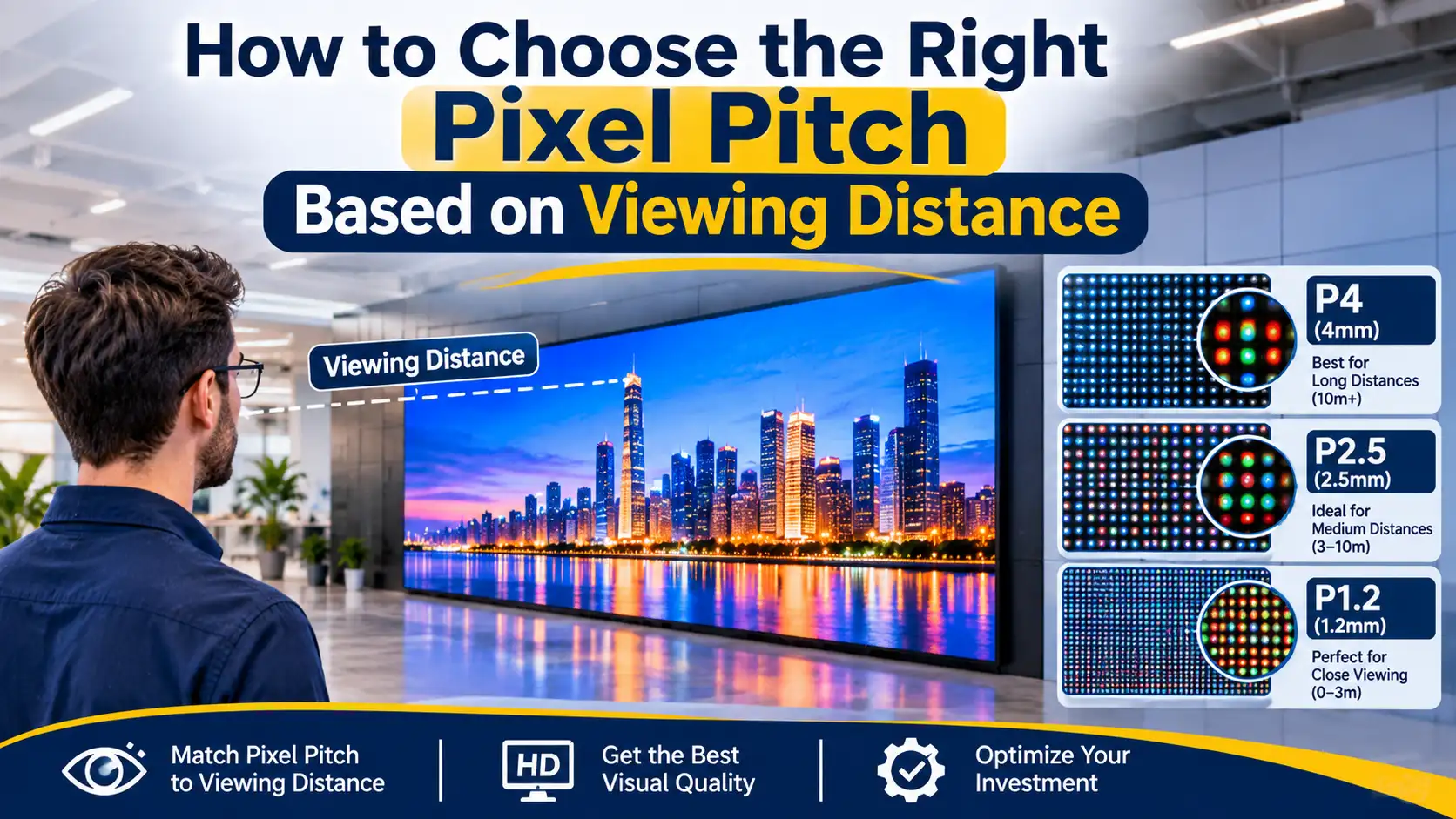
How to Choose the Right Pixel Pitch Based on Viewing Distance
November 14, 2026
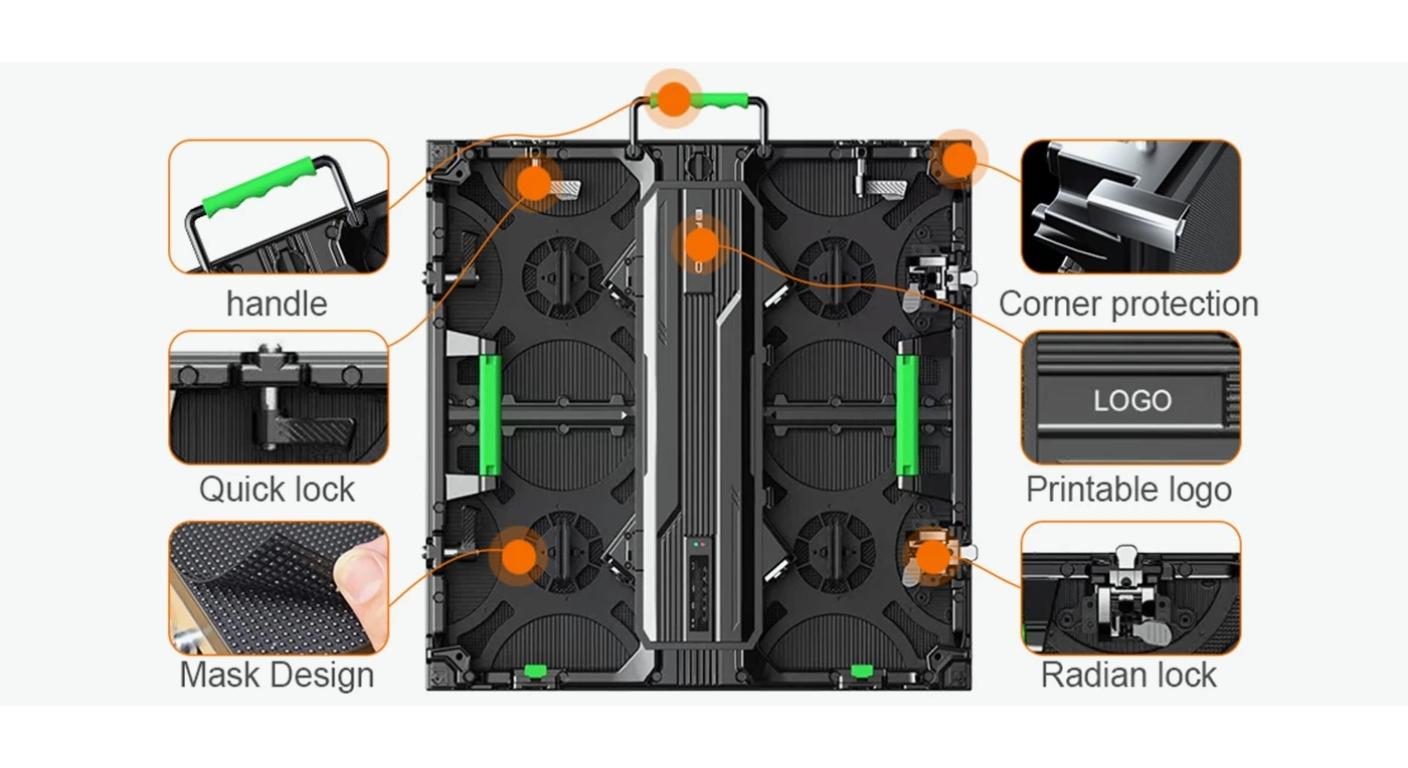
Corner Protection Rental LED Panel: Damage Prevention and Maintenance Guide
October 30, 2026
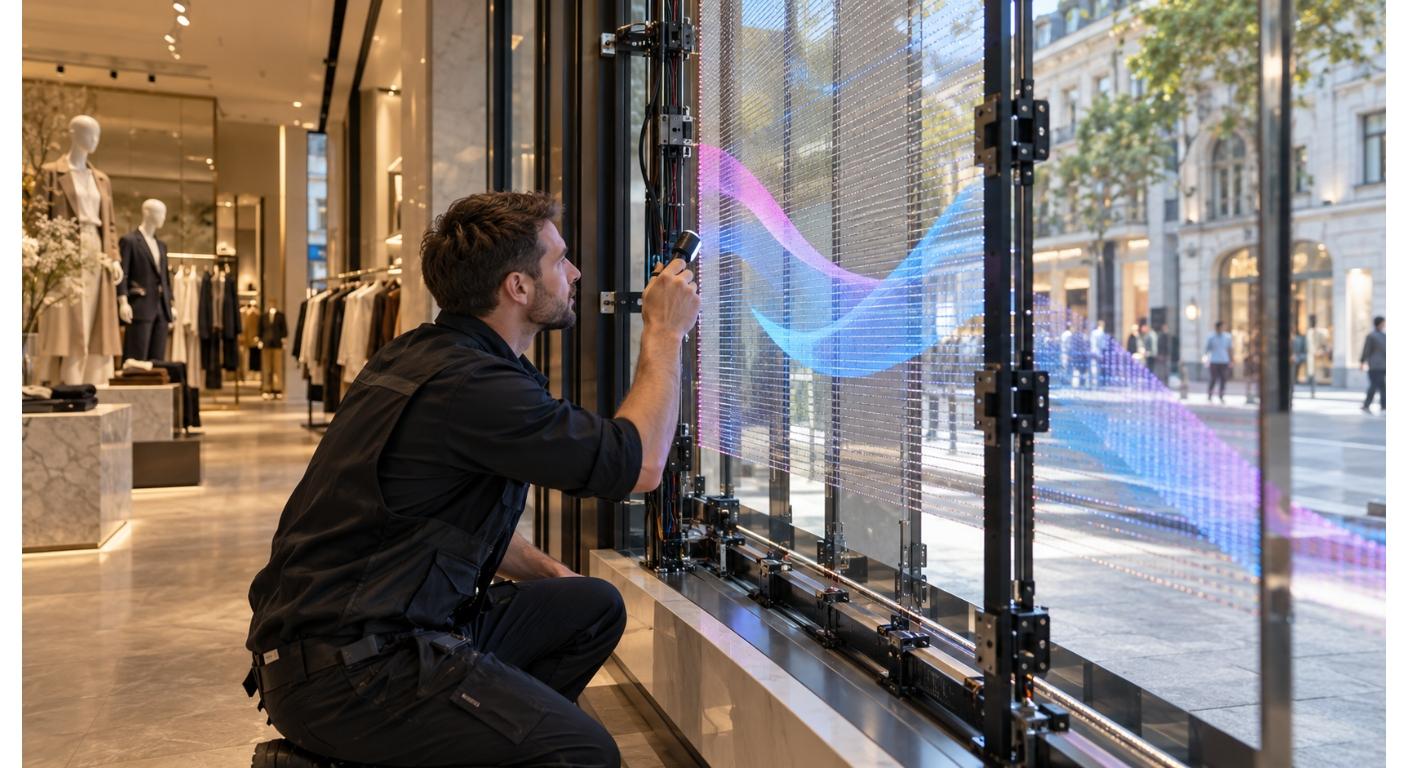
How to Choose a Shop Window Transparent LED Display for Retail Stores
October 29, 2026
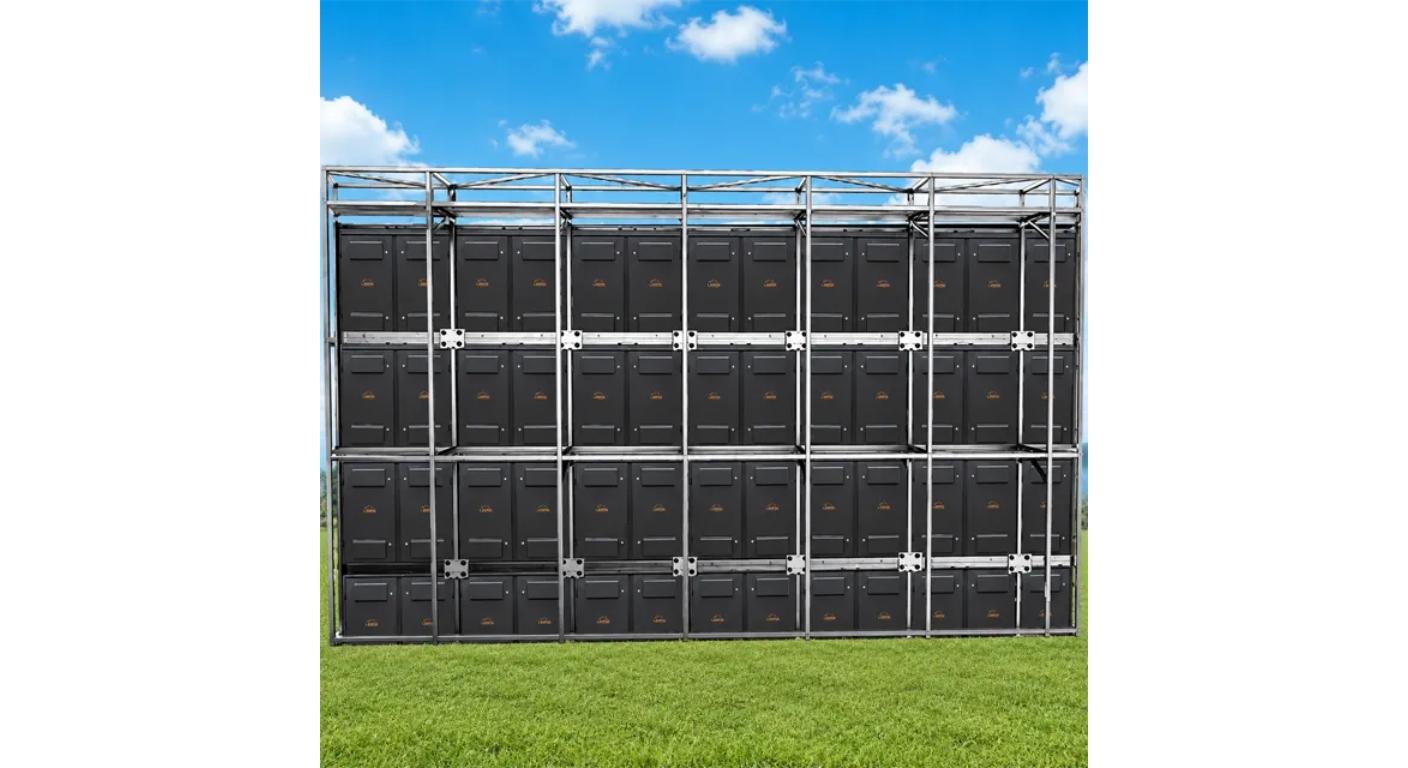
Iron vs. Aluminum Outdoor LED Display Cabinets: How to Choose
October 28, 2026
An LED floor screen creates pictures directly under a walking surface's protective screen. A projection mapping floor is a floor that is covered by a projector and has a different surface. In brighter spaces and installations where an unobstructed projection path is hard to come by, LED is often the best choice. For controlled-light situations, where overhead equipment and a suitable surface are available, projection can be an option.
Both can be used to develop interactive experiences. It's not about the flashiness of the demonstration, it's about the lighting, visitor traffic, floor construction, and maintenance.
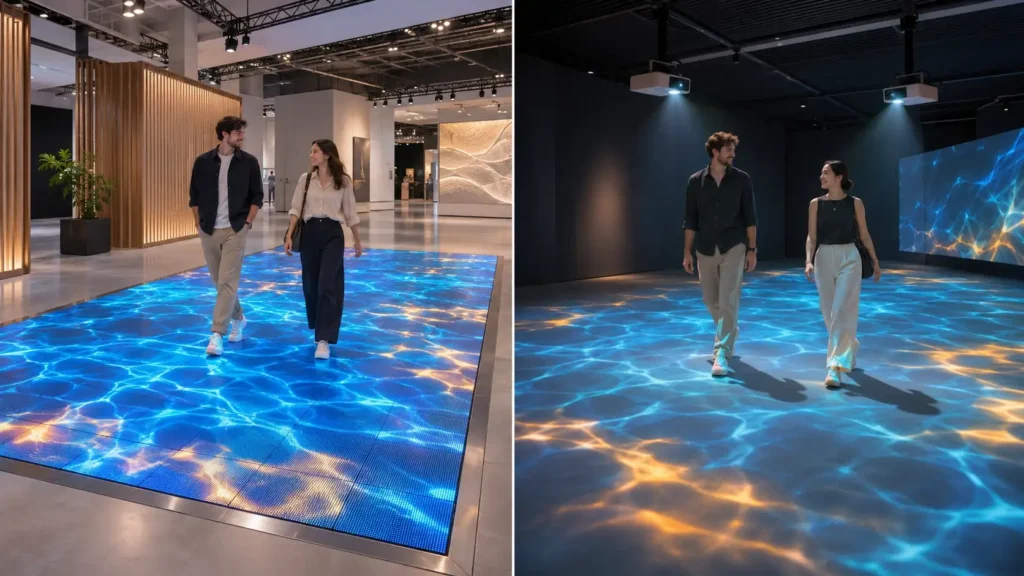
Two Different Ways to Create a Digital Floor
An LED floor consists of display cabinets, protective covers, supporting components, power distribution, and control equipment. Unlike a standard wall display, the complete floor assembly must be suitable for its intended pedestrian or equipment loads.
Projection mapping uses projectors, lenses, content-processing equipment, and a receiving surface. Software adjusts the image to match the floor geometry. Larger installations may require multiple projectors and edge blending.
| Factor | LED floor screen | Projection mapping floor |
|---|---|---|
| Image production | Pixels emit light beneath the walking surface | Projected light reflects from the floor |
| Ambient light | Often accommodates brighter environments | Contrast depends strongly on lighting |
| Visitor shadows | No projection beam to interrupt | People may obstruct projected light |
| Physical installation | Adds display hardware at floor level | Requires suitable projector positions |
| Image detail | Depends on pitch and display dimensions | Depends on resolution, optics, and coverage |
| Walking surface | Protective display surface | Existing or specially prepared flooring |
Ambient Light Changes the Result
A dark immersive gallery and a shopping mall atrium present very different conditions.
Projection usually benefits from controlling light that reaches the floor. Unwanted illumination reduces visible contrast, particularly in darker image areas. Increasing projector output can help, but equipment must still be selected for the coverage area and site lighting. Professional mapping projects account for both ambient light and receiving materials.
LED floors can offer more flexibility in illuminated spaces. However, excessive brightness can become uncomfortable, especially when people look downward from close range.
MIC’s interactive indoor LED floor screen is one option to assess for museums, exhibitions, and commercial interiors.
Test both technologies under normal operating lighting. A demonstration in a dark room will not predict performance beneath a skylight.
People Affect the Image Differently
Overhead projection" allows visitors to block light from reaching the floor. Overlapping coverage and placement of projectors may be needed to minimize shadowing, but coverage needs to be designed with audience movement in mind.
LED floors do not create shadows from projecting beams. People still walk over the pixels under their feet and crowds can block a lot of the content.
This impacts creative choices. The small text and detailed illustrations are likely to get lost under visitors. It is easier to follow broad patterns or clear movement cues and movement how it's worked out around participants.
Have several people have the experience at the same time instead of one person standing in a free space, ask the content team to show it.
Interactive Effects Need More Than a Display
Neither technology becomes interactive merely because it shows moving graphics.
An interactive system needs sensing, tracking, software, and a connection between detected movement and rendered content. Depending on the design, sensing may use integrated floor sensors, cameras, infrared equipment, or other tracking methods.
| Interactive requirement | What to verify |
|---|---|
| Footstep detection | Detection coverage and practical spatial accuracy |
| Multiple visitors | Tracking performance with overlapping participants |
| Response time | Delay across sensing, software, and display |
| Content changes | Software access, licensing, and supported formats |
| Venue conditions | Performance with actual lighting and visitor behavior |
An impressive ripple effect does not establish suitability for every game or audience size. Request a test matching the planned experience.
Walking Surface and Load Requirements
In the case of an LED floor, the display mounting is part of the walking surface. Verify structural support, leveling, edge transitions, slip resistance and cleaning.
Distributed loads do not imply suitability for concentrated loads on heels, furniture legs, wheels or equipment. Dynamic loading should also be considered individually.
With projection the electronics are kept above ground level and the receiving surface must also have appropriate traction and durability. Reflections from glossy finishes, and image appearance from changes in floor color and wearing can be incorrect.
In exposed areas, MIC's interactive outdoor LED floor screen offers an answer system that can be used to do a product path evaluation. Verify the ordered configuration's environmental protection, drainage and permitted loading.
An indoor LED floor or indoor projector should not be taken for granted to be appropriate for use outside.
Installation and Maintenance
LED flooring requires a level supporting arrangement, power and signal routing, and a practical replacement procedure. Ask how a central module can be removed without dismantling the surrounding installation.
Projection requires suitable throw geometry, secure mounting, focus, and alignment. Multiple projectors add blending and calibration work. Maintenance may require access equipment to reach overhead units.
Both approaches need cleaning and periodic inspection. Laser projection can reduce lamp-related servicing, but optics, cooling systems, and filters where fitted still need attention.
For productions combining floor visuals with a vertical backdrop, MIC’s MCR-S indoor event rental LED screen is a related backdrop option. Wall-screen cabinets should not be treated as walkable floor tiles.
Compare Complete Project Costs
Projection may look economical when an appropriate floor and overhead infrastructure already exist. LED may provide value where lighting flexibility and direct-view imagery are priorities.
There is no universal cost winner.
| Cost category | LED floor | Projection mapping floor |
|---|---|---|
| Hardware | Cabinets, covers, support, and controllers | Projectors, lenses, mounts, and processing |
| Installation | Leveling, cabling, and edge treatment | Rigging, alignment, mapping, and blending |
| Interaction | Sensors and software | Tracking equipment and software |
| Maintenance | Surface care, spares, and module replacement | Optical cleaning, servicing, and realignment |
| Content | Resolution-specific production | Geometry-specific production |
Compare electricity using actual configurations and operating hours. Screen area alone does not establish consumption.
Frequently Asked Questions
Is an LED floor better than floor projection?
LED often suits brighter environments. Projection can be effective in controlled lighting with suitable mounting and flooring.
Can both systems respond to footsteps?
Yes, when compatible sensing and interactive software are included. Confirm what the quotation actually covers.
Do LED floors eliminate shadows?
They eliminate shadows caused by blocking a projection beam. Visitors can still physically cover displayed content.
Can ordinary LED panels be installed as flooring?
No. Use a purpose-built floor system approved for the intended loads and installation method.
Is projection mapping cheaper?
Sometimes. Lens requirements, projector quantity, tracking, rigging, and content production can change the comparison.
Can either system operate outdoors during daylight?
Evaluate the specific equipment and conditions. Daylight projection is challenging; outdoor LED flooring still needs appropriate brightness and protection.
Which provides sharper images?
Compare LED pitch and pixel count with projection resolution, optics, surface quality, and mapped coverage.
What should buyers provide for a recommendation?
Share floor dimensions, lighting photographs, ceiling height, visitor numbers, load requirements, interaction goals, and operating hours.
Share on Social:


Contact Us
In This Article
Related Posts
How to Choose the Right Pixel Pitch Based on Viewing Distance
November 14, 2026
Corner Protection Rental LED Panel: Damage Prevention and Maintenance Guide
October 30, 2026
How to Choose a Shop Window Transparent LED Display for Retail Stores
October 29, 2026
Iron vs. Aluminum Outdoor LED Display Cabinets: How to Choose
October 28, 2026


