




How to Select MIC Outdoor LED Signage for Your Advertising Project
By hqt
Oct 23, 2026Related Posts
How to Choose the Right Pixel Pitch Based on Viewing Distance
November 14, 2026
Corner Protection Rental LED Panel: Damage Prevention and Maintenance Guide
October 30, 2026
How to Choose a Shop Window Transparent LED Display for Retail Stores
October 29, 2026
Iron vs. Aluminum Outdoor LED Display Cabinets: How to Choose
October 28, 2026
Outdoor LED signage must be considered as a working advertising system; it shouldn't just be a big screen. For commercial property owners and signage contractors/outdoor media operators, the significant choices involve the visibility of an audience and the conditions of installation and maintenance, as well as costs.
Two example product references of this process are: MIC's MC-S Outdoor Advertising LED Display and MC-PRO Outdoor Fixed LED Display. They both are for permanent outdoor use, although the published specification is different. These differences can be compared to the site brief, and this is a more useful method of selection than choosing by series name or maximum brightness.
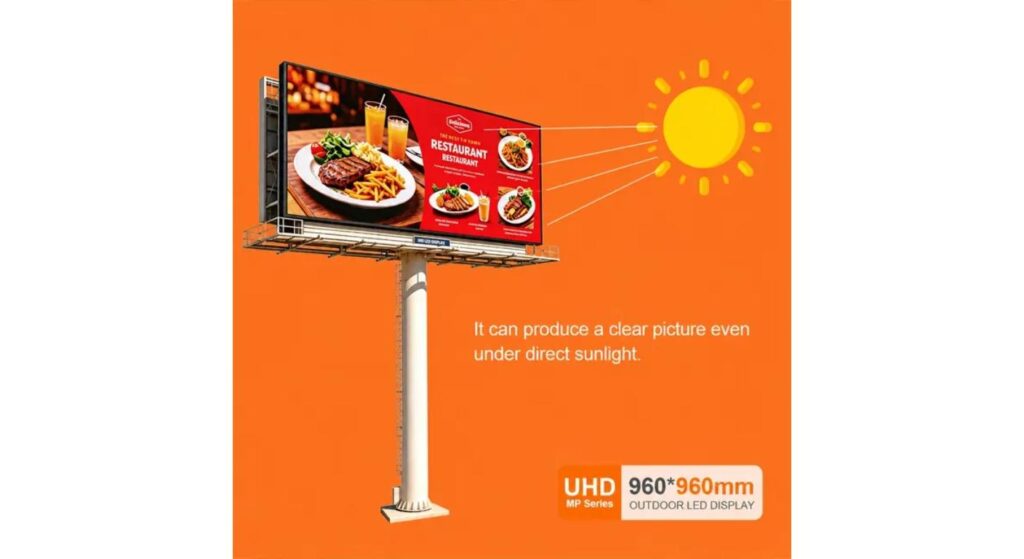
Always consider the audience and distance from which they will be viewing.
Determine the location(s) where the screen will be visible and the amount of time a viewer is likely to have to view the screen. Large, easy-to-understand messages are necessary for a roadside audience. People who need to walk closer to an entrance to a store might have more time to read product information, but small print may be ineffective as well.
Pixel pitch is a measure of the distance between the pixels. The smaller the pitch the better the fine detail will be able to be achieved at shorter distances, and the larger the pitch may be adequate for a large screen, viewed at a larger distance. This will also be based on the size of the screen, the complexity of the content and budget.
Evaluate the proposed display from the closest regular viewing location and approach directions. Request MIC to show exemplar work on the resolution proposed. A promotion video can't determine whether or not the smallest essential text will be legible in the final installation.
Think MC-S for Outdoor Advertising Layouts:
LED display MC-S is specifically designed for billboards, building facades and commercial advertising. It has put out a specification of P2 to P10 options, cabinets of 960 × 960 mm, a brightness of at least 5000 nits and an IP65 protection rating. Other types in the range are flat, curved, corner and pole mounted.
When the project requires an outdoor advertising setup which is specifically designed to account for the viewing distance and architectural design, take MC-S into consideration. Do not assume all installations of the selected version have the same shape of structure and that all of them will use the same cabinets/accessories.
It also offers the benefit of having a broader pitch range published, allowing for comparison of near-viewing commercial screens with larger ad spaces. But, when the best pitch is set automatically, it can result in greater equipment and processing requirements, with no improvement in the message from the desired viewing location.
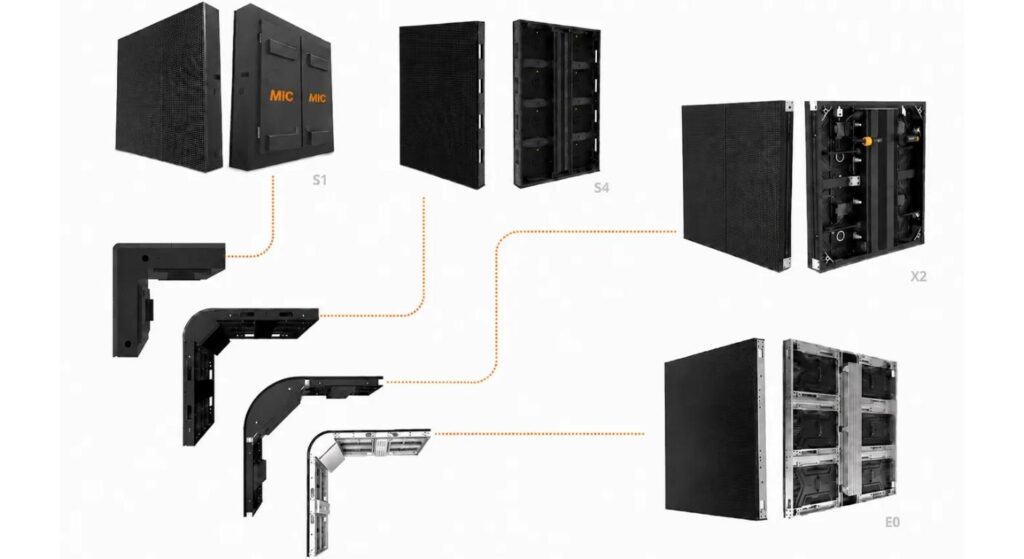
For Fixed-Installation Requirements consider MC-PRO.
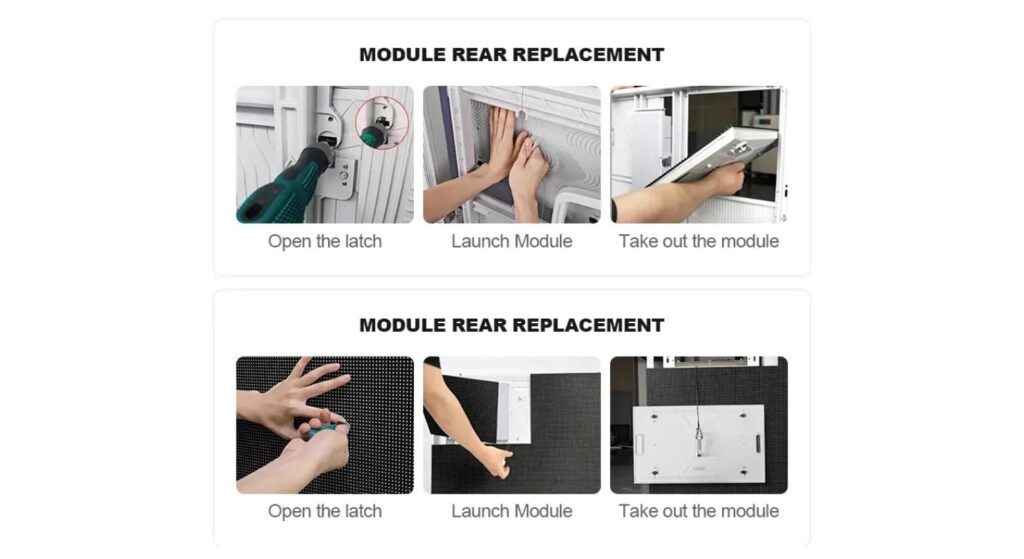
The MC-PRO Outdoor Fixed LED Display focuses on the permanent installation. It has P4.44, P5.7, P6.67, P8 and P10, up to 7500 nits of brightness, protection of IP66 at the front and rear, and aluminum modules and front and rear maintenance access according to its product page.
These are attributes that make MC-PRO well worth considering where exposure protection and/or service flexibility or high ambient light are key considerations. It also has a published cabinet profile of 88 mm which will need to be taken into account when arranging the display in conjunction with the building facade.
Do not consider either series as the "one size fits all. Compare the actual setups for the same site, service and display goals. Ask for up-to-date drawings and specifications before determining if a specific feature will have any benefits for the project.
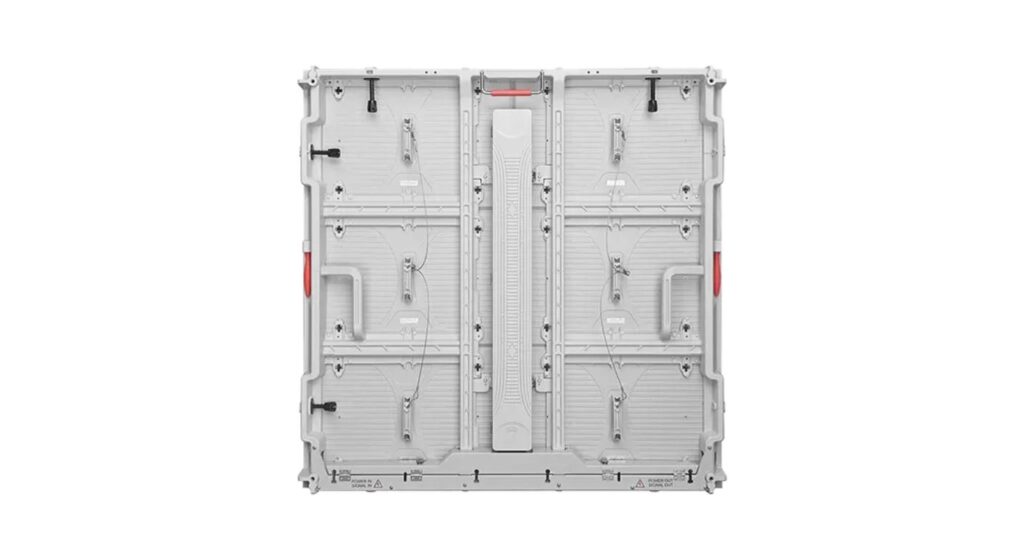
Calculate Daytime Visibility and Brightness Control
Outside view is dependent on the direction of the sun, ambient light, contrast of the screen and content in the screen. Note if there is direct afternoon sun, shade or if it is used primarily at night. Check the performance under representative conditions besides the highest published brightness.
The operating brightness is to be adapted to the place and time of operation. When operated at full power all night, it can generate night-time discomfort and wasted power. Inquire about the ability to adjust brightness and the person who will be making the adjustments.
AUTO BRIGHTNESS ADJUSTMENT is dependent upon the controller selected, sensing hardware and system configuration. Where necessary it should be stated and illustrated. Discuss what method will be used to make adjustment when the system is being designed.
Ensure IP Protection is appropriate for the installation location.
An IP rating applies to specific outdoor conditions, and does not make a product suitable for all conditions. Ensure that the proposed assembly is protected, front, rear, cable entries and connections.
Installation planning is affected by exposure to rain, airborne dust, coastal conditions, as well as by temperature and direct solar heating. Request the specific environmental requirements and consult on ventilation, drainage and corrosion protection, if necessary for the site. Proper engineering of supporting structures is also required for local conditions.
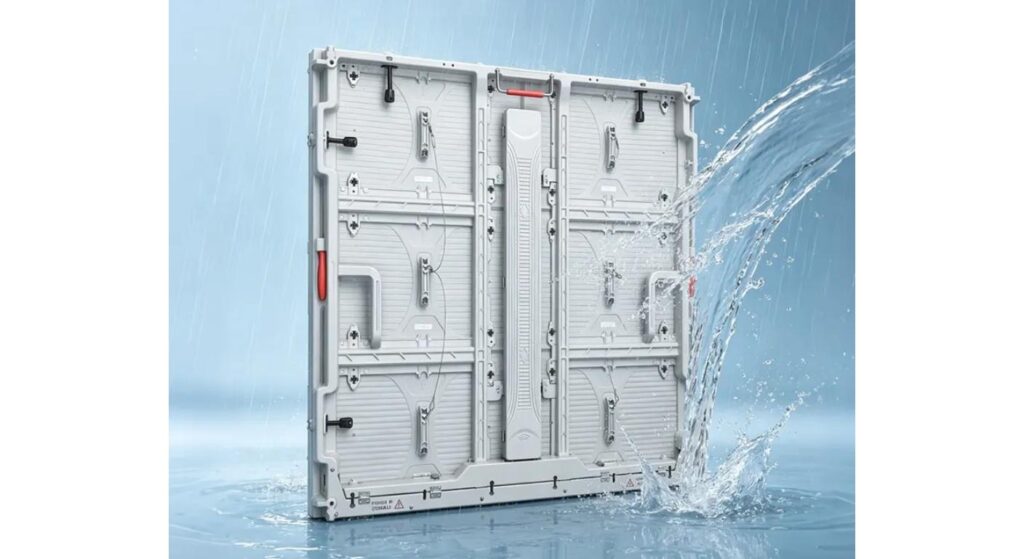
Should review service access as well. The type of maintenance might be different between a screen that is mounted near a wall and a freestanding billboard. Decide on the access to modules and internal components without disturbing surrounding architectural finishes and without causing unnecessary access issues.
Ensure that Content Management is included as part of the System.
With the control system and purchased configuration, remote updates, campaign scheduling, and centralized management of multiple screens are possible. All these functions are not available simply because of network connectivity. State the player, controller, software and method of connection that is in the quotation.
Simple publishing may be all that's needed at one site. A media network can be subject to user permissions, playback logs, or remote status reporting, grouped scheduling. Ask for a demonstration of the particular workflow needed by the operating team.
Verify software costs, connectivity costs and software actions during a network failure. Have content ready for agreed pixel canvas and test content publishing process prior to commissioning. These decisions will influence how simple or complicated operating the advertising system will be once installed.
Total Cost of Ownership is More than Just a Purchase Price.
Discuss the price of installation, electric, software, maintenance/replacement parts with the display quote. Equipment and service labor may have significant impact on costs, particularly elevated facades or road-side structures where special arrangements must be made for repairs.
Differentiate between maximum power demand and expected average power consumption. The maximum demand is used for electrical planning and the average consumption is more applicable to an operating estimate. Ask for data of the chosen configuration including the brightness, content and test conditions giving rise to these.
Average Kilowatts multiplied with operating hours will estimate energy use. Use separately powered equipment as necessary. If a lower consumption is claimed, it must be compared based on equivalent screen area, brightness and operating conditions, and a mere description of the same in the promotion is not sufficient to prove the claims.
| Budget Input | Illustrative Value |
| Screen area | 20 m² |
| Assumed average screen power | 280 W/m² |
| Daily operating time | 12 hours |
| Operating days per month | 30 |
| Estimated screen electricity use | 2,016 kWh/month |
| Electricity price | US$0.15/kWh |
| Estimated screen electricity cost | US$302.40/month |
Establish spare parts and service obligations and warranty policy. Submit screen size and distances, photos of the facility and hours to MIC via its project consultation page. A full brief will assist in providing a quotation for a system that is installed.
Conclusion
Outdoor LED signage is a perfect blend of readable content, proper product configuration, and a feasible operating plan. Compare between MIC's MC-S and MC-PRO in terms of viewing distance, daylight exposure, environmental protection and maintenance access. Check control functions and power assumptions prior to ordering to ensure project is evaluated based on full requirements.
FAQs
Q1. What will be an appropriate MIC series for outdoor LED signage?
MC-S: compare for advertising layout options with MC-PRO: compare with fixed-installations. Choose the configuration that is appropriate for the site.
Q2. Is the smaller the better for the pixel pitch?
It helps to see the finer detail at closer distances. It is dependent on distance to the screen, size of screen and its contents.
Q3. Does automatic brightness adjustment come as standard?
Do not assume so. Check the controller and sensing equipment and settings needed to make automatic adjustment.
Q4. Is there the possibility to manage several screens from a single point?
Yes, if you have a management platform and network configuration that are compatible. Make sure to secure scheduling, permissions and any recurring fees.
Q5. What are the ways to measure energy efficiency?
Ask for consumption to be measured or documented under specified conditions. Compare like with like and not a general energy saving statement.


Contact Us
In This Article
Related Posts
How to Choose the Right Pixel Pitch Based on Viewing Distance
November 14, 2026
Corner Protection Rental LED Panel: Damage Prevention and Maintenance Guide
October 30, 2026
How to Choose a Shop Window Transparent LED Display for Retail Stores
October 29, 2026
Iron vs. Aluminum Outdoor LED Display Cabinets: How to Choose
October 28, 2026


