




P4 vs P6 Outdoor LED Display: Resolution, Distance and Cost
By miashuvo2077
Sep 25, 2026Related Posts
LED Window Display- The Complete Guide for Retail, Advertising, and Commercial Spaces
October 26, 2026
Mini LED Display- What It Is, How It Works, and Where It Fits
October 26, 2026
Naked Eye 3D LED Display - How It Works, Key Specs, Cost and How to Plan One (2026 Guide)
October 16, 2026
Transparent LED Displays for Storefronts
October 14, 2026
P4 and P6 outdoor LED displays differ mainly in pixel density, viewing distance and cost: LEDFUL's comparison lists about 62,500 pixels/m² for P4 versus about 27,777 pixels/m² for P6, so P4 suits closer, more detailed viewing, while P6 can be a cost-efficient choice when audiences stay farther back and content is large. Confirm outdoor brightness, protection and quotation scope for the exact model.
Key takeaways
- LEDFUL's comparison lists about 62,500 pixels/m² for P4 and about 27,777 pixels/m² for P6, roughly 2.25 times the pixel density at P4.
- Published viewing-distance guidance varies: DOIT VISION lists P4 at about 5–6 m and P6 at 6–10 m, while LEDFUL gives wider ranges of 4–15 m and 6–20 m.
- Pixel pitch alone does not set outdoor brightness; DOIT VISION and MIC Display's pixel pitch guide both tie usable brightness to the site and the exact model.
- P4 generally costs more per square metre than P6 because a denser layout uses more pixel components per area, though no universal price multiple is verified.
- A larger screen does not automatically push the choice to P6; the nearest viewer, the smallest important text and the confirmed module matrix decide.
What Do P4 and P6 Mean in an Outdoor LED Display?
P4 and P6 are pixel pitch labels: P4 means 4 mm between pixel centres and P6 means 6 mm. According to DOIT VISION, pixel pitch is the centre-to-centre distance between adjacent pixels, measured in millimetres, so a smaller number describes a tighter pixel grid. For a broader view of how pitch steps map to screen size and application, MIC Display's led pixel pitch guide covers the wider range.
In outdoor work, both labels appear on outdoor-rated cabinets, and the pitch does not describe brightness, ingress protection, cabinet construction or electronics. That is why a P4 outdoor display and a P6 outdoor display should be compared as complete models rather than as two numbers on a brochure.
P4 vs P6 Resolution per Square Metre and Total Screen Resolution
P4 delivers considerably more pixels per square metre than P6, but total screen resolution also depends on the physical screen dimensions. Density and matrix size therefore need to be checked separately before you commit to a pitch.
Pixel density: P4 vs P6
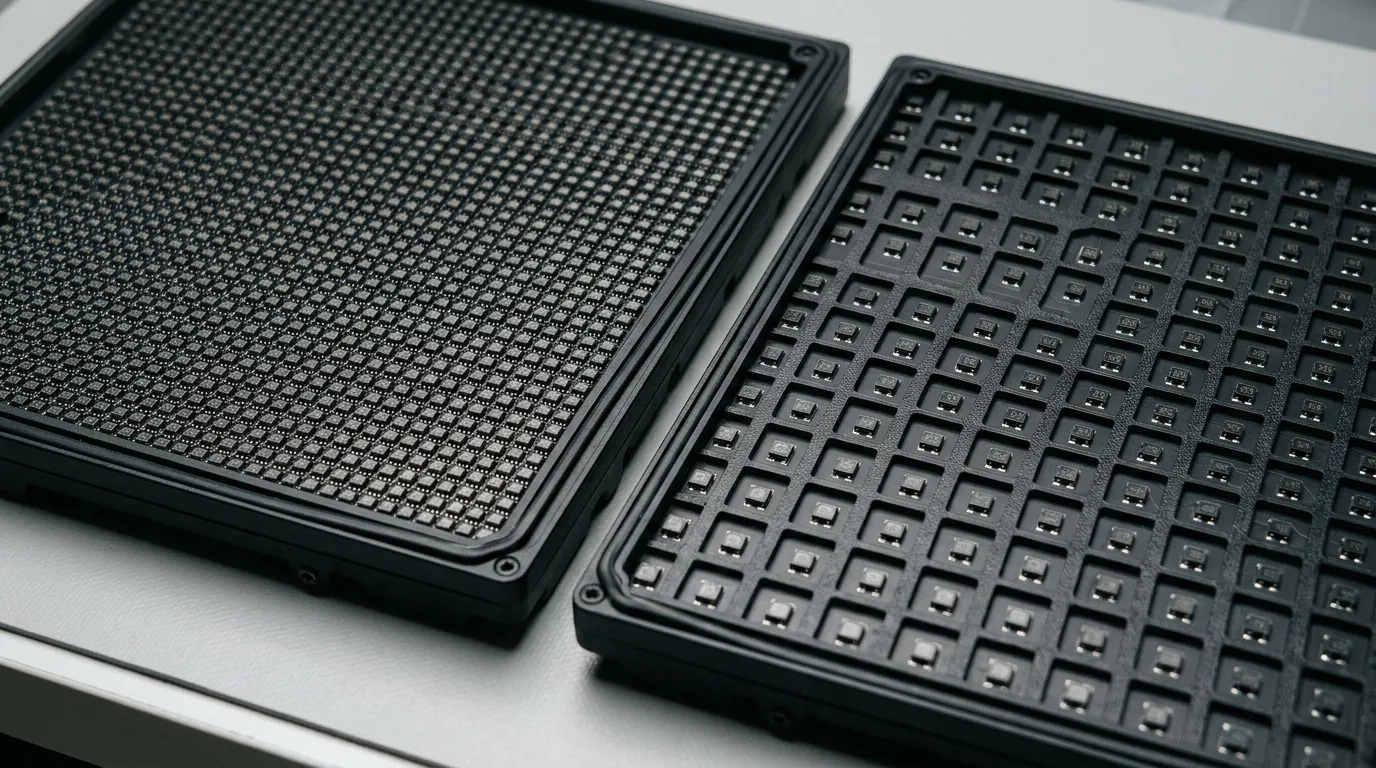
LEDFUL's outdoor comparison lists about 62,500 pixels/m² at P4 and about 27,777 pixels/m² at P6, which works out to roughly 2.25 times the pixel density at P4. Corporate Sign Industries gives a different P6 figure of 40,000 pixels/m² in its own comparison, which conflicts with the geometry of a 6 mm grid. Use density as a nominal starting point and confirm the proposed module's actual pixel matrix in writing.
How screen size changes total resolution
Total pixel resolution comes from screen dimensions as well as pitch. Because pitch is measured in millimetres (DOIT VISION), you can estimate the matrix by dividing the confirmed screen width and height by the pitch. A 6 m × 3 m screen would therefore produce roughly 1,500 × 750 pixels at P4 and 1,000 × 500 pixels at P6, before module and cabinet boundaries are taken into account.
Does a larger display automatically require P6?
No. A larger screen does not automatically push the choice to P6, because total pixel count rises with area at either pitch. The practical question is whether the nearest viewer can resolve the smallest important text at the chosen density, and whether the proposed cabinet and module layout delivers the matrix you calculated. Outdoor model selection at this stage is easier when the full outdoor led display range and its cabinet options are considered together.
Table 1 — P4 vs P6 density and resolution
| Specification | P4 | P6 | What it means |
|---|---|---|---|
| Nominal pixel pitch | 4 mm | 6 mm | Centre-to-centre pixel spacing (DOIT VISION) |
| Pixel density listed by LEDFUL | About 62,500 pixels/m² | About 27,777 pixels/m² | Nominal density for that pitch |
| Relative pixel density | Baseline | About 2.25× lower than P4 | P4 fits more detail into the same area |
| Total pixel matrix | Screen width and height ÷ 4 mm | Screen width and height ÷ 6 mm | Depends on the confirmed screen size |
| Actual module matrix | Verify with the supplier | Verify with the supplier | Module and cabinet boundaries can change the final matrix |
P4 vs P6 Minimum Viewing Distance: What Is a Safe Starting Point?
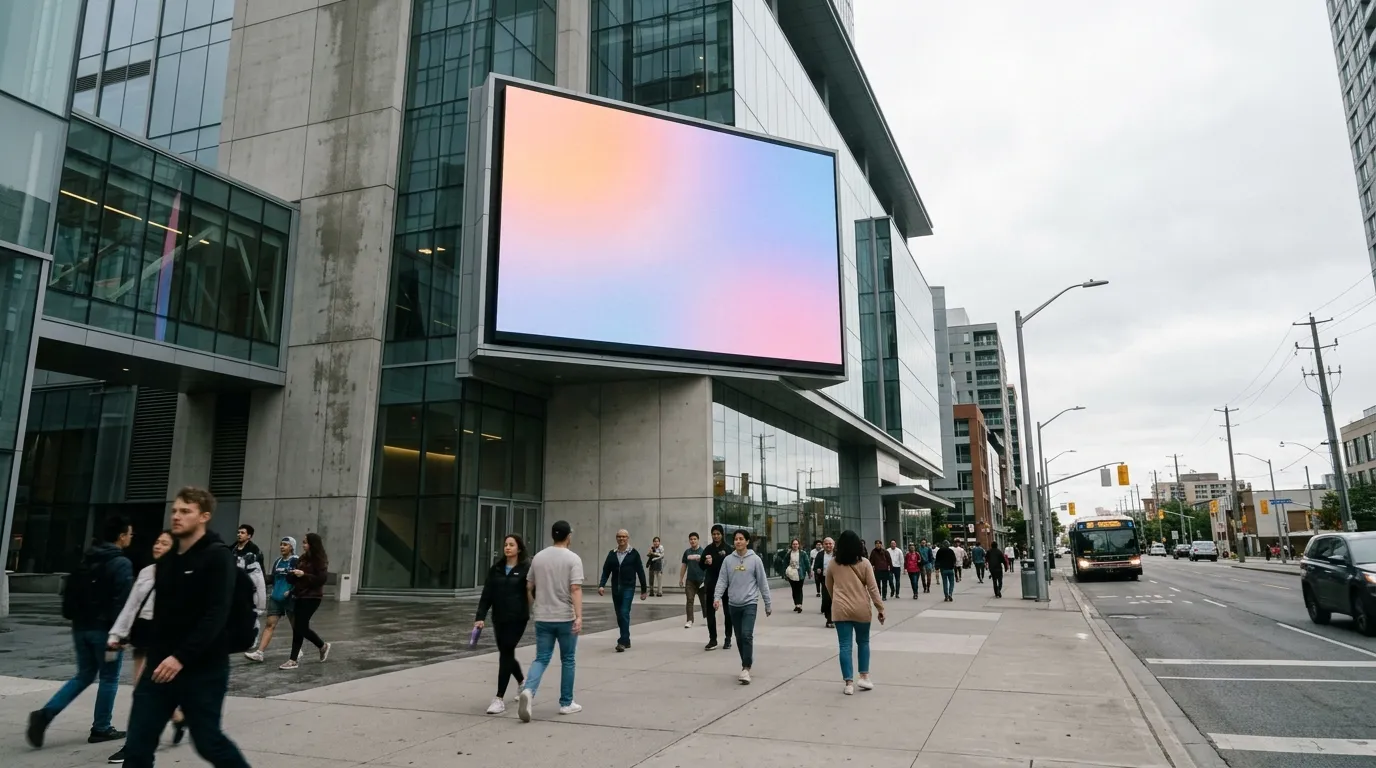
There is no single universal minimum viewing distance for P4 or P6, but published guidance places P4 closer. DOIT VISION lists P4 at about 5–6 m and P6 at about 6–10 m, while LEDFUL gives broader ranges of 4–15 m for P4 and 6–20 m for P6. MIC Display's pixel pitch guide applies a simpler planning rule of thumb: minimum viewing distance in metres roughly equals pitch in millimetres, which puts P4 at about 4 m and P6 at about 6 m.
Treat these figures as starting points rather than fixed thresholds. The comfortable distance also depends on the screen height, the size of the smallest text, ambient light and how long viewers are expected to look. Walk the site and mark the nearest realistic viewing position; if that position falls inside the P4 planning range, P4 is the safer candidate for detailed content.
Does P4 or P6 Have Higher Outdoor Brightness?
Neither. Brightness in an outdoor LED display is set by the LED, driver, power and control design of the exact model, not by the pitch label. A P4 cabinet and a P6 cabinet built to different specifications can have very different brightness ratings.
According to DOIT VISION, outdoor displays should exceed 4,000 nits to contend with direct sunlight. MIC Display's pixel pitch guide gives planning ranges of roughly 3,000–4,500 nits in shaded positions and 5,000–8,000 nits in direct sun, while noting that site conditions matter. A common mistake is choosing a pitch and then assuming the brightness will be adequate; instead, confirm the rated brightness of the exact outdoor model and check it against the screen's orientation, shade and expected viewing hours.
Why P4 Usually Costs More Than P6 — and How to Compare Quotes
P4 generally costs more per square metre than P6 because a denser pixel layout needs more pixel components per unit of area. DOIT VISION describes smaller pitch as higher density and greater image clarity at a higher price than P6, and Corporate Sign Industries also states that P6 costs less per square metre than its P4 example. Neither source provides a verified universal price ratio, so plan with a written quotation rather than a fixed percentage guess.
Why pixel density affects hardware cost
More pixels per square metre means more LED packages, more driver channels and more supporting electronics for the same area, which is the main hardware reason a tighter pitch usually carries a higher price. The final figure also depends on model, brightness, cabinet construction, control equipment, structure, freight and project scope. When comparing permanent installations, the outdoor fixed led display options on a supplier's list show how differently two similarly sized screens can be configured.
P4 vs P6 quote comparison checklist
Table 2 — What to request in a P4 and P6 quotation
| Quote item | What to request | Why it matters |
|---|---|---|
| Display area | Confirmed width and height | Density comparisons only hold at equal area |
| Exact model | P4 and P6 model references | Two models of the same pitch can differ in performance |
| Brightness | Rated nits and test conditions | Pitch does not determine brightness |
| Control and electronics | Receiving card, processor and power configuration | Affects image processing and running cost |
| Cabinet and structure | Cabinet type, mounting and frame | Site-specific and often quoted separately |
| Installation scope | Who installs, commissions and tests | Prevents a low hardware quote hiding project work |
| Freight | Delivery terms and destination | Easily overlooked when comparing totals |
| Warranty scope | Covered components and term | Terms differ between models and suppliers |
Protection ratings and service terms are covered in the section below on outdoor model details.
How Content Type and Text Size Affect the P4 vs P6 Choice
Choose the pitch around the smallest important text and the nearest viewer. P4's higher pixel density makes it the safer starting point for detailed text, tables, diagrams or close viewing, while P6 can work well when the audience stays farther back and the content uses large logos, numbers or full-screen video. DOIT VISION links smaller pitch to higher pixel density and greater image clarity.
The mistake to avoid is judging readability from the far side of the street while the content includes fine print that people are expected to read from a few metres away. Pull up representative content at the proposed screen size and check it from the closest realistic position. For advertising screens where a short, large message dominates, an outdoor advertising led display specification may tolerate a wider pitch than a screen carrying detailed information.
Decision Rule: Which Pitch for Your Screen Size and Audience Distance?
Use the nearest viewer as the first filter, then check screen size, content detail and quote scope. If the closest viewer sits inside the planning distance for P4 and the content includes fine text, start with P4. If the closest viewer stays beyond the P6 planning range and the content is large and simple, P6 may be sufficient.
Step-by-step selection
- Mark the nearest realistic viewing position on the site plan.
- Compare that distance with the published P4 and P6 ranges and MIC Display's rule of thumb that metres roughly equal millimetres of pitch.
- Identify the smallest important text and decide whether viewers must read it.
- Calculate the total pixel matrix for the confirmed screen size, then verify the actual module matrix with the supplier.
- Check the rated brightness and protection of each exact model against the site conditions.
- Compare equivalent P4 and P6 quotations for the same area, brightness and scope before deciding.
P4 vs P6 decision table
Table 3 — Starting point by audience distance and content
| Closest viewer and content | P4 starting point | P6 starting point | Action |
|---|---|---|---|
| Close viewing with fine text or data | Suitable starting point | Higher risk of unreadable detail | Start with P4 and validate the text |
| Mixed content at medium distance | Suitable starting point | Possible if only headlines must be read | Validate both against real content |
| Large graphics or video seen from far | More density than the content needs | Cost-efficient starting point | Start with P6 and confirm brightness |
| Uncertain site or moving audience | Suitable starting point | Needs closer review | Measure the nearest viewer before quoting |
Temporary or touring screens add handling and assembly requirements to the pitch decision, so event projects often review outdoor rental led display configurations alongside fixed-installation options.
Outdoor Model Details to Verify Before Ordering
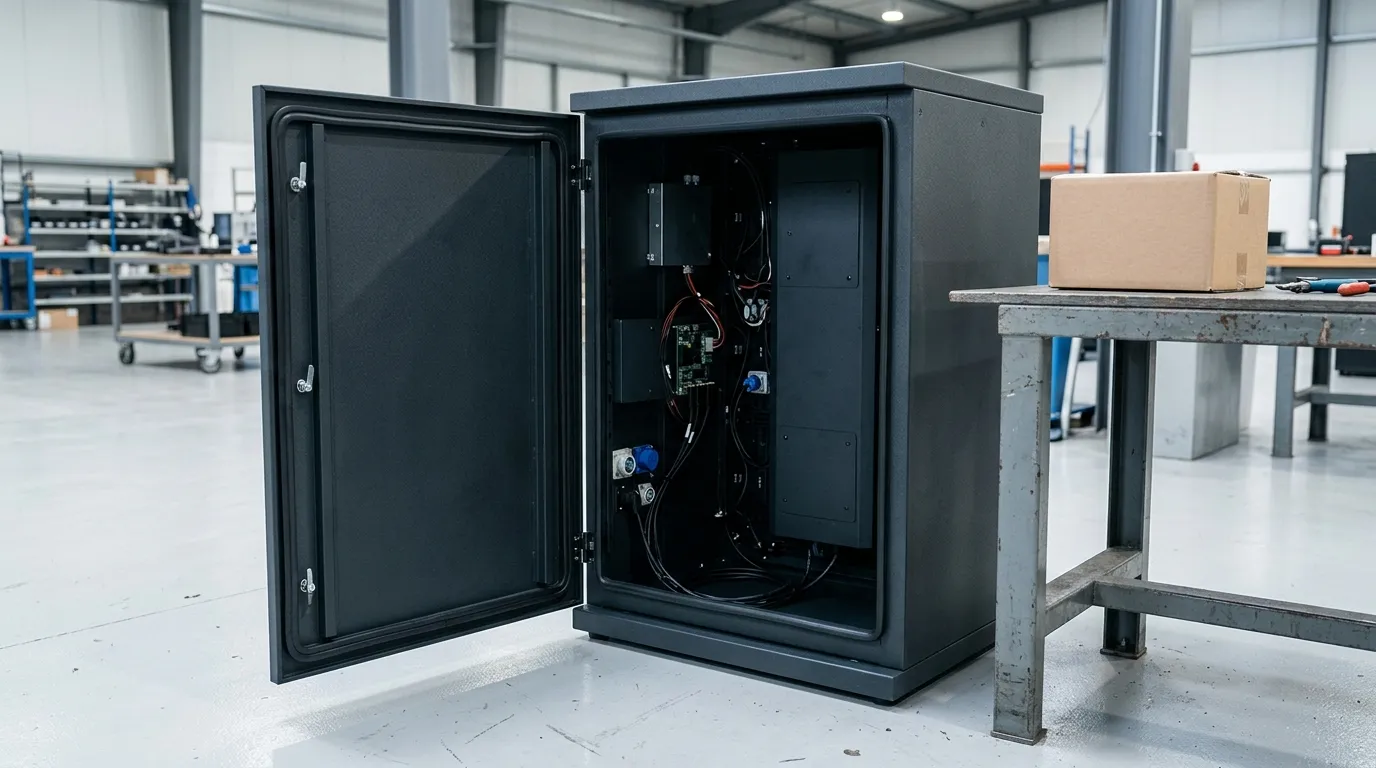
Verify the protection rating and service terms of the exact outdoor model before you finalise the pitch. MIC Display's pixel pitch guide identifies IP65 as a typical minimum planning level for outdoor use and notes that harsher environments may need higher protection.
MIC Display is an LED display factory in China established in 2011 that designs, produces and sells outdoor and other LED displays, exports to more than 100 countries, and offers a 5–8 year warranty with remote technical support and after-sales service. Its design team customises screen structure, size and configuration to each project's installation environment. Confirm the selected model's rating, warranty scope and support terms in writing rather than assuming a P4 or P6 model meets a particular level.
Frequently asked questions
Is P4 always better than P6 outdoors?
No. P4 has higher pixel density, but brightness, ingress protection, cabinet design, control system and viewing distance also decide whether a screen suits a project. P6 can be the better value when audiences stay farther back and the content uses large text or graphics. Compare the exact outdoor models rather than the pitch alone.
How much does a P4 outdoor LED display cost compared with P6?
There is no verified universal price. P4 generally costs more per square metre because it uses more pixels per unit of area, while P6 often costs less for the same area. Request comparable quotations covering the same model specification, brightness, control equipment, installation and warranty scope.
Can a P6 outdoor LED display show text clearly?
Yes, for large text viewed from its intended distance. P6's lower pixel density makes small or fine text harder to read up close. Validate the smallest intended text on the proposed screen size from the nearest viewer position; if reading detail is essential, P4 is the safer starting point.
If you are comparing P4 and P6 for a specific outdoor installation, MIC Display's design team can review your screen size, nearest viewing distance and model requirements. Contact us to discuss a comparable project configuration.
Share on Social:


Contact Us
In This Article
Related Posts
LED Window Display- The Complete Guide for Retail, Advertising, and Commercial Spaces
October 26, 2026
Mini LED Display- What It Is, How It Works, and Where It Fits
October 26, 2026
Naked Eye 3D LED Display - How It Works, Key Specs, Cost and How to Plan One (2026 Guide)
October 16, 2026
Transparent LED Displays for Storefronts
October 14, 2026


