




What Information Do I Need to Get an LED Display Quote?
By miashuvo2077
Sep 22, 2026Related Posts
LED Window Display- The Complete Guide for Retail, Advertising, and Commercial Spaces
October 26, 2026
Mini LED Display- What It Is, How It Works, and Where It Fits
October 26, 2026
Naked Eye 3D LED Display - How It Works, Key Specs, Cost and How to Plan One (2026 Guide)
October 16, 2026
Transparent LED Displays for Storefronts
October 14, 2026
To get an LED display quotation, send seven details: what the screen is for, where it will be installed, the screen size or available space, the closest viewing distance, whether it is indoors or outdoors, how it will be mounted, and what content it will show. You do not need to choose pixel pitch or other technical specifications first.
Key takeaways
- Seven details start an LED display quotation: application, installation location, screen size or available space, viewing distance, indoor or outdoor use, installation method and content type. MIC Display's FAQs list application, installation location, screen dimensions and viewing distance as the core inputs.
- You are not expected to know every technical specification before asking for a quote. LeYe Display advises buyers to share project requirements and let the supplier recommend a configuration.
- The display size you want and the space you actually have are two different measurements. LeYe Display recommends sending width, height, available space, depth and any obstructions where possible.
- The same nominal screen size can be quoted as different configurations depending on the setting and how the screen is installed, according to LED Display Factory's retail quote checklist.
- Photos, a rough sketch, destination, quantity and timing are optional additions that shorten the back-and-forth. They should not delay the first enquiry.
The first-message checklist: seven details that start an LED display quotation
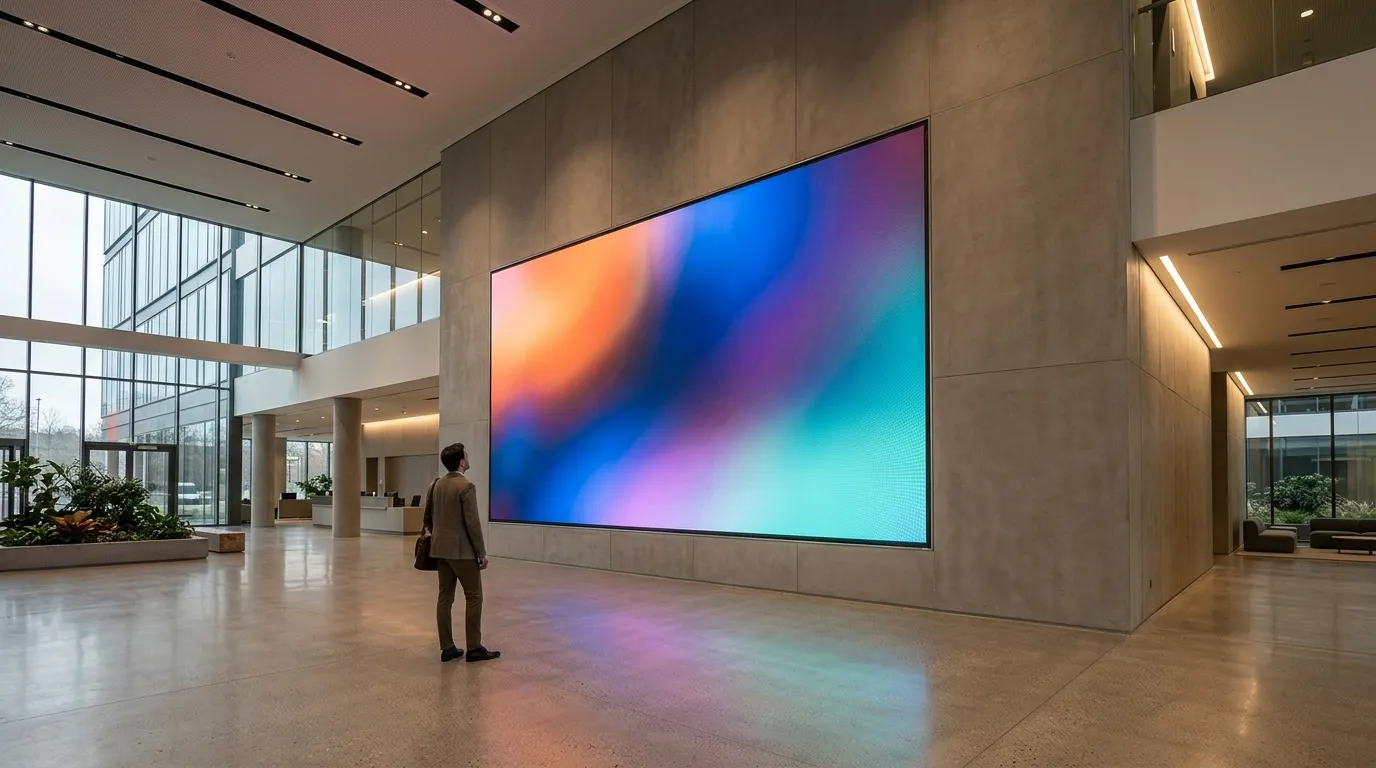
An LED display quotation starts with seven project details. Send whatever you already know in the first message and flag the rest as unknown rather than leaving them out.
| Detail | What to send | Why it changes the configuration |
|---|---|---|
| Application | What the screen is for — advertising, a control room, a stage, a retail store | Sets which product family and viewing conditions apply |
| Installation location | City and country, and whether the position is a wall, ceiling, floor or freestanding structure | Site conditions and logistics both depend on it |
| Screen size and available space | Target width and height, plus the space available including depth and obstructions | The two are not the same measurement and can rule a structure in or out |
| Closest viewing distance | How near the nearest viewer will stand or sit, even as an estimate | Determines which pixel pitch is appropriate |
| Indoor or outdoor | State it explicitly, including semi-sheltered positions such as entrances or canopies | Drives the cabinet and protection approach proposed |
| Installation method | Wall-mounted, hanging, floor-standing or freestanding, plus access around the screen | Decides the mounting structure and service clearance |
| Content type | Video, still advertising, text, live data or a mix | Influences the layout the supplier proposes |
[DIAGRAM: Seven project details on the left, the configuration decisions each one influences on the right — environment, cabinet and structure, pixel pitch, layout, mounting — shown as a simple input-to-decision flow.]
Why each detail changes the configuration
The application: what the screen is actually for
Application tells the supplier which product family and viewing conditions apply. A control-room wall, a retail advertising screen and a stage backdrop are configured differently even when they are the same size, which is why LeYe Display's quote guide opens its list with the application and use case. LED Display Factory's retail checklist makes the same point: the same screen size can lead to a different configuration depending on the setting. In practice, the application decides which configuration is quoted, not the price per square metre.
Indoor or outdoor: this decides the enclosure, not just the location
State indoor or outdoor explicitly, because the environment determines the cabinet and protection approach the supplier proposes. Semi-sheltered positions such as entrances, canopies and covered walkways still count as outdoor duty and should be described as such. LeYe Display lists the indoor or outdoor environment among its core inputs, and LEDSOLUTION lists indoor or outdoor use alongside viewing distance. MIC Display builds separate indoor led display and outdoor led display ranges for exactly this reason.
Screen size and available installation space — two different numbers
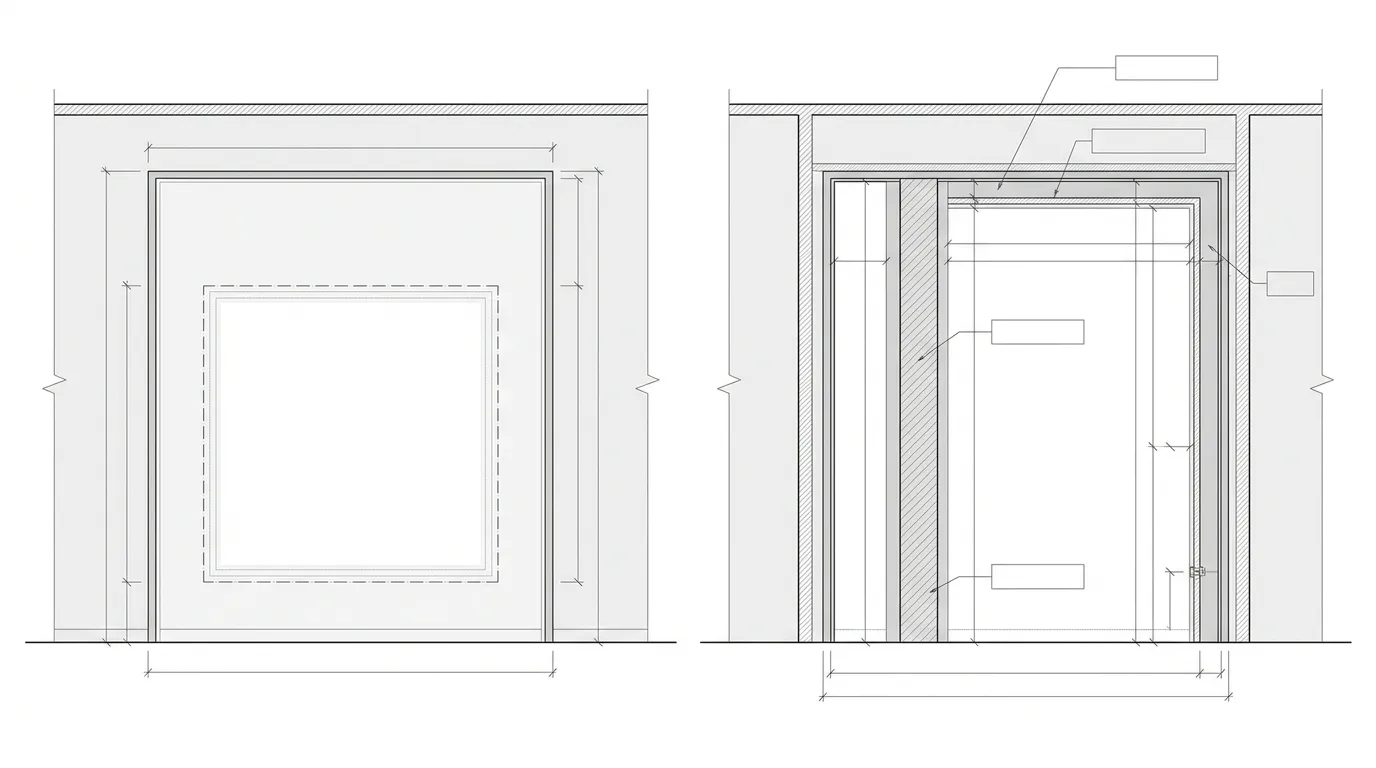
Send both the display size you want and the space actually available, because they are not the same measurement. LeYe Display advises giving width, height, available space, depth and any obstructions where possible, and notes that required display size should be treated separately from installation space. A screen that fits the wall opening may still not fit around a column, a door frame or a ceiling fixture. If only one number is known, send the available space and mark it as approximate.
Closest viewing distance
The closest viewing distance is how near the nearest viewer will realistically stand or sit, and it is what lets a supplier suggest an appropriate pixel pitch. Pixel pitch is the spacing between pixels, expressed in millimetres. LeYe Display and LEDSOLUTION both list viewing distance as a required quote input, and an estimate is enough to start. The technical comparison between pitches belongs in a later step, so use the led pixel pitch guide once the screen size and audience position are settled.
Installation method and site conditions
Say how the screen will be fixed, and describe the surface, access and service clearance around it. Wall-mounted, hanging, floor-standing and freestanding installations need different structures, so the mounting method decides what the supplier proposes. LeYe Display and LEDSOLUTION both list installation method and maintenance access among the details that inform a quote, and LED Display Factory's checklist raises installation position and service access in the same way. This is also the place to note obstructions, because they affect both the structure and how a technician reaches the rear of the screen.
Content type and aspect ratio
Describe what will actually run on the screen and roughly in what shape. Video, still advertising, text, live data and mixed formats lead to different layouts, and both LeYe Display and LEDSOLUTION list content type as an input that shapes the configuration. If the content you plan to show does not match the proportions of the screen you have in mind, expect the layout to be adjusted at quotation stage. Send a sample file or a screenshot if the content already exists.
Photos, drawings or a sketch — worth more than a perfect measurement
If numbers are uncertain, send a photo of the wall or site and a rough sketch with approximate dimensions marked on it. LED Display Factory's retail checklist recommends site photos and discusses installation position, service access and lighting as information that helps assess a project, and LeYe Display lists available site photos or drawings among helpful inputs. Mark any measurement you are unsure of as an estimate rather than leaving it out. A phone photo taken from the installation position, showing the surrounding walls and ceiling, is usually enough to start.
What if you don't know the pixel pitch or other technical specifications?
You do not need to know every technical specification before requesting a quotation. LeYe Display states that buyers can share project requirements and let the supplier recommend a configuration, which is standard practice in this market. LEDSOLUTION lists pixel pitch, control system and power requirements as helpful inputs, but they are follow-up details rather than prerequisites. Describe the project, answer what you can, and let the supplier ask for the rest. If you go on to compare the suppliers answering your enquiry, the led display manufacturer checklist covers that step separately.
Optional details that shorten the back-and-forth
Destination, quantity, timeline, maintenance access, control requirements and power availability are optional first-message details that reduce follow-up questions. They should not delay the initial enquiry. LeYe Display lists project location and delivery date among useful inputs, and LEDSOLUTION lists quantity, control system, power requirements and service access alongside them. Add the ones you know as a short bullet list after the seven core details, and check MIC Display's faqs if a project question remains open before you send.
Copyable LED display quote request template
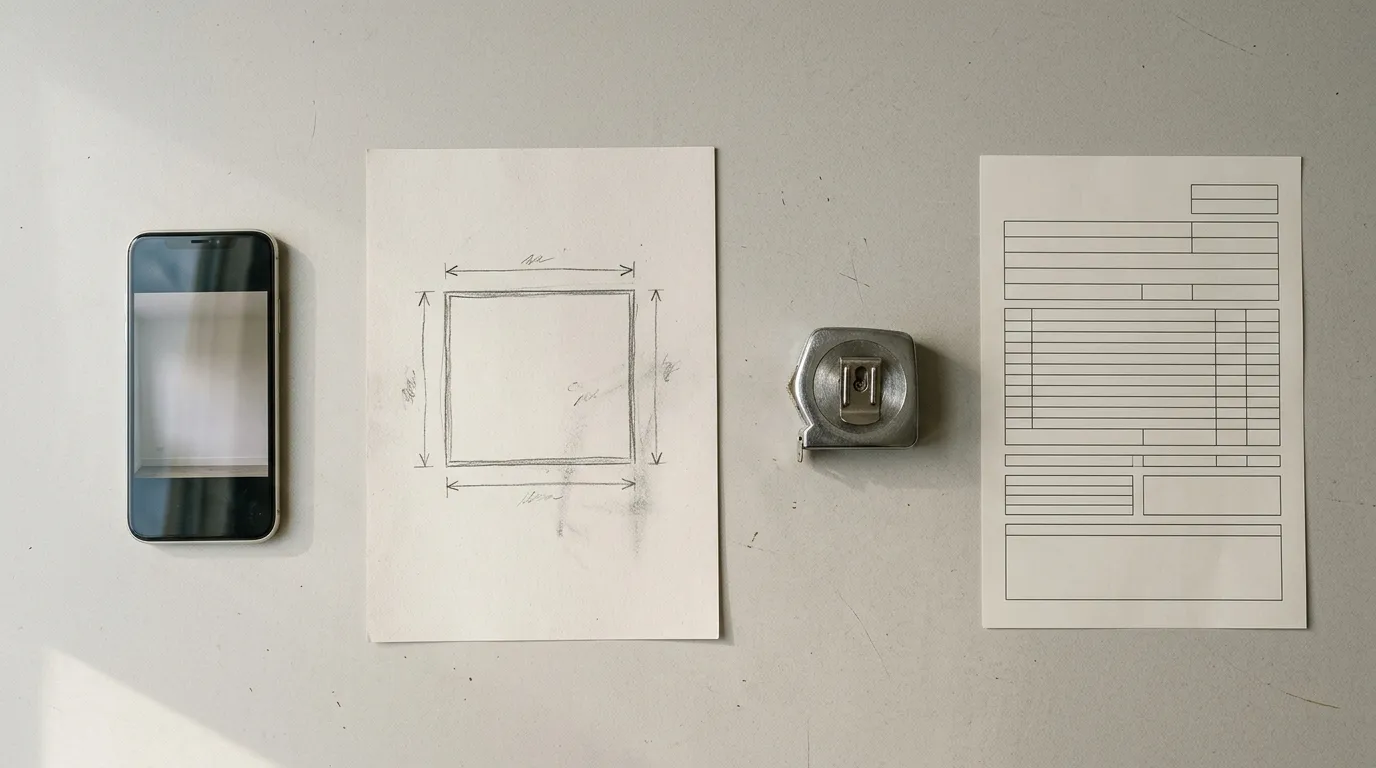
Use the template below to send the seven core details plus any optional information you have. Leave a line blank rather than guessing, and note when a measurement is an estimate.
- Application: the screen will be used for …
- Installation location: city and country, and the position on site
- Screen size and available space: target width × height, plus available width × height × depth, with any obstructions
- Closest viewing distance: approximately … metres
- Indoor or outdoor: including whether the position is fully or partly sheltered
- Installation method and site conditions: wall-mounted, hanging, floor-standing or freestanding, plus access and mounting surface
- Content type: video, still advertising, text, live data or a mix
- Optional: photos or sketch attached, delivery destination, quantity, required date, maintenance access and power availability
[PHOTO: A completed quote request shown next to the phone photo and rough sketch it refers to, so the reader can see that approximate information is acceptable.]
FAQ
Can a supplier quote an LED screen if I only have a rough size?
Yes. LeYe Display advises giving width, height, available space, depth and obstructions where possible, and treats required display size as separate from installation space. A rough size plus a photo of the site is usually enough for a supplier to propose a configuration and confirm the dimensions later in the process.
Why will two same-size LED screens be quoted differently?
LED Display Factory's retail checklist notes that the same screen size can lead to different configurations depending on the setting, referencing factors such as brightness, cabinet layout, maintenance and control. Two screens of identical dimensions in a dim lobby and a sunlit street frontage do not face the same conditions, so they are not quoted as the same product.
What does MIC Display ask for in a quote request?
MIC Display's FAQ page lists the application, installation location, screen dimensions and viewing distance as the details to provide. Adding indoor or outdoor use, the installation method and the content type gives a fuller picture. MIC Display, established in 2011, customises screen structure, size and configuration to each project's installation environment.
Send your seven details through contact us and the reply will start from your project rather than a generic specification sheet.
Share on Social:


Contact Us
In This Article
Related Posts
LED Window Display- The Complete Guide for Retail, Advertising, and Commercial Spaces
October 26, 2026
Mini LED Display- What It Is, How It Works, and Where It Fits
October 26, 2026
Naked Eye 3D LED Display - How It Works, Key Specs, Cost and How to Plan One (2026 Guide)
October 16, 2026
Transparent LED Displays for Storefronts
October 14, 2026


