




LED Screen Factory for Wholesale Buyers: Ordering Guide
By miashuvo2077
Sep 20, 2026Related Posts
LED Window Display- The Complete Guide for Retail, Advertising, and Commercial Spaces
October 26, 2026
Mini LED Display- What It Is, How It Works, and Where It Fits
October 26, 2026
Naked Eye 3D LED Display - How It Works, Key Specs, Cost and How to Plan One (2026 Guide)
October 16, 2026
Transparent LED Displays for Storefronts
October 14, 2026
MIC Display is a China-based LED display factory that supplies wholesale buyers with indoor, outdoor, rental, fine-pitch COB, transparent, floor tile and poster displays, in pixel pitches from P0.9375 to P10. This guide shows what to specify in your inquiry, what to confirm in the quotation, and what to check before production, packing and shipping.
Key takeaways
- MIC Display designs, produces and sells indoor, outdoor, rental, fine-pitch COB, transparent, LED floor tile and LED poster displays, with small-pitch P0.9375–P1.86, indoor P2–P10 and outdoor P2.5–P10 in its documented range.
- The factory was established in 2011, and its design team customizes screen structure, size and configuration to each project's installation environment.
- A quotation is only as accurate as the inputs behind it: application, indoor or outdoor environment, target dimensions, pitch or viewing-distance preference, quantity, destination and required date.
- Displays carry a 5–8 year warranty with remote technical support and after-sales service. The exact term that applies to your order belongs in the order documents.
- MIC Display's wholesale price tiers and minimum order quantity are not published, so ask for both in writing with your quotation.
What Wholesale Buyers Can Order from MIC Display
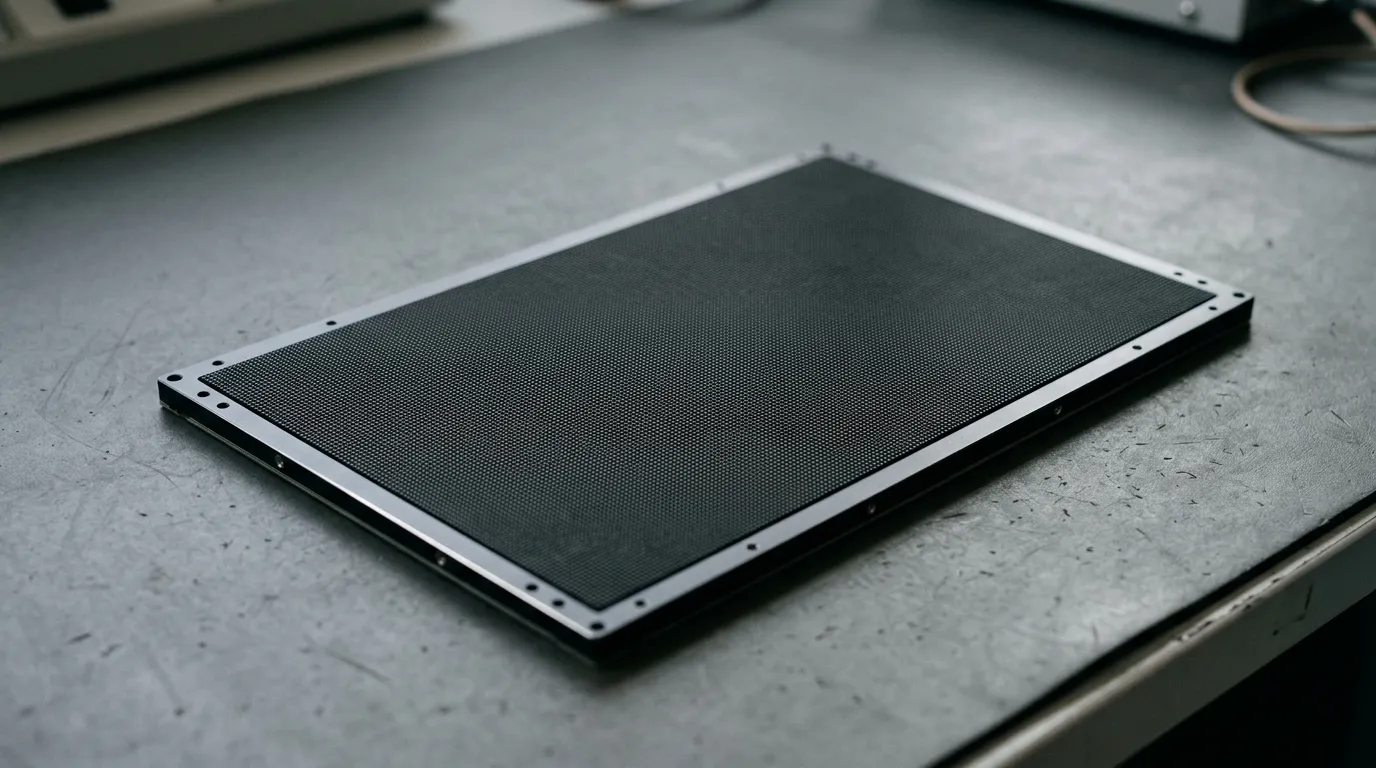
MIC Display designs, produces and sells indoor, outdoor, rental, fine-pitch COB, transparent, LED floor tile and LED poster displays, with documented pixel pitch ranges of P0.9375–P1.86 for small-pitch, P2–P10 indoor and P2.5–P10 outdoor. According to MIC Display's company information, the factory was established in 2011 and its products are exported to more than 100 countries and regions. The same source states that MIC Display supports OEM/ODM manufacturing alongside project customization.
The pitch ranges apply to the categories named below. They are not interchangeable between product families: an outdoor screen is specified against an outdoor range, and a rental screen is specified by its assembly and rigging requirements as well as its pitch.
| Screen type | Documented pitch range | Typical application | Buyer must specify |
|---|---|---|---|
| Fine-pitch COB (small-pitch) | P0.9375–P1.86 | Control room, close-viewing commercial walls | Viewing distance, cabinet depth, wall finish |
| Indoor | P2–P10 | Commercial, advertising, stage/event | Screen width × height, ambient light, mounting method |
| Outdoor | P2.5–P10 | Outdoor advertising, fixed installation | Weather exposure, viewing distance, support structure |
| Rental | Verify with the supplier | Stage and event use | Assembly frequency, hanging or stacking method |
| Transparent | Verify with the supplier | Advertising on glass and façades | Substrate type, transparency target |
| LED floor tile | Verify with the supplier | Interactive and decorative flooring | Traffic load, surface finish, access for service |
| LED poster | Verify with the supplier | Retail, lobby, showroom | Number of units, floor or wall placement |
The wider catalogue behind this table sits under MIC Display's products range if you need to match a category to a specific model.
Pixel pitch ranges by screen category
Pixel pitch is the distance between the centers of two adjacent LED pixels, measured in millimeters; a smaller number means a denser image that holds up at closer viewing distances. Use MIC Display's documented bands as a starting filter — P0.9375–P1.86 small-pitch, P2–P10 indoor, P2.5–P10 outdoor — then confirm the exact pitch against the installation, because the band tells you what is possible rather than what is right for a given room. Our led pixel pitch guide explains the distance-to-pitch relationship before you fix a number in the inquiry.
Matching screen type to indoor, outdoor, rental and specialty applications
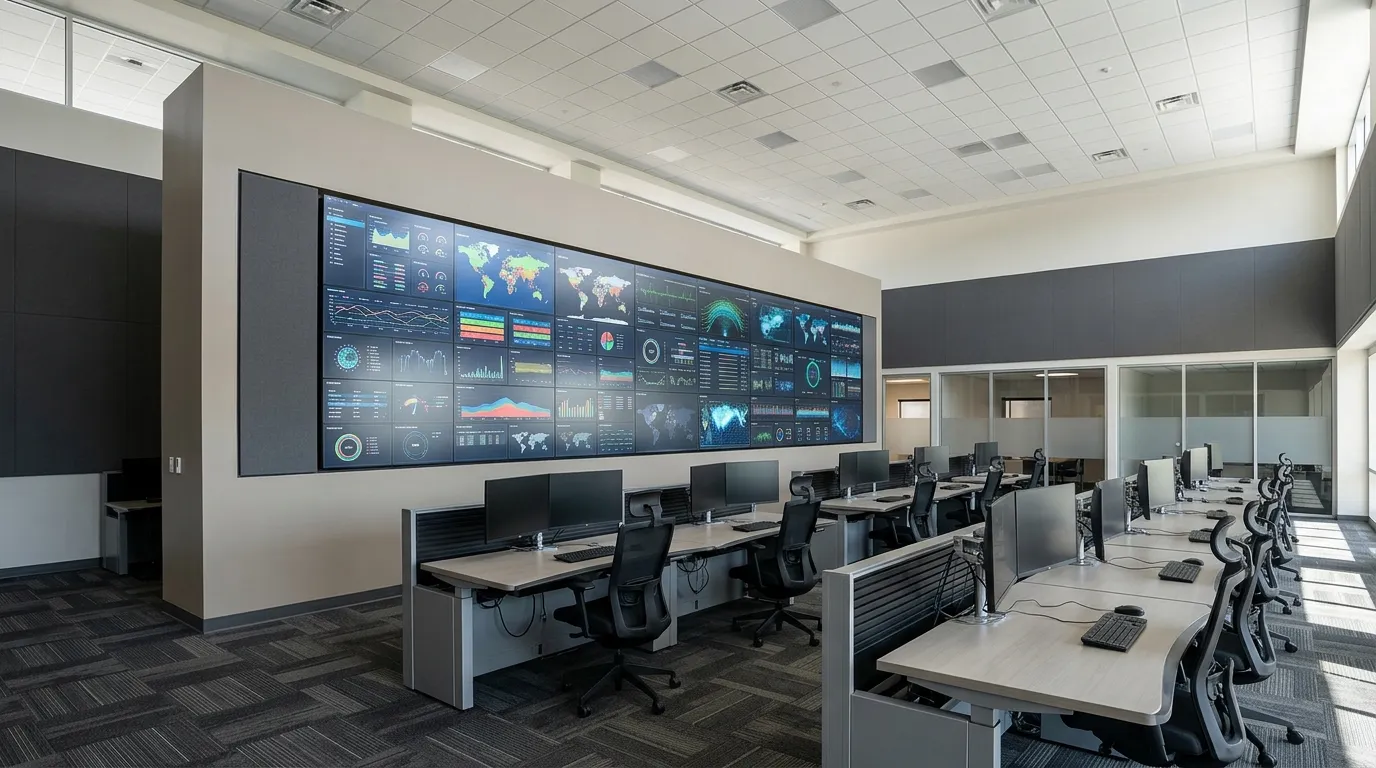
Start with the environment, then the pitch. If the screen is fixed indoors, an indoor fixed or fine-pitch COB option is the natural family; if it faces weather, the outdoor range applies; if it is assembled and dismantled repeatedly, a rental product is the correct starting point regardless of pitch. Transparent, floor tile and poster displays solve different problems — seeing through a glass façade, walking on the surface, or moving a single unit between locations — so treat them as separate purchases rather than pitch variants. MIC Display states that its design team customizes screen structure, size and configuration to each project's installation environment, and final configuration is subject to project review.
How to Request an Accurate Factory-Direct Quotation
A wholesale quotation from MIC Display can only be accurate when the buyer supplies the application, the indoor or outdoor environment, the target screen dimensions, a viewing distance or pitch preference, the quantity, the delivery destination and the required date. MIC Display then customizes structure, size and configuration to the installation environment described in that inquiry.
Send these eight inputs with your first message:
- Application and audience — advertising, control room, retail, stage or event.
- Environment — indoor fixed, outdoor fixed, or equipment that is repeatedly assembled.
- Target width and height, plus any structural limit on depth or weight.
- Viewing distance or a preferred pixel pitch, if you already have one.
- Quantity, and whether repeat orders are expected later.
- Installation method and mounting constraints.
- Delivery destination and required date.
- Any documentation your market requires the supplier to provide.
What to confirm inside the quotation before you approve it
Check the quoted scope line by line rather than the headline number alone. Confirm the cabinet or module configuration, the control system, the processing and mounting structure, the spare parts included, the warranty scope and anything the quote leaves out.
MIC Display's buyer checklist for choosing an led display manufacturer names component quality, certification verification, QC/testing, engineering support, warranty and spares, documentation and factory audits as the items buyers should confirm rather than assume. Ask MIC Display to put each item that matters to your project in writing. Uniview's China LED Display Manufacturer buyer guide makes the same point from the procurement side, listing manufacturing and testing, application fit, certification for the target market, delivery planning and post-arrival support as evaluation areas.
From Order Confirmation to Production: What to Sign Off
Before production begins, approve the final configuration and drawings, the list of supplied items, the warranty and spare-parts scope, and the delivery plan. Treat any change requested after that approval as a new written variation, including a change of pitch, cabinet type or quantity, because manufacturing starts once the configuration is frozen.
A factory-direct order is a specification order, not a catalogue order. The screen you receive is the configuration you approve, which is why the approval step matters more than the purchase step for wholesale buyers placing repeat or multi-unit orders.
Production and pre-shipment testing — what to ask MIC Display to confirm
Request the test scope, test duration and reporting format for your specific order in writing, and ask which documents will be issued before dispatch. The sources reviewed for this guide do not establish a named test standard, an aging duration or a pass-rate figure for MIC Display, so those should be supplied by MIC Display for your order rather than assumed. If you would rather inspect before dispatch, arrange an led display factory visit as part of the order plan.
[DIAGRAM: order flow from inquiry to quotation, configuration approval, production and pre-shipment check, packing, shipping, and warranty, labelling each stage as buyer-confirmed or supplier-confirmed]
Packing and Shipping: What Wholesale Buyers Should Confirm
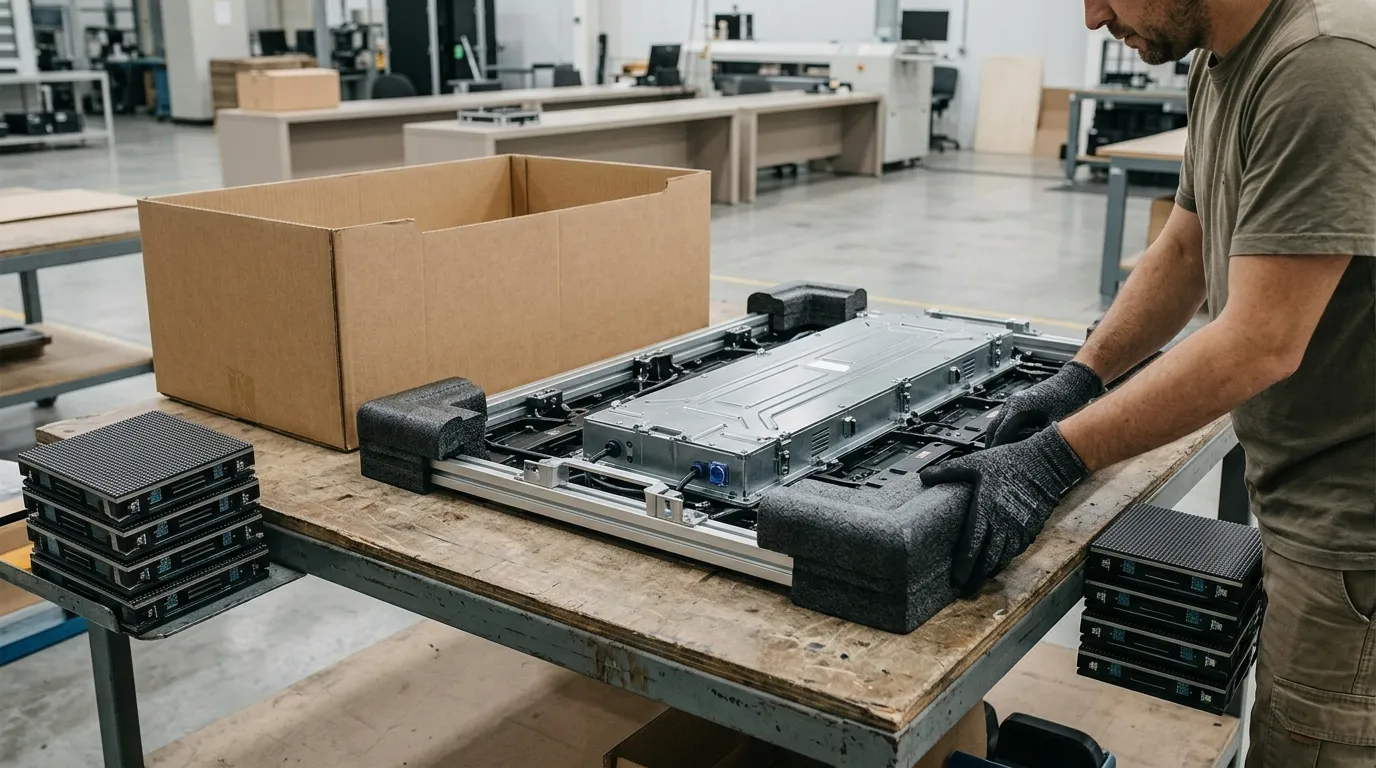
Confirm the packing method, the number of cabinets or modules per crate, crate dimensions and gross weights, the shipping term and who arranges freight, and the export documents before dispatch. These details are set per order, and MIC Display does not publish packing specifications, lead times, freight rates or shipping terms, so they need to appear in the order documents rather than be inferred from a web page.
Use this checklist before dispatch:
- Packing type and the protection level it provides for modules, cabinets and control equipment.
- Number of units per crate, and whether spares travel in the same crate or separately.
- Crate dimensions and gross weights, for onward transport planning at destination.
- The shipping term in use, and which party books freight and handles insurance.
- Commercial invoice and packing list details, including descriptions that match the approved configuration.
- Labelling, and any destination-specific requirement your market places on the importer.
[PHOTO: packed LED display cabinets or modules with the packing list visible, annotated with the fields a buyer should verify before dispatch]
Warranty, After-Sales Support and Spare Parts
MIC Display's displays carry a 5–8 year warranty, with remote technical support and after-sales service. Spare parts are worth writing into the order, because the spares you hold determine how quickly a failed module can be replaced once the screen is in service.
The applicable term depends on the product and the order, so have MIC Display confirm the exact term, what the warranty covers, what affects cover, and the spare-parts list as part of the order documents. The published warranty page is the reference point for that conversation. On-site response times, service-level hours and failure rates are not established here and should be agreed in writing if your project depends on them.
Wholesale Pricing and MOQ: What Is Confirmed and What to Ask
MIC Display's wholesale price tiers and minimum order quantity are not confirmed in the sources behind this page, so the practical answer for a wholesale buyer is to request a written quotation that states the MOQ, any tier breaks, the currency, the quote's validity period, and exactly which items the price includes.
Some supplier pages publish a percentage saving for buying factory-direct. Treat any figure of that kind as marketing for one configuration rather than a general benchmark, and never as a term you can hold a supplier to. Ask instead for these four statements in writing:
- The minimum order quantity for the screen type you need, and whether it is per order or per model.
- Any tier break, and the quantity at which each tier starts.
- Whether the control system, processing, mounting structure, spares and documentation are inside or outside the price.
- Which party carries freight, duties and destination charges.
Price varies with pitch, configuration, quantity and installation environment, which is why a single list price is not meaningful for project orders.
Frequently Asked Questions
How much does a wholesale LED screen order cost?
MIC Display does not publish a wholesale price list, and cost depends on the screen type, pixel pitch, configuration, quantity and delivery destination. Request a written quotation so the minimum order quantity, any tier breaks, the quote's validity period and the included items are stated for your specific project.
What specifications should a wholesale LED screen inquiry include?
Include the pixel pitch or viewing distance, cabinet or module dimensions, screen width and height, indoor or outdoor environment, control system requirements, mounting structure and quantity. MIC Display's documented pitch coverage runs P0.9375–P1.86 small-pitch, P2–P10 indoor and P2.5–P10 outdoor, so confirm which band applies before sending an inquiry.
Do I need to visit the factory before placing a wholesale order?
Not necessarily. Wholesale buyers can verify through written specification approval, documentation and pre-shipment reporting. If you prefer to inspect before dispatch, MIC Display supports a factory visit as part of the order plan, and the wider supplier-verification steps are covered in the manufacturer selection checklist on this site.
Can spare parts be supplied with a wholesale LED screen order?
Spare-parts scope is not published, so ask MIC Display to list it in the quotation. MIC Display's buyer checklist names warranty and spares as a supplier-evaluation item, which makes spares a reasonable point to settle before approving the order rather than after the screen is in service.
Ready to price a project? Send your application, environment, target dimensions and quantity through contact us, and ask for the MOQ, any tier breaks and the included-items list in the written quotation.
Share on Social:


Contact Us
In This Article
Related Posts
LED Window Display- The Complete Guide for Retail, Advertising, and Commercial Spaces
October 26, 2026
Mini LED Display- What It Is, How It Works, and Where It Fits
October 26, 2026
Naked Eye 3D LED Display - How It Works, Key Specs, Cost and How to Plan One (2026 Guide)
October 16, 2026
Transparent LED Displays for Storefronts
October 14, 2026


